
Coding classes are rewriting futures in a Kenyan youth prison
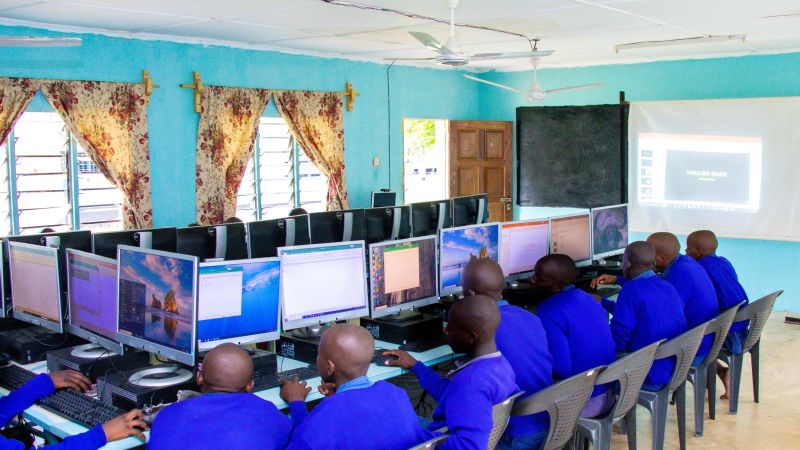
Coding Programs Are Transforming Lives in a Kenyan Youth Prison
Coding classes are rewriting futures – In a small facility on the edge of Mombasa, a Kenyan tech entrepreneur named Paul Akwabi discovered a program that is reshaping the future of young offenders. What he found wasn’t just a classroom — it was a glimpse into his own past. Akwabi, who once navigated the streets of Nairobi’s Kibera neighborhood, a sprawling slum, recalled how his early years involved delivering drugs and other contraband for older boys. “I thought, ‘This could have been me,’” he told CNN. Instead of following that path, he taught himself electronics using books and by fixing radios. After finishing school, he became a street vendor while studying Computer Science at the Technical University of Mombasa. “Technology became more than an interest — it became my way out,” Akwabi explained.
Driven by this personal connection and a belief in redemption, Akwabi launched TechKidz Africa, a Mombasa-based technology academy aimed at fostering young innovators. This initiative now extends to Shimo La Tewa Borstal Institution and Boys Education Centre, a youth prison that houses boys aged 15 to 18 who have committed serious crimes. The partnership, which began in 2024, includes a collaboration with Close the Gap Kenya, a nonprofit dedicated to refurbishing and donating IT equipment. Together, they installed a computer lab and developed a three-month digital literacy course tailored to teach ICT skills focused on employability and online safety.
For many of the first 25 participants, the course was a revelation. “At first, it was difficult to operate the computer,” wrote one 19-year-old learner from Nyeri County. “I had never used one before.” Another 18-year-old from Meru County shared, “I was able to use a computer for the first time and enjoyed typing activities. I hope to use my graphic design skills to promote my plumbing business when I’m released.” These stories highlight the transformative power of technology for inmates who previously had limited exposure to digital tools. TechKidz refers to these participants as “learners,” emphasizing their potential rather than their past mistakes.
Kenya’s tech industry has seen rapid growth, but access to digital resources remains uneven. A 2024 government survey revealed that while over 50% of Kenyans own mobile phones, only 11.6% have regular computer access. The Center for International Governance Innovation noted that urban areas far outpace rural and marginalized communities in digital literacy and internet connectivity. This gap is particularly stark in youth prisons, where many inmates come from lower-income rural backgrounds. Jostinah Wawasi Mwang’ombe, senior superintendent of Shimo La Tewa Institution, told CNN that most prisoners in the facility lack foundational computer knowledge. “They’ve often only interacted with technology through movies in cybercafés,” she said. “We had to start from scratch — just explaining what computers are and their purpose before teaching them how to use them.”
The three-month course is designed to build on the learners’ existing vocational skills, such as carpentry, barbering, agriculture, and masonry. TechKidz’s curriculum begins with digital ethics and data protection, then moves to hardware repairs and email etiquette. From there, learners progress to mastering Microsoft Excel and Word, before diving into coding, web design, and advanced topics like video production and graphic design. “We wanted to create a bridge between their hands-on skills and the digital world,” Akwabi said. “This way, they can use technology to enhance their trades or start new ventures.”
Kenya’s juvenile justice system has increasingly shifted its focus toward rehabilitation and reintegration. Shimo La Tewa Borstal Institution, for example, requires inmates to engage in either formal education, vocational training, or agricultural programs during their three-year sentences. The last two years can be spent on probation in the community, allowing them to apply their skills in real-world settings. Mwang’ombe highlighted the importance of digital hygiene training, ensuring learners understand how to use technology responsibly. “We’re not just teaching them how to code — we’re shaping their habits for the future,” she added.
While adult prisons in Kenya face overcrowding, the judiciary has taken steps to address this issue. “Overcrowding is untenable,” stated the country’s chief justice. “We’ve prioritized decongestion efforts and focused on rehabilitation.” Shimo La Tewa’s approach aligns with this strategy, emphasizing that education and skills development are critical to breaking cycles of recidivism. Akwabi’s program, however, adds a unique dimension by integrating coding and digital literacy into the rehabilitative process. “For these learners, technology is more than a tool — it’s a second chance,” he said.
The initiative has sparked interest beyond the prison walls. TechKidz Africa, which typically works with schools, now sees its impact expanding to correctional facilities. This shift reflects a growing recognition of the role technology plays in empowering marginalized youth. “We’ve seen how coding can unlock opportunities that were once out of reach,” Akwabi noted. The program’s success has also inspired discussions about scaling similar efforts across Kenya’s prison system. With digital skills becoming essential in the modern workforce, the partnership between TechKidz and Close the Gap Kenya sets a precedent for combining innovation with social reform.
For the learners, the experience has been both challenging and rewarding. Many arrived with little to no knowledge of computers, but by the end of the course, they were confident in using digital tools to support their careers. One participant, who had previously worked as a street vendor, shared how the program helped him envision a future beyond incarceration. “I never thought I could have a job that uses computers,” he said. “Now, I’m excited to apply what I’ve learned.” These personal transformations underscore the program’s potential to change lives and reduce the stigma associated with youth crime.
As Kenya continues to invest in its tech sector, initiatives like TechKidz Africa are filling a critical gap. By providing access to technology and training, they are equipping young offenders with the tools needed to thrive in a digital economy. Mwang’ombe praised the effort, calling it a “vital step toward preparing inmates for the workforce.” She also emphasized that the program’s emphasis on employability helps build confidence and reduces the likelihood of reoffending. “When you give someone a skill, you give them a reason to stay on the right path,” she said.
The collaboration between TechKidz and the prison has not only benefited the learners but also highlighted the importance of public-private partnerships in education. Close the Gap Kenya’s contribution of refurbished IT equipment ensured that the prison had the necessary resources to run the course. “This partnership makes it possible to provide quality training without relying solely on government funding,” Akwabi explained. He also noted that the program’s success depends on the learners’ commitment. “They have to be willing to learn, and that’s what we’ve seen — a genuine desire to improve their futures.”
Looking ahead, Akwabi plans to expand TechKidz Africa’s reach, targeting more prisons across Kenya. “The goal is to create a network where every young person, regardless of background, has access to digital education,” he said. The program’s curriculum is designed to be adaptable, ensuring it meets the needs of diverse learners. As more young offenders gain tech skills, the hope is that they’ll become innovators, entrepreneurs, or skilled workers — not just inmates. “Technology is the key to unlocking potential,” Akwabi concluded. “And we’re just getting started.”
A Glimpse into the Learners’ Experiences
“At first, it was difficult to operate the computer. I had never used one before.” — Learner from Nyeri County
“I was able to use a computer for the first time and enjoyed typing activities. I hope to use my graphic design skills to promote my plumbing business upon release.” — Learner from Meru County
The learners’ quotes paint a vivid picture of their journey. For many, the program was their first encounter with technology, offering a new perspective on what the digital world can achieve. One learner described how the course helped him realize the value of coding in everyday life. “I used to think computers were just for rich kids,” he said. “Now, I see how they can help me grow my business.” Others highlighted the practical skills they gained, such as email etiquette and data management. “I never knew how to send a professional email,” another learner admitted. “But now, I can use it to network with potential employers.”
The program’s structure ensures that learners progress at their own pace. Classes are interactive, with a mix of theory and hands-on practice. Instructors, trained by TechKidz, guide participants through projects that combine their vocational skills with digital tools. For example, a learner who had trained as a mason used coding to create a website for his construction business. “It’s a way to showcase my work and reach more customers,” he explained. These real-world applications not only reinforce learning but also instill a sense of purpose and achievement.
Despite the program’s success, challenges remain. Some learners struggle with basic concepts like internet navigation or software installation, which can be daunting for those with no prior exposure. However, TechKidz addresses these hurdles by offering personalized support. “We’ve had to be patient and creative in how we teach,” Akwabi said. “Each learner has a different starting point, and we adjust accordingly.” The program also includes mentorship opportunities, where TechKidz alumni and industry professionals share their experiences and provide
