
How Trump decided to host a UFC fight at the White House
How Trump Decided to Host a UFC Fight at the White House
How Trump decided to host a UFC – Donald Trump, now in his second term as president, has long been known for his unconventional approach to politics. One of his most audacious moves came in the form of a decision to host a mixed martial arts event at the White House, a plan that had been in the works for nearly two years. The event, set to take place on the South Lawn, marks a unique blend of entertainment and power, symbolizing Trump’s continued effort to command attention through high-profile, spectacle-driven initiatives.
A Bold Vision for the White House
Following his 2024 presidential victory, Trump’s administration unveiled a series of ambitious projects aimed at reshaping the presidential residence. These included a new ballroom, a 250-foot “triumphal arch,” and the redevelopment of a local golf course. The UFC fight, however, stands out as one of the most unconventional additions to this list. The event is scheduled to occur on the president’s 80th birthday, with the White House’s South Lawn transformed into a stage for combat sports.
According to a White House official with knowledge of the private discussions, the decision to host the event was made during a pivotal moment in Trump’s political career. “That’s when he officially decided he wanted to do it,” the official said. The idea was inspired by the nontraditional events that had characterized Trump’s campaign, such as the time he drove a campaign-branded garbage truck in Wisconsin. These moments were designed to capture the public’s imagination and generate media buzz, a strategy that now extends to the White House itself.
The Political Landscape Shifts
While the UFC event was once seen as a triumph of Trump’s influence, it now occurs amid a backdrop of political challenges. Recent polls indicate that a growing majority of Americans disapprove of his performance, with concerns about the economy and foreign conflicts casting a shadow over his presidency. The event, billed as a celebration of the nation’s 250th anniversary, has been criticized by some as a distraction from these pressing issues.
Joe Rogan, the popular podcast host who publicly endorsed Trump in 2024, expressed reservations about the event in March. “I’ll be there, but I’m not thrilled about it,” Rogan said. “It just doesn’t seem like a wise idea.” His comments reflect a broader sentiment among critics who argue that the fight could become a symbol of Trump’s personal excesses rather than a platform for national unity or policy discussion.
Despite the skepticism, the event has sparked intense competition among Trump’s supporters. Aides, allies, and loyalists are scrambling to secure access, with some ticket-seekers encountering roadblocks at their usual gateways within the administration. Senior officials have even directed fans to bypass traditional channels and approach White House chief of staff Susie Wiles directly, or try their luck on Ticketmaster. “Forget it,” said a longtime Trump ally. “It’s the hottest ticket in Trumpworld by far.”
From Campaign Trail to Presidential Spectacle
The concept of a UFC fight at the White House originated during Trump’s transition team meetings. The idea was initially a casual brainstorming session, inspired by the creative campaigns that had defined his political rise. During a November appearance at Madison Square Garden, where Trump was flanked by billionaires and politicians who had once doubted his chances, the plan began to take shape. The arena, adorned with his campaign slogan, became a stage for his ambition to replicate the energy of the campaign trail in the nation’s capital.
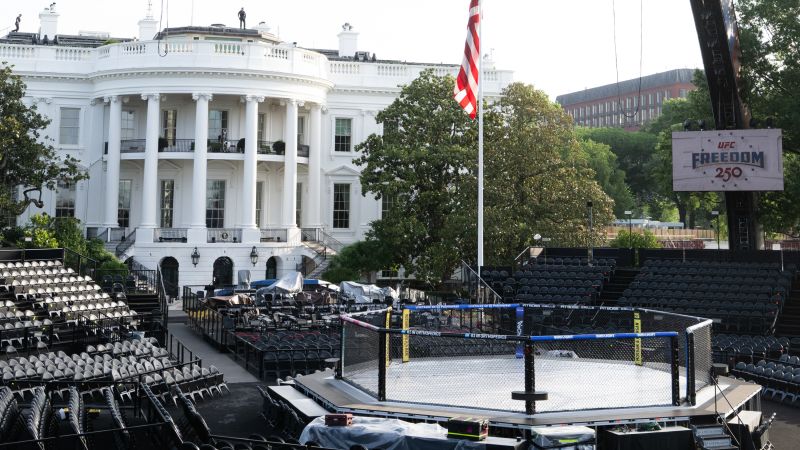
Trump’s vision for the event extended beyond the fight itself. The White House’s South Lawn would host a multiday celebration, including a Saturday fan festival on the Ellipse, a park south of the executive mansion. The octagon, a central feature of the UFC arena, now occupies much of the lawn, altering its traditional use. This transformation highlights Trump’s desire to blend political authority with cultural entertainment, a theme that has marked many of his initiatives since taking office.
Projects and Controversies
Trump’s personal projects have drawn both admiration and criticism. While he has overseen the construction of a massive ballroom and the planning of a new “triumphal arch,” these efforts have not always been well-received. A recent setback occurred when a federal judge ordered the removal of his name from the Kennedy Center, citing concerns over his use of public spaces. Despite this, Trump remains deeply involved in the planning and execution of his various undertakings, from the Oval Office to the Rose Garden.
Supporters argue that these projects, though costly, serve a purpose. The repainting of the Reflecting Pool and the reimagining of key White House areas are part of a broader effort to modernize the presidential residence. However, the public’s mixed reaction to these changes raises questions about their effectiveness. While some see them as a way to celebrate American heritage, others view them as a distraction from the administration’s core responsibilities.
The Spectacle at the Core
The UFC fight, with its estimated $60 million price tag, represents the culmination of Trump’s desire to create a singular, unforgettable moment. The event is expected to draw a large audience, with celebrities and political figures lining up to attend. Yet, as the president prepares to preside over the fights, the political utility of such a spectacle remains debatable. Some allies worry that it could reinforce perceptions of Trump as a leader more interested in personal flair than substantive governance.
Meanwhile, the fight’s timing is significant. It occurs during a period of declining approval ratings, with Trump facing criticism for his handling of domestic and international affairs. The event’s focus on American identity and the nation’s history may serve as a way to reframe his presidency, but it also risks overshadowing the challenges he has yet to address. As the president steps onto the stage, the question remains: Will the UFC fight be remembered as a bold stroke of genius, or as a symbol of the excesses that have defined his tenure?
In the end, the event’s success will depend on its ability to resonate with the public. While Trump’s supporters see it as a testament to his ability to command the spotlight, critics may view it as an indicator of his growing detachment from the issues that matter most to voters. As the nation’s 250th anniversary approaches, the White House fight could become a defining moment — one that either solidifies Trump’s legacy or exposes the cracks in his political foundation.
The White House, once a symbol of presidential gravitas, now appears to be a venue for entertainment. Trump’s decision to host the event reflects a broader trend of using high-profile gatherings to assert influence, even in the face of political headwinds. Whether this move will ultimately bolster his image or deepen his unpopularity remains to be seen, but one thing is certain: the president is determined to make his mark, no matter the cost.
