
Famed Magritte painting damaged by child with pine cone
Famed Magritte Painting Damaged by Child with Pine Cone
Famed Magritte painting damaged by child – During a recent visit to the Israel Museum in Jerusalem, a 5-year-old boy inadvertently caused damage to a renowned René Magritte artwork, the “Castle of the Pyrenees.” The incident, which occurred a few weeks ago, involved the child using a pine cone to interact with the 1959 painting, resulting in minor harm to the piece. Conservators at the museum are currently working to restore the artwork, which has been described as a “beloved highlight” of the institution’s collection. The museum’s spokesperson confirmed that the damage was unintentional, emphasizing that such occurrences are not uncommon in global museums.
A Beloved Artwork with a Rich History
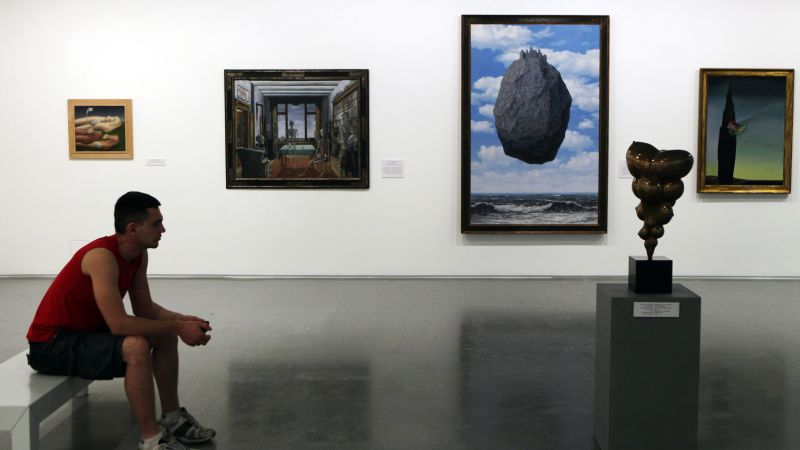
The “Castle of the Pyrenees” is a striking surrealistic piece that captures the essence of Magritte’s signature style—blending the mundane with the fantastical. The painting portrays a castle perched atop an immense rock, suspended above turbulent seas, creating a dreamlike scene that has captivated viewers for decades. It was commissioned by Harry Torczyner, a close friend and patron of the surrealist artist, to address an “ugly view” from a large window in his office. Torczyner later donated the work to the Israel Museum in 1985 as a tribute to the institution’s 20th anniversary.
“As one of our most-visited paintings, a five-year-old boy and his grandmother sought it out in our modern art galleries a few weeks ago, resulting in minor damage,” the museum spokesperson told CNN on Friday.
The spokesperson added that the damage was “inadvertently” caused, amounting to “an unfortunate incident that occasionally happens worldwide.” This remark highlights the delicate balance between allowing visitors to engage with art and protecting fragile masterpieces from accidental harm. While the “Castle of the Pyrenees” remains a cornerstone of the museum’s collection, the incident has sparked discussions about the measures needed to safeguard such iconic works.
A Precedent in Art History
The damage to the Magritte painting is not an isolated event. Last year, a similar incident occurred at the Museum Boijmans Van Beuningen in Rotterdam, where a child scratched a Mark Rothko piece titled “Grey, Orange on Maroon, No. 8.” This artwork, estimated to be worth millions, had to be temporarily removed for restoration. Now, it has been fully repaired and is featured in a major Rothko exhibition in Florence, Italy. Such incidents underscore the vulnerability of even the most celebrated artworks to human curiosity, particularly from young visitors.
“Our expert conservation team is already studying and repairing the work, and we look forward to returning this beloved collection highlight to the galleries as soon as possible,” the museum spokesperson said.
Magritte’s works, known for their enigmatic themes and whimsical imagery, often draw large crowds. The “Castle of the Pyrenees” is no exception, with its surreal depiction of a floating castle inspiring fascination and debate among art enthusiasts. The painting’s story gained further attention in 2022, when it was the focus of a dedicated exhibition exploring its provenance and significance. The audio recordings from that exhibition are still available on the museum’s website, offering insights into how Torczyner’s commission transformed a simple view into a timeless artistic vision.
Strategies for Preserving Art
Despite the efforts to protect artworks, accidents involving young visitors continue to challenge museum curators. The Israel Museum’s spokesperson noted that the institution constantly evaluates its approach to visitor access, striving to maintain a balance between immersive experiences and the necessity of protective barriers. This philosophy is evident in the museum’s design, which prioritizes both educational engagement and conservation standards.
Magritte’s influence on the surrealist movement remains profound, and his paintings frequently fetch astronomical prices at auction. In 2024, his 1954 work “L’empire des lumières” sold for a record $121 million at Christie’s in New York, setting a new benchmark for surrealist art. The “Castle of the Pyrenees,” though not as recently valued, holds a similar status as a cherished piece within the Israel Museum’s holdings. Its restoration will ensure it continues to inspire audiences for generations to come.
While the pine cone incident may seem minor, it serves as a reminder of the fragility of art and the unpredictable nature of human interaction with it. The museum’s response reflects a proactive stance, with conservators employing advanced techniques to repair the damage. These efforts are critical, as even slight alterations can impact the integrity and appearance of a masterpiece. The spokesperson also highlighted the importance of public education, suggesting that awareness campaigns could help mitigate future incidents.
Art and the Unintended Act
The incident has sparked conversations about the role of children in art history. While their actions can be playful, they can also leave lasting marks on cultural treasures. The “Castle of the Pyrenees” is now a symbol of both the beauty and the risks associated with public access to art. Visitors, especially young ones, are often drawn to visually striking pieces, and the painting’s dramatic imagery likely played a part in the child’s decision to interact with it.
“It is always evaluating this equilibrium,” the spokesperson said, referring to the museum’s ongoing efforts to enhance visitor experiences without compromising the preservation of its collections.
The museum’s approach to handling such incidents is part of a broader trend in the art world. Institutions worldwide are increasingly adopting measures like interactive barriers, signage, and guided tours to minimize accidental damage. However, these precautions do not eliminate the possibility of human error, especially when curiosity outpaces caution. The “Castle of the Pyrenees” incident is a case in point, illustrating how even a small gesture can create a ripple effect in the art community.
For the Israel Museum, the damage to the “Castle of the Pyrenees” is a temporary setback rather than a major concern. The painting’s historical and artistic value ensures its place in the collection, even after restoration. The incident also serves as a lighthearted reminder of the joy and spontaneity that visitors bring to museums, which often enrich the experience as much as the art itself. As the conservation team works to repair the damage, the museum remains optimistic about the piece’s return to the galleries.
Ultimately, the “Castle of the Pyrenees” represents not only the creative genius of René Magritte but also the enduring connection between art and its audience. While the pine cone may have left a mark on the canvas, it has also highlighted the importance of preserving such works for future generations. The museum’s commitment to balancing accessibility with protection ensures that the painting—and other masterpieces—will continue to inspire and educate visitors for years to come.
