
Man who killed Minnesota lawmaker and her husband pleads guilty to murder in federal case
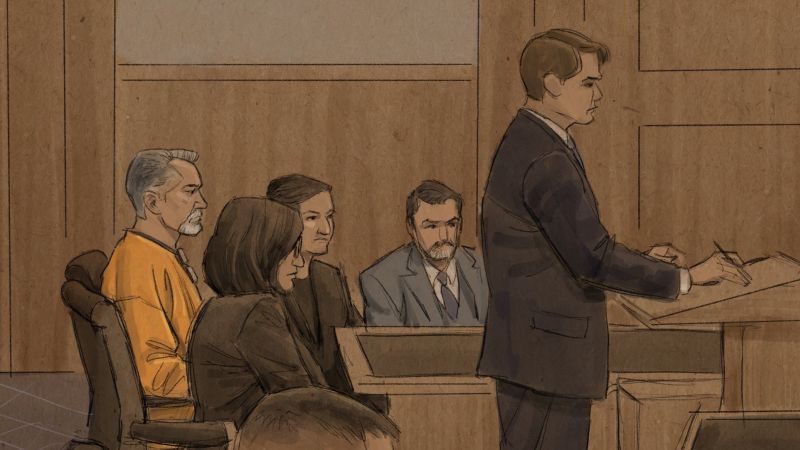
Man Who Killed Minnesota Lawmaker and Her Husband Pleads Guilty to Murder in Federal Case
Man who killed Minnesota lawmaker and her – Vance Boelter, a 58-year-old man accused of orchestrating the fatal shootings of a former Minnesota House Speaker and her husband, has entered a guilty plea in a federal court proceeding. The plea agreement, finalized Thursday in Minneapolis, marks a significant step in the legal process against Boelter, who is now set to face life imprisonment without the possibility of parole. This decision comes nearly a year after the violent attacks that left two prominent legislators dead and two others critically injured.
A Planned Attack and Disguised Identity
Boelter admitted in court that he meticulously planned the murders months prior to the incident. During the shootings, he donned a police uniform, including a tactical vest, a badge, and a silicone mask, to mimic an officer. His strategy involved targeting the lawmakers’ residences with a combination of deception and firepower, authorities revealed. The first incident occurred at the home of John Hoffman, a state senator, where Boelter arrived under the pretense of conducting a welfare check.
According to the family’s account, Hoffman’s adult daughter, Hope, was the one who called 911. She locked the door after Boelter claimed there had been a shooting. John Hoffman, who answered the door, was told by Boelter that shots had been fired. When Hoffman confirmed there were no weapons in the house, Boelter ordered the family to raise their hands and opened fire, wounding both John and his wife, Yvette. The pair survived after emergency surgery, but their ordeal was far from over.
Another Home, Another Tragedy
Hours later, Boelter moved to the suburb of Champlin, where he targeted the home of Mark and Melissa Hortman. Approaching the front door while dressed as a law enforcement officer, he shouted, “Police, welfare check!” When Mark Hortman opened the door, Boelter informed him of the gunfire. Hortman, who was asleep, responded with disbelief. Boelter then asked if anyone else was present, leading to a confrontation that ended in multiple gunshots. Melissa Hortman was shot point-blank in the head as she attempted to flee upstairs, an act that left the courtroom audience in tears.
Boelter’s detailed confession included how he had compiled a list of nearly 70 names, targeting individuals with political connections. The list, found in his vehicle along with three AK-47 rifles and a 9mm handgun, suggested a premeditated campaign of violence. His actions at the Hortman residence were described as methodical, with a clear intent to eliminate the couple. The evidence of his disguise and preparedness was critical in securing the federal plea deal.
Legal Consequences and Sentencing
Following the plea agreement, federal prosecutors recommended a sentence of two consecutive life terms plus an additional 40 years. Judge John R. Tunheim accepted the recommendation, stating he would schedule a formal sentencing hearing later this summer. This hearing will provide victims and their families the opportunity to address the court, a gesture intended to honor the impact of the crime.
“There is no justice for Mark and Melissa Hortman, and there is not justice when our family and our state will never truly heal,” the Hoffman family said in a statement after the hearing. “While the legal process may provide accountability, true healing requires something more from all of us.”
The plea agreement also reflects a strategic move by federal authorities to avoid the death penalty, which had been previously considered. Minnesota’s top federal prosecutor, Daniel Rosen, explained that Boelter’s willingness to accept the maximum prison term was the key factor in dropping the capital punishment option. “The truth is, when you have a defendant prepared to plead guilty to consecutive life terms plus 40 years to ensure he never sees freedom again, that was an opportunity we just couldn’t pass up,” Rosen said.
Manhunt and Capture
Boelter’s arrest followed a 43-hour search that spanned multiple locations and involved hundreds of law enforcement officers. The manhunt, described as the largest in Minnesota’s history, culminated in his capture near his home in Green Isle. Police tracked him down in a field, where they apprehended him just a mile from his residence. His ability to evade capture for nearly two days underscored the intensity of the threat he posed.
During the investigation, authorities noted that Boelter’s actions were not limited to the initial attacks. Between the incidents at the Hoffman and Hortman homes, he visited other residences, indicating a broader pattern of violence. His vehicle, which was recovered after the shootings, contained weapons that were later linked to the attacks. The discovery of these firearms and the hit list provided compelling evidence of his premeditated plans.
Impact and Public Reaction
The case has sparked widespread discussion about political violence and the safety of public figures. Melissa Hortman, a former House Speaker, was a prominent voice in Minnesota politics, and her death has left a void in the legislative landscape. The Hoffman family’s statement highlighted the emotional toll of the tragedy, emphasizing the need for both legal accountability and communal reconciliation.
Boelter’s admission of guilt has brought a sense of closure to the legal proceedings, but the families of the victims continue to seek justice. The court hearing in Minneapolis was attended by several members of Boelter’s family, as well as the Hoffmans, who stood in the gallery as the verdict was announced. The presence of the victims’ relatives added a poignant layer to the proceedings, reminding the audience of the human cost of the crimes.
As the formal sentencing approaches, the focus remains on the future of Boelter and the implications of his actions. The plea deal represents a compromise between the government and the defendant, with the hope that it will serve as a deterrent to others who might consider similar acts of violence. For the families of the victims, however, the plea is just one step toward finding peace in a state that has been deeply shaken by the incident.
A Political Shadow and Legal Strategy
Boelter’s choice to plead guilty to the most severe charges underscores the strategic considerations in federal sentencing. By accepting the maximum prison term, he eliminated the possibility of a death sentence, which would have required a jury trial and a higher burden of proof. The government’s decision to endorse this deal was final, as confirmed by Acting US Attorney General Todd Blanche in a court filing. The approval signaled a consensus among federal prosecutors and legal leaders on the severity of the crime.
While the legal outcome is set, the legacy of the case will endure. The attacks on two state lawmakers, one of whom was a former House Speaker, have prompted renewed scrutiny of security measures for political figures. Boelter’s ability to infiltrate homes under the guise of an officer has raised questions about how such threats can be prevented. His arrest and conviction, however, have provided a clear resolution to the immediate crisis, even if the emotional scars remain.
As the summer progresses, the formal sentencing hearing will serve as a platform for the victims’ families to share their stories. The hope is that this process will not only deliver justice but also highlight the need for vigilance in the face of political extremism. For now, Boelter’s guilty plea marks the end of a chapter that has left Minnesota’s political community reeling.
