
Several states are bowing out of Trump’s ‘Great American State Fair’
Several States Opting Out of Trump’s ‘Great American State Fair’
Several states are bowing out of Trump – President Donald Trump has promoted the “Great American State Fair” as a patriotic World’s Fair, envisioning a grand celebration of U.S. states and territories through elaborate pavilions. However, a growing number of states are withdrawing from the event, raising questions about its political neutrality. Oregon, Washington, and North Carolina have formally declined an invitation from the Trump administration to showcase their regions at the fair, which is set to open on June 25 and run for approximately two weeks. Pennsylvania remains undecided, with officials awaiting final decisions before committing. While some state representatives cited financial considerations as a primary factor, others highlighted concerns about the event’s ideological leanings.
Partisan Concerns Spark Withdrawals
A spokesperson for Oregon Governor Tina Kotek, a Democrat, emphasized that the state’s decision to withdraw was influenced by worries over the event’s political orientation. “The State of Oregon will not be participating in the Great American State Fair due to both the cost of participation and increasing concerns that the event in Washington D.C. is becoming more partisan than anticipated,” said Luke Harkin, the spokesperson. This sentiment echoes similar criticisms from other states, suggesting that the fair may be perceived as a platform for promoting Trump’s political agenda rather than a neutral celebration of national diversity.
Despite the withdrawals, organizers of the event have confirmed that all 50 states and territories will still be represented. “What we can say is that every state’s story will be told in a way that reflects its people, history, and culture,” said a Freedom 250 representative, adding that the fair will feature contributions from various entities, including state governments, tourism boards, and local organizations. The group has also highlighted the active finalization of event details, indicating that the plan is still evolving even as some states take a step back.
Controversies and Logistical Challenges
Freedom 250, the Trump-aligned nonprofit behind the fair and other 250th-anniversary events, has faced scrutiny over its influence on the celebration. The event has already encountered setbacks, such as the cancellation of an opening concert after artists withdrew due to political disagreements. Additionally, the administration has drawn criticism for a recent Ultimate Fighting Championship (UFC) event held at the White House, which Democrats argued diverted attention from efforts to reduce government costs.
Despite these challenges, Freedom 250 remains committed to showcasing the nation’s heritage. The group has released preliminary designs for pavilions, which reflect each state’s unique identity. For instance, South Carolina’s booth will feature a mini-golf course, while Texas plans a replica of the Alamo. Montana’s exhibit includes a fossil-digging station, and other states have proposed creative elements like augmented reality rodeo experiences for Wyoming and a mechanical milking cow in Michigan. Minnesota’s pavilion will offer visitors the chance to win prizes by selecting from a pond filled with miniature Common Loons, the state bird.
While the state participation is not guaranteed, the organizers insist that the fair will still be a comprehensive event. “Every single state has its own distinct identity, and we’re excited to collaborate with our neighbors to celebrate this milestone,” said Courtny Hinds, general manager of the Wyoming State Fair and lead for the state’s pavilion. Her remarks underscore the enthusiasm of some states, even as others question the event’s neutrality.
Costs and Funding Responsibilities
According to a source familiar with the planning process, the Trump-aligned group Freedom 250 has covered the construction costs of the fair’s booths and pavilions. However, participating states are responsible for funding the decorations for their tents. This arrangement has raised concerns about the financial burden on states, particularly those with limited budgets. A spokesperson for North Carolina’s 250 planning team noted that the state was invited but decided against participation due to the expenditures required.
Still, the event’s organizers are pushing forward with their vision. The fair will take place from June 25 through July 10, featuring a series of activities designed to engage the public. Among these are a scaled-down version of Trump’s proposed 250-foot “triumphal arch” and an 110-foot Ferris wheel. Additional attractions include movie screenings, musical performances, and military flyovers. These elements aim to create a lively atmosphere, though some critics worry they will overshadow the cultural and historical aspects of the event.
A Semiquincentennial of Trump’s Influence
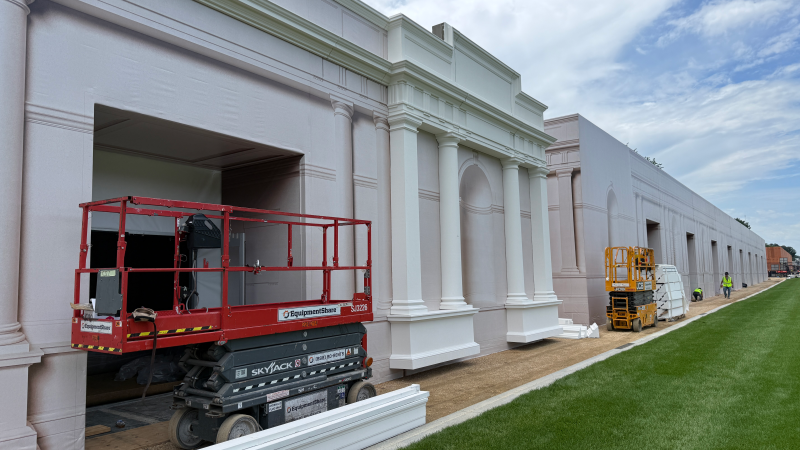
Trump’s involvement in the 250th-anniversary celebrations has been notable, with the fair serving as a key component of his broader efforts to mark the occasion. Since announcing his plans on the campaign trail in 2023, the event has evolved into a major showcase of American states and territories. The National Mall will be transformed into a vibrant hub, with large white tents adorned with neo-classical columns housing the pavilions. While the fair’s concept is rooted in celebrating national heritage, its execution has sparked debates about the extent of Trump’s political influence on the event.
As preparations continue, the fair’s success hinges on its ability to balance political messaging with public appeal. With some states distancing themselves from the administration, the event’s organizers must navigate these challenges while ensuring the fair remains a meaningful celebration of American diversity. Whether it will be seen as a triumph of national unity or a reflection of partisan divides remains to be seen, but the scale and creativity of the event suggest it will leave a lasting impression on visitors.
Designs Highlight State Identities
Freedom 250 has shared detailed renderings of the pavilions, each designed to reflect the unique characteristics of its respective state. Arizona’s booth, for example, will feature an immersive reproduction of Antelope Canyon’s wave-like sandstone walls, offering a visual tribute to the state’s natural wonders. In contrast, visitors to Michigan’s pavilion will encounter a mechanical milking cow, symbolizing the state’s agricultural heritage. Minnesota’s exhibit, meanwhile, includes an interactive pond where participants can win prizes by selecting from miniature Common Loons, the state’s official bird.
Wyoming’s pavilion stands out with its focus on augmented reality experiences, allowing attendees to simulate the state’s iconic rodeo culture. These designs not only showcase the states’ histories but also aim to engage the public in innovative ways. The organizers have emphasized that the fair will celebrate the contributions of all states, regardless of their participation in the political aspects of the event. This approach has been praised for its inclusivity, though it does not fully address the concerns raised by those who feel the event is being used to promote a specific political narrative.
As the fair approaches, the spotlight remains on its ability to unite the nation in celebration. With the participation of many states and the vibrant displays planned, the event has the potential to become a memorable part of the 250th-anniversary festivities. Yet, the withdrawal of some states and the ongoing controversies suggest that the fair may also serve as a reminder of the political divides that continue to shape the American landscape. The outcome of this event could have lasting implications for how the nation views its own history and unity in the years to come.
