
Iran’s media posts photos purportedly showing US bomb remains at destroyed water reservoir
Iranian Media Claims US Bomb Evidence at Water Reservoir
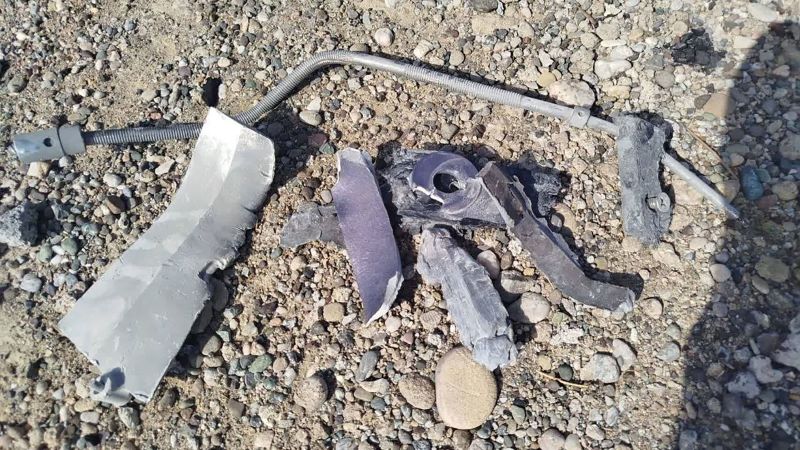
Iran s media posts photos purportedly – Iran’s media has released photographs allegedly displaying remnants of a US-made bomb at a water storage facility in southern Iran, sparking debate over the attack’s origin. The images, shared by Iran’s semi-official news agency Mehr, depict debris and explosive components believed to be from a GBU-39 series missile, a type commonly used in past conflicts. While the US military has not officially confirmed the weapon type, the visuals and satellite data support the possibility of American ordnance involvement. This incident marks a new development in the ongoing tensions between Iran and the United States, with the focus keyword “Iran s media posts photos” emerging as a key element in the narrative.
Geolocation and Independent Verification
The images of the damaged reservoir were initially analyzed by an independent researcher known as acceladealer, who used geolocation tools to identify the site in the Bamani district. CNN validated this location, though it could not independently verify the exact munition type. The visual evidence, paired with satellite imagery, highlights the strategic importance of the site and raises questions about the attack’s intent. Iran s media posts photos have been widely circulated, offering a clear view of the destruction and fueling speculation about its purpose.
Expert Consensus on Bomb Components
Experts in military ordnance, including Trevor Ball of the US Army’s explosive disposal team and N.R. Jenzen-Jones of Armament Research Services, confirmed the fragments match GBU-39 precision-guided bombs. These weapons, known for their accuracy, were frequently deployed during the Iraq War and are now part of Iran’s arsenal. Ball emphasized the damage pattern aligns with the impact of such a weapon, though the remote location of the site complicates the assessment of targeting precision. The presence of US-made components in the photos has intensified scrutiny over the attack’s attribution.
“The explosion’s footprint and debris match the signature of a GBU-39, which is a highly accurate weapon system,” Jenzen-Jones explained. “This suggests the attack was intentional, targeting the water storage facility specifically.”
Geopolitical Tensions and Strategic Targets
The strike appears to be linked to a broader US military operation following Iran’s downing of a US helicopter earlier in the week. However, the exact connection remains unclear, as the facility’s destruction may have been a secondary effect or a deliberate strike. US Central Command spokesperson Captain Timothy Hawkins acknowledged the reports but offered no further details, leaving room for interpretation. Iran s media posts photos have been used to underscore the vulnerability of regional infrastructure, with water systems often cited as strategic targets in past conflicts.
“This attack highlights the potential for critical infrastructure to be targeted in military operations,” said a regional analyst. “Water reservoirs are essential for civilian populations, making them valuable assets in both strategic and humanitarian contexts.”
Human Impact and Water Supply Crisis
Abdul Hamid Hamzehpour, CEO of Hormozgan Water and Wastewater Company, confirmed that two reservoirs in the Bamani district were struck by missiles. The smaller of the two, depicted in Iran s media posts photos, has a combined capacity of 2,500 cubic meters, serving at least 20,000 residents. The destruction threatens water access for thousands, raising concerns about the long-term effects on local communities. While the US has not claimed responsibility, the evidence points to a potential escalation in targeting civilian facilities.
Experts argue that the precision of the strike implies a calculated effort to disrupt Iran’s water supply, a tactic with significant humanitarian implications. The incident also reignites discussions about the Geneva Convention’s protections for essential infrastructure, which Iran s media posts photos now serve as a visual reminder of. As the situation unfolds, the focus keyword will remain central to understanding the event’s broader geopolitical context.
