
These drag queens have no time for culture wars
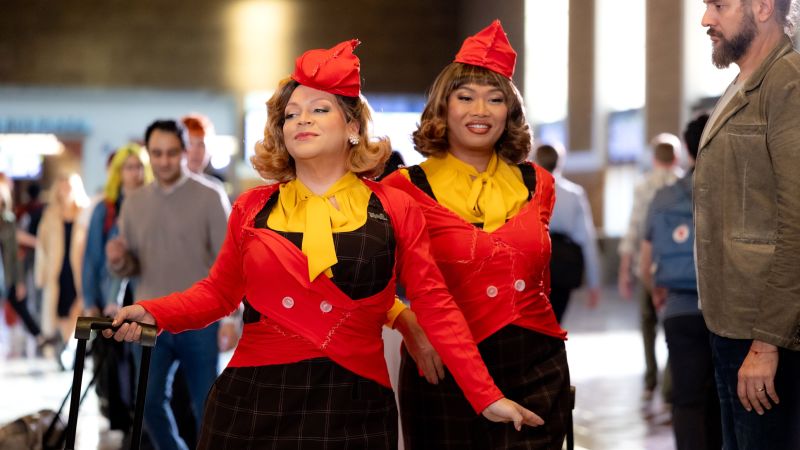
Drag Queens Ignite Laughter Amid Political Tensions
A Spoof That Defies Expectations
These drag queens have no time – When Adam Shankman embarked on a project to craft a comedic take on the disaster movie genre, he likely didn’t anticipate the cultural resonance his new film would achieve. Titled “Stop! That! Train!”, the movie, starring a cast of drag queens and set to debut this weekend, has become a surprising yet welcome antidote to the ongoing debates about drag culture. With its vibrant energy and over-the-top antics, the film manages to blend humor with heart, offering a refreshing escape from the weighty discussions surrounding LGBTQ+ representation.
“I made a kids movie, sort of,” Shankman remarked, “if it weren’t for the d**k jokes.”
Though the film’s R rating and risqué elements might suggest otherwise, Shankman insists it’s not aimed at younger viewers. The movie’s premise—a group of drag queens embroiled in a chaotic train adventure—calls for a lighthearted approach, but the presence of bold humor and absurd scenarios keeps the tone playful. From cheeky jokes about a conductor’s anatomy to a puppet’s drug-induced antics, the film leans into the whimsical and the silly, crafting a world where laughter is the primary currency.
The Appeal of a Mainstream Audience
Amid a climate where drag queens are frequently cast as symbols of cultural conflict, “Stop! That! Train!” stands out for its universal appeal. The movie’s reliance on physical comedy, puns, and visual gags—much like the classic parody films of the 1980s such as “Airplane!” and the “Naked Gun” series—ensures that it remains accessible to a broad demographic. Notably, it avoids tackling race or religion, and even refrains from making direct references to drag itself, which has sparked both praise and curiosity.
“The movie is, from a humor standpoint, as politically free as you can be, and I did that intentionally,” Shankman explained. “It’s a comedy-forward piece, and the drag artists in it are the most transgressive element.” By centering the narrative on the misadventures of Tess and DeeDee, two employees of the Stank Rail commuter train company, Shankman ensures that the film’s LGBTQ+ themes are woven seamlessly into the plot rather than foregrounded as a political statement. This subtle integration allows the story to resonate with both drag enthusiasts and mainstream viewers alike.
A Tale of Two Queens and a Stormaganza
The film follows Tess, portrayed by drag queen Ginger Minj, and DeeDee, played by Jujubee, as they navigate a cross-country journey aboard the luxurious Glamazonian Express after losing their jobs. Their mission: to explore the United States and see the “Dakotas—both Fanning and Johnson,” a reference that plays on the idea of seeking out iconic destinations while embracing the eccentricity of their identities. Along the way, they face challenges from demanding passengers and rival colleagues, all while dodging the impending “stormaganza” that threatens to derail their plans.
When the train’s brakes fail at the climax, the duo must rely on their quick thinking and the support of Judy Gagwell, a fictional president played by RuPaul, to save the day. The film’s blend of chaos and charm is evident in its over-the-top scenarios, such as a train crash that simultaneously destroys a nuclear power plant, a dog shelter, and a home belonging to actor Laurie Metcalf. These absurd elements underscore the movie’s commitment to pure entertainment, free from the constraints of real-world politics.
Cast and Production Highlights
Shot in just 19 days, “Stop! That! Train!” showcases a diverse array of talents, including cameos from Sarah Michelle Gellar, Nicole Richie, Jesse Tyler Ferguson, and Raven-Symoné. The rapid production schedule adds to the film’s energetic vibe, emphasizing its focus on spontaneity and fun. Despite the short filming window, the cast manages to deliver a cohesive and entertaining narrative that balances humor with a touch of heart.
One of the film’s most notable aspects is its embrace of camp, a style often associated with drag culture. “We’ve all seen these movies a million times,” Ginger Minj noted, “but there’s this undercurrent of drag that’s just sprinkled there. I think it’s easily accessible for a lot of people who aren’t familiar with drag.” This approach allows the film to feel both familiar and fresh, offering a parody that’s as much about the genre itself as it is about the performers who bring it to life.
Drag in Film: A Historical Perspective
Drag has been a part of film since its early days, with pioneers like Gilbert Sarony starring in a 1901 silent short titled “The Old Maid Having Her Picture Taken.” This early example, distributed by Thomas Edison’s company, highlights how drag has long been a tool for storytelling and humor. However, commercially successful films often use drag as a comedic device, typically featuring straight, cisgender male stars in cross-dressing roles.
Examples include 1959’s “Some Like It Hot,” 1982’s “Tootsie,” and 1993’s “Mrs. Doubtfire,” where drag serves as a plot device rather than a central theme. More recently, films like “The Adventures of Priscilla, Queen of the Desert” (1994) and “To Wong Foo, Thanks for Everything! Julie Newmar” (1995) have cast mostly straight actors in roles that explore LGBTQ+ identities. “Stop! That! Train!” breaks this mold by centering drag queens as the protagonists, a bold move that challenges traditional narratives while keeping the focus on humor.
Joe E. Jeffreys, a drag historian at the New York University Tisch School of the Arts, points out that such a shift is rare in mainstream cinema. “It’s unusual to see drag portrayed as a main character’s identity rather than a gimmick,” he said. The film’s success suggests that audiences are increasingly open to stories that celebrate drag without reducing it to a political symbol. Its blend of classic parody tropes with contemporary LGBTQ+ flair positions it as a unique entry in the comedy genre.
More Than Just a Disastrous Ride
While the film’s premise is rooted in disaster movie conventions, its execution offers a fresh perspective. The use of AI-generated special effects has also become a talking point, with some questioning whether the film’s visual flair was achieved through technology. Shankman has dismissed these claims, asserting that the effects were created using traditional methods. This debate adds another layer to the film’s cultural impact, highlighting how even the most basic elements of production can spark discussion.
Ultimately, “Stop! That! Train!” succeeds by prioritizing joy over controversy. Its humor, accessibility, and commitment to camp have made it a standout in a landscape often divided by political issues. By focusing on the escapades of its drag queen leads, the film not only entertains but also challenges the notion that drag must be a statement of defiance. Instead, it offers a celebration of diversity and fun, proving that comedy can transcend cultural divides and bring people together through shared laughter.
With its blend of slapstick, puns, and over-the-top scenarios, the movie is a testament to the versatility of drag as a storytelling medium. As it hits theaters this weekend, it invites audiences to experience the magic of a genre that has long been underestimated but now finds itself in the spotlight once again.
