
Why Colombia’s pro-Trump candidate was banned from wearing the national team jersey
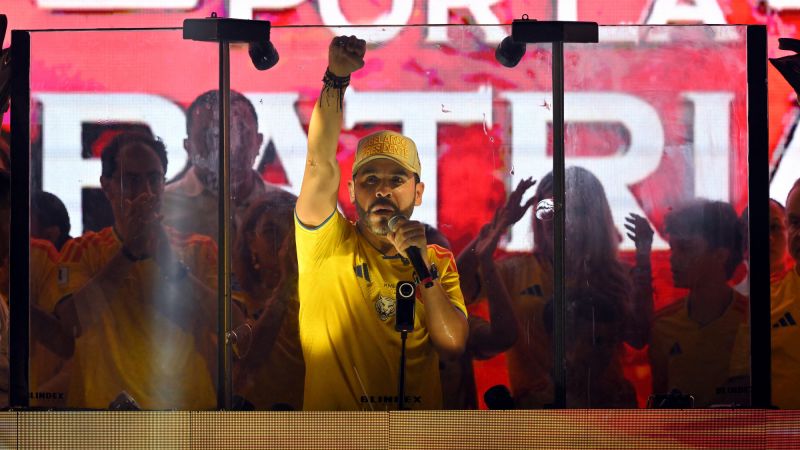
Colombia’s Pro-Trump Candidate Faces Jersey Ban Amid Election Drama
Why Colombia s pro Trump candidate – In a surprising twist, Colombia’s presidential runoff has collided with the national soccer team’s identity, sparking debates over the boundaries of political expression. The controversy centers on Abelardo de la Espriella, the right-wing candidate favored to win the election, who was recently barred from wearing the iconic bright yellow jersey of the Colombian national team. This ruling, issued by Judge Aura Forero in Bogota, has ignited discussions about the intersection of sports and politics in South America, where the soccer calendar often influences electoral timing.
The Jersey as a Political Tool
De la Espriella, a conservative nationalist, has been leveraging the national team’s jersey as a symbol of his campaign. For weeks, his supporters have worn the garment at rallies and shared it on social media, framing it as a gesture of unity and pride. To de la Espriella, the jersey represents more than just a sports item—it’s a national emblem, akin to the flag or the armed forces, that underscores his political vision. This approach has drawn both admiration and criticism, highlighting the power of sports in shaping public perception.
His use of the jersey became a focal point during the first round of voting on May 31. De la Espriella encouraged voters to don the national team’s attire at polling stations, effectively sidestepping rules that restrict campaigning on election day. Critics, including his leftist rival Ivan Cepeda, have decried this strategy as a manipulation of soccer’s cultural significance. They argue that the jersey should be a shared symbol for all Colombians, not a tool to favor one candidate over another.
From Brazil to Italy: A Regional Trend
The phenomenon of politicians using soccer jerseys is not unique to Colombia. Across Latin America, leaders have long embraced the garment as a way to connect with the public. Former Brazilian President Jair Bolsonaro, for instance, popularized the green and yellow Brazilian jersey, transforming it into a visual shorthand for his right-wing ideology. His opponent, Lula da Silva, also tapped into this tradition by associating himself with football icons like Ronaldo Fenômeno, creating a softer image before his political rise.
Even in Italy, where soccer is deeply intertwined with politics, Silvio Berlusconi—a pioneer of modern right-wing populism—built his influence through AC Milan. The club, which he owned from 1986 to 2017, became a platform for his political ambitions, with its dominance in the late 80s and early 90s cementing his status as a national figure. Similarly, in Venezuela, the Vinotinto jersey has been a political artifact, worn by both Nicolas Maduro and opposition leaders during campaigns. This widespread practice underscores how deeply soccer is embedded in the region’s political landscape.
The Ruling and Its Implications
On Thursday, Judge Aura Forero’s decision to ban de la Espriella from wearing the jersey in political contexts has added a new layer to the election’s narrative. The ruling states that his use of the garment “logically compromises the right to be equally used by the other presidential candidate and his supporters.” By associating the jersey with his candidacy, de la Espriella has allegedly tilted its symbolic value toward his campaign, according to the court.
“De la Espriella’s use of the jersey is being skewed in favor of his candidacy and political party,” the court’s statement reads.
This ban has raised questions about the fairness of the electoral process. While de la Espriella’s supporters argue it’s an infringement on personal freedoms, others see it as a necessary step to ensure impartiality. The timing of the ban, just days before the June 21 runoff, has further complicated matters, as the World Cup is set to take center stage. Colombia’s team will face Uzbekistan and Congo in matches scheduled around the election, creating a natural link between the national pride of soccer and the political stakes of the vote.
A Political Symbol with a Long History
Historically, soccer jerseys have served as powerful tools for political messaging. In Colombia, the bright yellow attire has been worn by politicians across the spectrum, from leftists to rightists, to rally support. This week, social media buzzed with images of leaders from past elections sporting the jersey, reigniting debates about its role in public engagement. Even the current president, Gustavo Petro, was seen wearing the national team’s garment at a farewell event, suggesting the jersey’s appeal transcends party lines.
However, the recent ban has introduced a new dynamic. While Petro’s choice was not tied to a political event, it highlights how the jersey’s presence in public spaces can blur the lines between sports and politics. The case of de la Espriella, who received over 10 million votes in the first round, underscores the potential for such symbols to sway voter sentiment. His supporters are now pushing back against the ruling, with some calling for a “flag-day” on Saturday to continue their campaign.
Can a Jersey Really Influence the Outcome?
The ruling has sparked a broader conversation about the role of national symbols in elections. De la Espriella claims the ban is an attack on personal freedoms, arguing that the jersey is a legitimate representation of his platform. Yet, opponents maintain that its use for political purposes risks diminishing its universal appeal. The debate reflects a deeper tension: can a piece of clothing, steeped in cultural pride, remain impartial when worn by a candidate?
With the World Cup and the presidential runoff converging, the stakes have never been higher. The Colombian police face the daunting task of enforcing the ban while managing the fervor of a nation excited about its soccer team’s performance. De la Espriella’s defiance could set a precedent, proving that sports and politics are inextricably linked in the region. As the election day approaches, the jersey remains a battleground for identity, loyalty, and the quest for public favor.
The case also raises questions about the influence of sports on democratic processes. In a country where soccer is more than a game—it’s a religion—candidates naturally turn to the sport for connection. But when the line between national pride and political propaganda blurs, it challenges the integrity of the electoral system. Whether de la Espriella’s ban is a fair measure or a symbolic move to stifle his campaign will likely be debated for years to come.
As the polls close on June 21, the jersey’s fate will serve as a microcosm of the broader struggle between sports and politics. The national team’s success on the field may bolster de la Espriella’s image, while the courtroom’s decision could shape his strategy in the runoff. In a region where leaders have long used sports to bridge the gap between the people and power, the outcome of this dispute will have lasting implications for how campaigns are conducted in the future.
A Region Shaped by Soccer and Politics
From the stands of football stadiums to the halls of government, soccer has been a constant in Latin American politics. The jersey, once a simple piece of clothing, now carries the weight of ideological battles. In countries like Brazil, Italy, and Venezuela, the garment has been used to build alliances, promote agendas, and even challenge authority. For Colombia, the issue is no less significant, as the nation grapples with the symbolism of its World Cup hopes and the political ambitions of its candidates.
As the runoff looms, the tension between the two sides—those who see the jersey as a unifying force and those who view it as a partisan tool—will intensify. The ruling may not stop de la Espriella’s supporters, who are determined to keep the jersey in the spotlight. Whether they succeed or not, the episode has already cemented soccer’s role as a powerful, if controversial, element in the political arena.
