
East Asia’s tallest tree is the ‘Heaven Sword,’ an environmental guardian
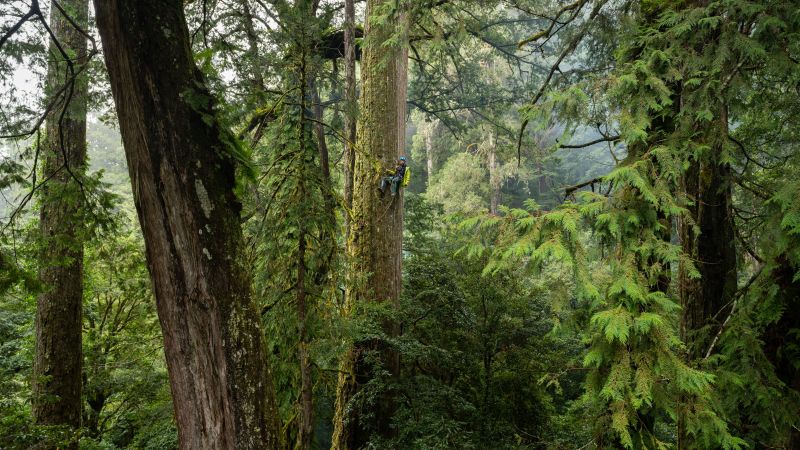
East Asia’s Tallest Tree Discovered as ‘Heaven Sword’ in Taiwan’s Remote Valley
East Asia s tallest tree is – In a remote valley nestled near Taiwan’s longest river, scientists on a mission have uncovered what may be the island’s tallest known tree. Dubbed the ‘Heaven Sword of the Da’an River’ by the research team, this colossal fir—Taiwania cryptomerioides—has captured attention for its staggering height of 84.1 meters (276 feet). The find, which took researchers over a decade to confirm, highlights the enduring mystery of towering flora in one of East Asia’s most biodiverse regions.
A Name Rooted in Myth and Science
The team’s choice of the name ‘Heaven Sword’ draws inspiration from a legendary weapon in Jin Yong’s martial arts novels, symbolizing both power and reverence. This moniker, however, is not just symbolic; it reflects the tree’s significance as a natural landmark. The Indigenous Rukai people, who have lived in Taiwan’s southern mountains for generations, refer to the species as ‘the tree that hits the moon,’ a phrase that underscores its ethereal height and cultural importance.
The quest to locate the Taiwania fir began over a decade ago, driven by a growing interest in documenting the island’s towering vegetation. While the world’s tallest living tree, Hyperion, a coast redwood in California’s Redwood National Park, stands at 116 meters (381.3 feet), the ‘Heaven Sword’ rivals it in both size and ecological value. Taiwan’s rugged topography, which includes steep cliffs and dense forests, has long shielded these ancient giants from human interference, allowing them to thrive in relative isolation.
Combining Technology and Tradition to Measure the Unmeasurable
Initially, the team relied on aerial scanning and remote-sensing technology to track potential candidates. Partnering with experts from Taiwan’s National Cheng Kung University, they employed lidar—light detection and ranging—to map the terrain and analyze tree heights. This method, which uses laser pulses to create detailed 3D models, was instrumental in identifying the tallest specimens. However, the process revealed unexpected challenges.
Lidar’s precision was tested when researchers discovered that the island’s uneven landscape could distort measurements. Steep slopes and towering canopies sometimes made the technology overestimate tree heights, creating confusion. To address this, the team invited citizen scientists in 2020 to review the data. Their input was critical, as it showed that 93% of the trees had been inaccurately tallied, saving the researchers from countless unnecessary climbs.
Ultimately, the ‘Heaven Sword’ was confirmed through a classic approach: sending a professional tree climber to the site and measuring its height directly from the summit. This method, though labor-intensive, provided the definitive proof needed to validate the tree’s status. The discovery underscores the importance of blending modern tools with traditional fieldwork to achieve accurate results.
Environmental Factors Shaping Giant Trees in Taiwan
Dr. Rebecca Chia-Chun Hsu, lead author of the study and assistant researcher at the Taiwan Forestry Research Institute, explained that Taiwan’s unique climate and geography are key to sustaining such massive trees. The region’s abundant rainfall and stable environmental conditions have created a rare ecosystem where ancient, towering flora can grow unimpeded for centuries. This is particularly evident in the island’s protected forests, which now serve as sanctuaries for these natural giants.
Despite this natural resilience, Taiwan’s forests have not been immune to human impact. Industrial logging between 1912 and 1991 stripped vast areas of their ancient canopy, leaving behind fragmented ecosystems. However, the island’s steep terrain provided a safeguard, ensuring that many of the oldest trees remained untouched. Today, these remnants are preserved in conservation areas, offering a glimpse into the past and a promise for the future.
The journey to measure the ‘Heaven Sword’ was not without its obstacles. The team’s expeditions often required days of hiking to reach isolated sites, where they could study the trees in their natural setting. Members of Indigenous communities, who have long been stewards of the land, played a vital role in guiding the researchers. Their local knowledge complemented the scientific methods, creating a collaborative approach that enriched the discovery process.
From ‘The Three Sisters’ to the ‘Heaven Sword’
The team’s initial focus was on ‘The Three Sisters,’ a trio of Taiwania firs in the expansive Cilan conservation area. This project, launched 12 years ago, sparked a broader initiative to document all of Taiwan’s tallest trees. Hsu’s involvement in a conference where lidar experts shared their challenges led to the formation of the group, which now includes professional climbers, ecologists, geologists, and remote-sensing specialists.
“The common characteristics are probably that we are all tree lovers and like adventures,” Hsu remarked, highlighting the shared passion that drives the team’s work. Their approach has evolved from relying on remote data to incorporating on-the-ground verification. This hybrid strategy not only improves accuracy but also sets a precedent for studying large trees globally.
The ‘Heaven Sword’ stands as a testament to the power of persistence and innovation. Its discovery has implications beyond mere record-breaking; it emphasizes the need for conservation in the face of climate change. By identifying and protecting these towering specimens, researchers hope to safeguard biodiversity and preserve the natural heritage of Taiwan’s forests for future generations.
Advancing Conservation Through Collaborative Efforts
Experts believe the methods developed by the Taiwan tree seekers could revolutionize large-scale tree monitoring. Lidar technology, combined with citizen science and field verification, offers a scalable solution for tracking biodiversity in complex landscapes. Hsu stressed that such efforts are crucial for understanding how environmental factors influence tree growth and for developing strategies to mitigate climate risks.
As the team continues its work, they remain committed to uncovering more of Taiwan’s hidden natural treasures. The ‘Heaven Sword’ is not just a tree—it is a symbol of the intersection between science, culture, and nature. Its towering presence reminds us of the delicate balance required to protect Earth’s most remarkable ecosystems.
