
Trump administration puts in writing to courts that the $1.8B ‘anti-weaponization’ fund is dead
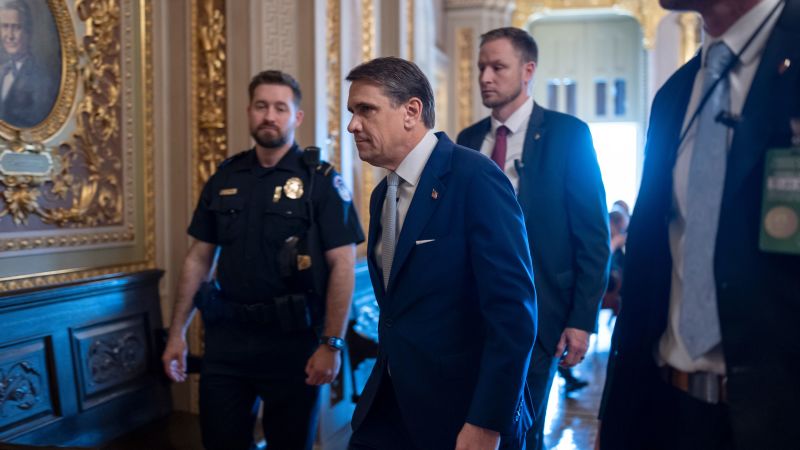
Trump Administration Confirms $1.8 Billion ‘Anti-Weaponization’ Fund Is No Longer Active
Trump administration puts in writing to courts – In a significant legal development, the Department of Justice (DOJ) has formally notified two federal judges that the $1.8 billion “anti-weaponization” fund, proposed by the Trump administration, is effectively terminated. This declaration, made in recent filings, marks the first time the administration has explicitly stated its decision to abandon the initiative. The move comes as part of ongoing litigation, where multiple parties had contested the program’s legality, arguing it could be used as a slush fund to support Trump allies. Acting Attorney General Todd Blanche had previously signaled the program’s end, but the DOJ’s written confirmation now solidifies its fate.
Senate Republicans’ Mixed Response
Despite bipartisan concerns about the fund’s potential to funnel resources to Trump supporters, Senate Republicans had rejected several attempts to formally kill the program. The repeated legislative pushbacks, however, were met with criticism from lawmakers who worried the fund lacked sufficient safeguards. Some members, including influential Republicans, emphasized the need for clearer rules to prevent misuse, particularly during the chaotic events of January 6, 2021, when rioters stormed the U.S. Capitol. Critics feared the administration might use the fund to compensate individuals involved in the attack, including those who targeted law enforcement.
Yet, the administration’s decision to abandon the fund has sparked division within the GOP. After hours of deliberation, key Republican leaders managed to secure passage of an immigration funding bill, which was advanced without explicitly terminating the anti-weaponization fund. This compromise allowed the bill to move forward, though the absence of a formal kill provision left some lawmakers uneasy. Only one Republican, Alaska Senator Lisa Murkowski, voted against the final bill, highlighting the internal debate over the program’s future.
Federal Judge’s Earlier Intervention
Before the DOJ’s official announcement, a federal judge in Virginia had already halted the fund’s operations. The ruling, issued last week, temporarily blocked the administration from taking steps to establish the program and prevented any disbursements from it. However, this decision was described as technical, focusing on procedural aspects rather than the program’s core legality. The judge’s action was intended to give the court time to evaluate a broader lawsuit aiming to dismantle the fund entirely.
Now, with the DOJ’s new filings, the argument has shifted. The department asserted that the fund is no longer a viable target for legal challenges, stating that the cases brought against it are “moot.” In submissions to judges in Washington, D.C., and Virginia, DOJ attorneys cited Blanche’s earlier comments as evidence of the administration’s commitment to ending the program. They argued that the fund’s demise means the plaintiffs’ claims lack a concrete basis for continued litigation, as the program no longer exists to cause harm.
DOJ’s Legal Rationale
DOJ lawyers emphasized that the fund’s abandonment removes the need for courts to intervene, calling the legal battle a “political process” that has already concluded. They defended the program’s use in public debate, noting that the push-and-pull of such discussions is a hallmark of the U.S. constitutional system. “The equities and the public interest do not favor this court interjecting itself in a political process to shut down a fund that is already not going forward,” the DOJ wrote in its filing to U.S. District Judge Leonie Brinkema in Alexandria, Virginia.
One of the central arguments in the DOJ’s defense was the plaintiffs’ lack of standing to challenge the fund. The department claimed that the challengers had not demonstrated a direct harm caused by the program, as it was no longer operational. In a specific case brought by individuals and groups alleging they were targeted by the Trump administration, the DOJ contended that the plaintiffs misinterpreted the settlement agreement that created the fund. “Plaintiffs’ requested relief—shutting down the non-existent Fund—would not remedy their claimed injury (exclusion from the non-existent Fund),” the DOJ stated. “It would leave them in the exact same position they claimed to be in when they filed their complaint.”
Trump’s Uncertain Stance
Meanwhile, President Donald Trump has not provided a definitive answer on the fund’s future. A day after Blanche confirmed its termination to lawmakers, Trump expressed hesitation, stating he would need to consult with legal advisors to determine its status. “I’d have to ask the lawyers, I don’t know,” he said when questioned about whether the fund was fully dead or merely paused. His comments have contributed to ongoing confusion, with some observers questioning if the program might be revived later.
Trump’s mixed signals have further complicated the situation. While he praised the fund as a “beautiful thing” during a recent interview, his administration’s formal abandonment suggests a more pragmatic approach. The DOJ’s filings, however, have been interpreted as a clear end to the initiative, with the department arguing that the fund’s existence is no longer a factor in the legal cases. This has led to speculation about the program’s fate, with some lawmakers and analysts suggesting it may be a casualty of political maneuvering rather than a deliberate policy choice.
Broader Implications and Public Reaction
The decision to end the fund has drawn mixed reactions from the public and political figures. Supporters argue that it was a necessary step to prevent potential misuse, while critics contend that the administration delayed its shutdown to avoid immediate backlash. The program’s name—“anti-weaponization”—was intended to signal its purpose of countering the use of taxpayer money to support Trump’s political agenda, but its implementation faced scrutiny from the outset.
Blanche’s role in the fund’s demise has been pivotal. His public commitment to ending the program, including his Tuesday statement to House lawmakers that the Justice Department would “not be moving forward with the fund, period,” has bolstered the administration’s legal position. Democratic Representative Grace Meng, however, pressed him for clarification, asking, “Not moving forward, ever?” To which Blanche replied, “Correct.” This exchange underscored the political sensitivity surrounding the fund, with some lawmakers wary of its potential to influence future policy decisions.
As the legal and political debates surrounding the fund conclude, the focus now turns to its impact on the broader legislative agenda. While the immigration bill has passed, the absence of a formal kill provision means the anti-weaponization fund’s fate remains open for now. For now, the DOJ’s argument that the program is dead stands, but the administration’s lack of certainty about its future has left room for further discussion and possible revival. The fund’s legacy, however, will be defined by its role in the ongoing conflict between executive action and judicial oversight in shaping policy priorities.
“The push-and-pull of such debate is a feature of our constitutional republic.”
As the administration moves forward, the question remains: Will the fund’s end mark a permanent shift, or is it merely a pause in a larger political strategy? For now, the DOJ’s written confirmation suggests the former, but the uncertainty surrounding Trump’s final stance leaves room for future developments.
