
Ukraine’s deadly strikes are bringing the war home to Russians, and discontent is bubbling up
Ukraine’s Strikes Shift War’s Impact Closer to Russian Hearts
Ukraine s deadly strikes are bringing – For years, the Russian war in Ukraine has been a distant conflict for many citizens of major cities. However, a recent surge in long-range attacks has begun to bring the war’s effects into their daily lives. Residents in urban centers like Moscow and St. Petersburg, once insulated from the frontlines, now face the unsettling reality of being targeted by Ukrainian drones. These strikes, which have escalated in scale and precision, are not only shaking the physical landscape but also stirring quiet unrest among the population.
Personal Accounts of Escalating Threat
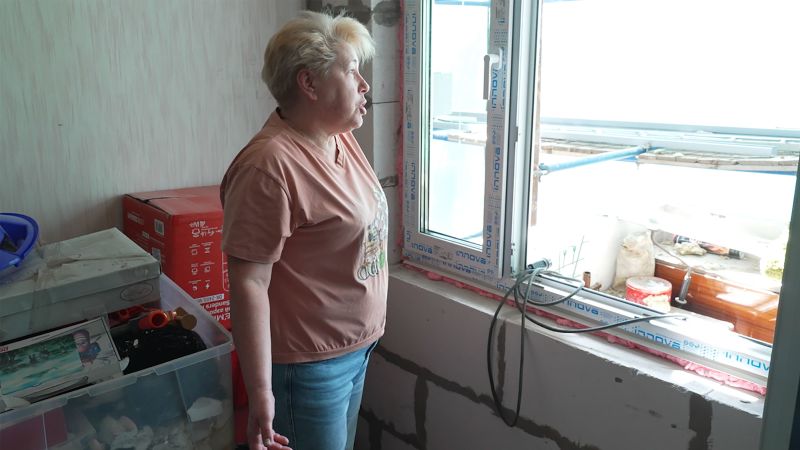
Elena Vladimirovna, a 56-year-old mother from the Moscow region, recounted the harrowing experience of a drone strike that shattered her apartment’s tranquility. Around 4 a.m., the sound of buzzing drones pierced the night, prompting her to look out her window. Though the initial noise subsided, a sudden explosion near her balcony marked the true danger. “The drone landed on the canopy beneath our balcony, then it erupted into flames,” she described, her voice steady but tinged with fear. The resulting fire forced her and her son to battle the blaze with buckets of water, only to be alerted by a second explosion that signaled the need to flee.
“It was impossible to sleep. The buzzing was so loud, I was scared our apartment building could be hit in some way,”
her neighbor added, emphasizing the psychological toll of the strikes. Despite knowing the targets were likely military sites, the sense of vulnerability lingered. This incident, part of a broader wave of attacks, has exposed a growing fear among Russians that the war’s frontlines are no longer confined to Ukraine’s borders.
A Changing Dynamic of the War
The conflict, now in its fifth year, has seen Ukraine shift from defensive to offensive tactics. With the ability to strike deep into Russian territory, the war has moved closer to the heart of the nation. This change is evident in the recent strikes on the Moscow region, where over 500 drones were deployed in a single day. According to Russian officials, at least three people were killed in these attacks, though many others faced property damage and fear of further strikes.
As the war intensifies, so do its repercussions. Fuel shortages, a direct result of Ukrainian strikes on oil refineries, have created a new layer of hardship. In Crimea, drivers have had to ration gasoline, with reports of long lines and limited supplies. These economic strains, combined with restrictions on internet access and popular messaging apps, are amplifying a sense of frustration that is increasingly visible in public sentiment.
Discontent in the Shadow of the Kremlin
St. Petersburg, the second-largest city in Russia and the hometown of President Vladimir Putin, became a focal point of these strikes. Ukrainian drones descended on the city hours before the start of the Kremlin’s flagship economic forum, SPIEF, casting a dark cloud over the event. The sight of smoke-filled skies greeted thousands of attendees, symbolizing the growing reach of the conflict. The next day, another attack forced residents to remain indoors, underscoring the vulnerability of even the most urbanized areas.
A resident of Kronstadt, a port city near St. Petersburg, described the tremors and sounds of drones that disrupted her sleep. “The walls of our home were shaking from 3 a.m., and the buzzing was constant,” she said, highlighting the pervasive anxiety. While she understood the strategic intent behind the attacks, the immediate fear of being hit kept her on edge. This personal account reflects a broader shift in perception: for many Russians, the war is no longer a distant event but an encroaching reality.
Historical Context and Strategic Impact
Kronstadt, founded in the early 18th century as a maritime defense post, now stands as a symbol of the war’s reach. Its location on Kotlin Island, just 19 miles from St. Petersburg, makes it a critical target for Ukrainian forces aiming to strike deep into Russian territory. The repeated attacks in May have not only damaged infrastructure but also challenged the narrative of Moscow’s invincibility.
President Volodymyr Zelensky framed these strikes as a necessary response to the war’s continuation. “This time, Ukraine’s long-range strikes have reached the Moscow region, and we are sending a clear message to the Russians: their government must end this war,” he asserted. His words resonate with those who feel the burden of the conflict is being unfairly distributed. For Elena, surviving the attack was a miracle, but the aftermath—a gaping hole in the wall and unfinished repairs—reminds her of the war’s growing proximity.
Public Sentiment and the Social Contract
Experts suggest that the Kremlin’s ability to maintain public support has been tested. Alexandra Arkhipova, a social anthropologist at the Paris-based École Normale Supérieure, noted that a fragile social agreement had developed between the government and urban residents. “The authorities appeared to be sending a message that ‘there is no war for you, dear Muscovites,’” she explained, citing how the war has been framed as a distant threat for those not directly affected. Yet, the recent strikes are beginning to erode this illusion, leaving Russians to grapple with the war’s impact in a way that was previously unthinkable.
While the violence may feel distant for Elena and others in Moscow, the psychological effects are undeniable. The strikes have forced a reckoning with the war’s cost, even as economic pressures mount. The combination of physical damage, fuel scarcity, and state surveillance has created a perfect storm of discontent. As the conflict evolves, the question remains: how long can Russians maintain their current stance when the war’s consequences are no longer confined to the battlefield?
The ongoing strikes mark a turning point in the war’s narrative. For the first time, the war is reaching the heart of Russia, challenging the perception of safety that has been maintained in major cities. This shift is not just a military maneuver but a psychological one, as the war’s reach extends beyond the frontlines into the homes and lives of Russians. The impact of these strikes is clear: the war is no longer a distant conflict but an ever-present reality, and the people of Russia are beginning to feel its weight more acutely.
As the conflict drags on, the strain on Russian society continues to grow. The combination of military strikes, economic challenges, and information controls is creating a new form of tension. For many, the war’s effects are no longer just in the headlines but in their daily lives, shaping the way they view their government and the future of the conflict. The strikes have done more than cause damage—they have ignited a quiet but growing sense of unease that may soon demand louder responses.
