
Justice Department rushes to defense of Chicago US attorney after weeks of turmoil
Justice Department’s Rapid Support for Chicago US Attorney Amid Ongoing Challenges
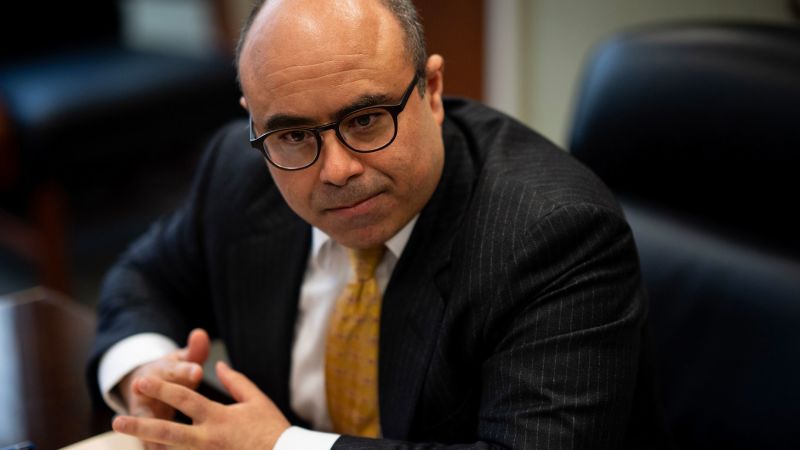
Justice Department rushes to defense of Chicago – Two weeks of upheaval have shaken the US Attorney’s Office in Chicago, prompting a swift public endorsement from the acting attorney general, Todd Blanche, for its leader, Andrew Boutros. The controversy surrounding Boutros, a former line prosecutor turned defense attorney, has intensified as his office faces scrutiny over its handling of a high-profile case involving a group of Democratic politicians and activists dubbed the Broadview Six. This situation has not only tested Boutros’ leadership but also exposed tensions within the city’s legal community, where his career has been marked by both acclaim and controversy.
Boutros, who has navigated the complex legal landscape of Chicago for years, has long been associated with a reputation for diligence and strategic acumen. However, recent weeks have seen his office under fire for alleged missteps in the investigation of the Broadview Six—a collective of figures linked to Democratic Party interests. The case, which initially focused on charges of obstructing federal officers, gained national attention when it was revealed that Boutros’ team was also overseeing a contentious probe into E. Jean Carroll, a prominent critic of President Donald Trump and his accuser in a sexual assault case. This dual scrutiny has amplified doubts about the office’s impartiality and transparency.
Blanche’s public defense of Boutros has come at a critical juncture, coinciding with the president’s announcement of his nomination for the role. In a social media post on X, Blanche emphasized the Department’s backing for Boutros’ efforts to address key issues such as violent crime, drug trafficking, immigration violations, and fraud. “This Department fully supports U.S. Attorney Boutros and his efforts to combat violent crime, drug trafficking, immigration violations, and fraud, and we look forward to more great work from his office,” Blanche wrote, underscoring the political stakes involved.
“We have fixed — and continue to fix — an Office I inherited in April 2025 that was doing less than even the bare minimum, as widely reported in the press at that time,” Boutros stated in his own X post, reflecting on the challenges he faced upon taking charge. He also expressed gratitude to colleagues who had stood by him, contrasting their support with what he described as efforts to undermine the office through political maneuvering.
Boutros’ response highlighted a growing perception that his work has been targeted by external forces. While he had previously been seen as a nonpartisan figure in mainstream law firms, his association with the Trump administration has drawn criticism from legal experts and defense attorneys. Some argue that his office’s handling of the Broadview Six case reflects a broader pattern of politicization within the Justice Department, particularly in its pursuit of charges against political adversaries.
The Broadview Six case has become a focal point of debate, with court proceedings accelerating as a judge investigates the grand jury process. The scandal erupted two weeks ago when it was revealed that the grand jury had approved indictments for several politicians arrested in September for impeding federal officers at an Immigration and Customs Enforcement detention center in Broadview, Illinois. Now, the inquiry seeks to determine whether the grand jury’s decisions were influenced by political pressures or procedural lapses.
Defense attorneys for the Broadview Six have accused the Justice Department of adopting a cavalier approach, suggesting that the indictments were politically motivated. Chris Parente, representing defendant Brian Straw—a local elected official—pointed to the broader implications of the case. “What’s come to light in Chicago raises concerns about how the Justice Department has secured indictments in other high-priority cases against Trump’s foes,” Parente said, citing examples like the investigations into former FBI director James Comey and other critics of the president.
Boutros’ office has been criticized for its handling of the Broadview Six case, which defense lawyers claim demonstrates a lack of rigor and a tendency to prioritize political goals over legal standards. The case has also drawn attention to the role of grand juries in shaping the Justice Department’s strategy, with some accusing the agency of exploiting their independence to advance its agenda. Blanche, however, has defended the department’s actions, insisting that grand juries operate with the autonomy necessary to ensure impartiality.
Despite the support from Blanche and the administration, the crisis within the Chicago US Attorney’s Office shows no signs of abating. The acting attorney general’s intervention has not fully quelled concerns about the office’s stability, nor has it halted a judge’s inquiry into its conduct. Legal analysts suggest that the Broadview Six scandal may serve as a catalyst for deeper scrutiny of the Justice Department’s practices, particularly in cases involving prominent political figures.
Meanwhile, the political dynamics within the legal community have come to the forefront. Boutros, who once thrived in traditional law firms, now finds himself at the center of a high-stakes battle between institutional integrity and partisan influence. His colleagues in Chicago, including prosecutors and defense attorneys, have expressed mixed reactions to the recent developments, with some acknowledging the challenges he faces and others questioning his ability to navigate the political landscape.
As the investigation into the Broadview Six case continues, the broader implications for the Justice Department’s reputation remain a topic of discussion. Critics argue that the department’s focus on politically expedient charges has eroded public trust, while supporters maintain that Boutros’ leadership is essential in maintaining the fight against organized crime and corruption. The upcoming court proceedings will likely determine whether the Chicago office can recover from its current turmoil or if its methods have permanently tarnished its legacy.
Blanche’s endorsement has also drawn scrutiny from those who view it as a strategic move to shield the department from backlash. Parente and other defense attorneys have highlighted how the acting attorney general has used the grand jury’s secrecy to deflect criticism. “Blanche is telling everyone, ‘Don’t worry about the grand jury indictments of Comey, Don Lemon, and the Southern Poverty Law Center,’” Parente remarked, illustrating the tension between the department’s public narrative and the evidence emerging from the case.
With the political climate in flux, the Chicago US Attorney’s Office stands at a crossroads. The support from Blanche has provided a temporary lifeline for Boutros, but the long-term viability of the office may depend on its ability to address the underlying issues that have sparked the current crisis. As the judge’s inquiry unfolds, the focus will remain on whether the grand jury process was manipulated to serve political ends, and how this reflects the Justice Department’s commitment to fairness and independence in its prosecutions.
The controversy underscores a larger debate about the role of the Justice Department in the Trump era. While some defend its actions as necessary to combat corruption, others see them as an extension of the president’s broader political strategy. For Boutros, the challenge is to prove that his office can operate effectively in a landscape where political influence and legal integrity are often at odds. As the case progresses, the outcome may shape the future of the US Attorney’s Office in Chicago—and the perception of the Justice Department nationwide.
