
How Villanova shaped the New York Knicks’ dominant run to the NBA Finals
How Villanova Shaped the New York Knicks’ Dominant Run to the NBA Finals
The Unlikely Path to Glory
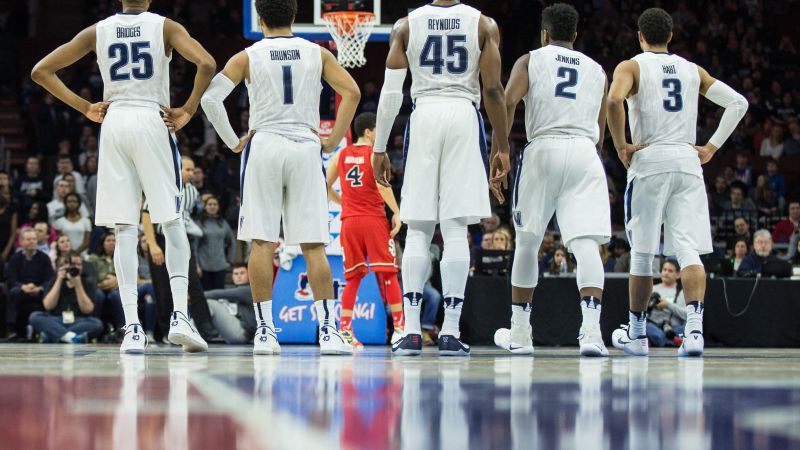
How Villanova shaped the New York – As the final buzzer sounds, Kris Jenkins leans slightly, his focus on the basketball that just swished through the net, etching another chapter into NCAA history. Meanwhile, Mikal Bridges bursts onto the court, and Josh Hart piggybacks over Phil Booth in a chaotic celebration of Villanova’s 2016 national championship. A decade later, these three players—once teammates on the same college squad—stand at the precipice of their own historic moment. If Hart, Bridges, and Jalen Brunson lead the New York Knicks to an NBA title, they will become the first trio to achieve this feat, having played on the same championship-winning college team and later shared a title in the professional league.
Such a milestone would echo the legacy of past college-NBA dynasties, yet it marks a departure from the traditional pathways. In 1951, Frank Ramsey, Lou Tsioropoulos, and Cliff Hagan hoisted the Kentucky title, later translating their success to the NBA with the Boston Celtics and St. Louis Hawks. Decades later, in 1960, Jerry Lucas, John Havlicek, and Larry Siegfried were part of Ohio State’s victory, only for Havlicek to eventually win an NBA crown with the Celtics. None of these teams, however, saw their members claim titles together, a fact that makes the Knicks’ potential triumph all the more remarkable.
The Nova Knicks: A Test of Resilience
The Knicks’ journey to the NBA Finals this season has been anything but conventional. Unlike the streamlined paths of modern players, who often prioritize efficiency over hardship, the “Nova Knicks” have faced unique challenges that forged their resilience. Their story begins in 2016, when Villanova’s championship run served as a springboard for their NBA careers. Yet, the road from that victory to the present has been anything but smooth.
Mikal Bridges, for instance, redshirted his freshman season, then struggled to secure a starting spot in his sophomore year as Villanova marched toward the title. Despite playing in 40 games, he remained on the bench, a testament to the grind of college basketball. His perseverance paid off; drafted in 2018, Bridges has since become a cornerstone of the Knicks, now entering the first year of a four-year, $150 million contract. Similarly, Josh Hart’s path to the NBA was marked by perseverance. He waited until his junior season to earn consistent playing time, earning Big East Tournament Most Valuable Player honors and league sixth man accolades. Even after being outplayed as a sophomore by Dylan Ennis, Hart’s late-blooming success earned him an 11-year NBA career and an $81 million extension three years ago.
Jalen Brunson, meanwhile, carved his own trajectory. As a freshman, he was the lone McDonald’s All-American on Villanova’s roster, logging 959 minutes despite the team’s eventual championship. His junior season, however, saw him named National Player of the Year—a title that seemed to foreshadow his NBA stardom. Yet, he was selected in the second round, a fact that inspired the creation of his charity, the Second Round Foundation. Brunson’s decision to accept a lower contract to give the Knicks flexibility in acquiring other talent has now paid dividends, as he prepares to secure his financial future with a lucrative deal.
A New Era for College Basketball?
While the “Nova Knicks” have defied conventional norms, their story also reflects a broader shift in college basketball. In recent years, the college basketball portal has closed faster than ever, with players increasingly seeking immediate NBA opportunities. This trend has transformed the sport into a pipeline to professional success, often sidelining the traditional grind of developing talent through hardship. Yet, the Knicks’ journey offers a counterpoint: a reminder that perseverance and adaptability can still yield greatness.
Consider the contrast with the past. Players like Ramsey and Tsioropoulos, who won titles with Kentucky and later the Celtics, were products of an era where college basketball was a proving ground for NBA aspirations. Their stories were defined by challenges overcome, not by shortcuts taken. The Nova Knicks, however, have taken a different route. Their college success was a stepping stone, but their NBA journey has been shaped by trials that tested their resolve. For example, Brunson’s second-round draft status and Bridges’ delayed breakout highlight how modern players often face a balancing act between college glory and NBA readiness.
Yet, this unconventional path has also made the Knicks’ potential title a symbol of something larger. In a league increasingly focused on efficiency, their story stands as proof that the NBA can still value players who thrive under adversity. The city of New York, known as basketball’s playground, has long been a stage for such narratives. From the 1950s to today, the Knicks have been a barometer of the sport’s evolution, and their current team’s roots in Villanova’s 2016 triumph may signal a return to the values that once defined college basketball.
City of Dreams and the Cost of Ambition
As the Knicks gear up for their NBA finals run, the city of New York has responded with its characteristic flair. Mayor Zohran Mamdani signed an executive order on Monday, temporarily “repealing kids’ bedtimes” to allow fans to stay up late and watch the team’s historic games. The mayor’s justification? “As mayor, you’re forced to make many difficult decisions. This was not one of them.”
“As mayor, you’re forced to make many difficult decisions. This was not one of them.”
On the other end of the spectrum, Tyneeha Rivers, a mother of a player on the team, has been watching with a mix of pride and emotion. “I’m sniffling more than sobbing because I don’t really want to cry,” she said on the phone. “My baby boy is now a 29-year-old man, more than capable of taking care of himself. But the trouble with motherhood is that you can never stop seeing the little boy who could barely see over the ball.”
Rivers’ words underscore the personal stakes of the Knicks’ journey. For every parent and fan celebrating the team’s progress, there are memories of the struggles that preceded it. The Nova Knicks’ story is not just about basketball—it’s about the sacrifices and triumphs that define the sport’s relationship with the city. New York, with its five decades of empty sandlots, has always been a place where dreams are forged, and the Knicks’ current roster may be the latest chapter in that ongoing narrative.
A Legacy in the Making
As the Knicks stand on the brink of history, their journey through college and professional basketball serves as a powerful reminder of the sport’s past. While the college basketball landscape has changed, the Nova Knicks’ story challenges the notion that success must come through easy routes. Their collective experience—marked by setbacks, persistence, and eventual triumph—illustrates that the essence of the game can still be found in the struggles of its players.
With the Knicks’ path to the finals now in sight, the question remains: Will they become the first trio of teammates to win both college and NBA championships together? The answer lies not just in their talent, but in their ability to endure the trials that shaped them. As they prepare to face the ultimate test, the legacy of the “Nova Knicks” may well redefine what it means to succeed in the world of basketball. For a city that thrives on spectacle, their story is a quiet triumph—one that celebrates the grit, the growth, and the unyielding spirit of the game.
