
Bondi defends DOJ’s handling of Epstein files but says Blanche was in charge
Bondi Defends DOJ’s Handling of Epstein Files, Blames Blanche
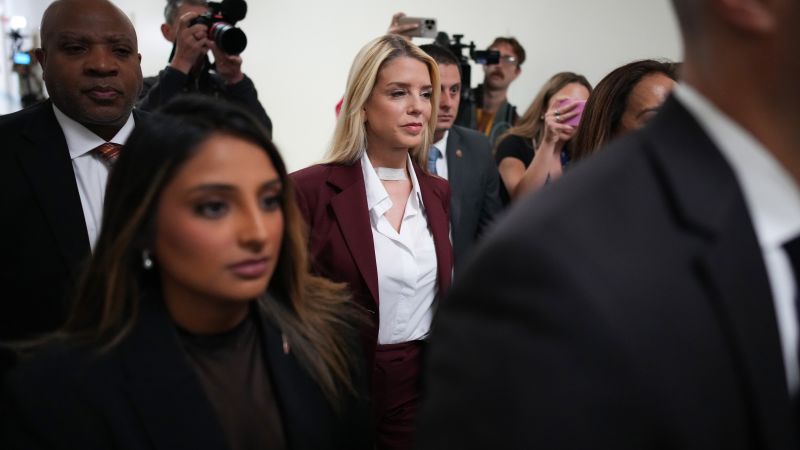
Bondi defends DOJ s handling of Epstein – Former U.S. Attorney General Pam Bondi faced intense questioning from House lawmakers during a pivotal interview on Friday, where she reiterated her support for the Department of Justice’s management of the Jeffrey Epstein files. Despite Democratic critics pointing out her limited detail on the matter, Bondi shifted focus to Todd Blanche, her successor, asserting that he was the main authority responsible for the case. The session, which took place in a private setting, highlighted the ongoing debate about transparency in the Epstein investigation, particularly concerning how much President Donald Trump was aware of the alleged crimes during the probe.
Leadership and Delegation in the DOJ
Bondi’s remarks prior to the interview emphasized her leadership style, stating she entrusted critical tasks to senior officials. “I delegated oversight to Deputy Attorney General Todd Blanche,” she explained, framing this as a standard practice for a large federal agency. According to a DOJ source, such delegation was routine, with Bondi focusing on broader policy matters while Blanche handled day-to-day operations. However, lawmakers questioned whether this approach diluted accountability, especially regarding the handling of Epstein’s files by the department.
Democrats Criticize Bondi’s Testimony
House Democrats accused Bondi of evading responsibility during the session, noting her vague responses to key questions. Rep. Robert Garcia, the committee’s top Democrat, described her as attempting to “shift blame” onto Blanche, claiming she avoided directly addressing Trump’s knowledge of Epstein’s crimes. Rep. Dave Min labeled the interview a “charade,” while Rep. James Walkinshaw highlighted Bondi’s uncertainty about the timeline of Trump’s involvement. These critiques suggest the DOJ’s handling of Epstein files remains a focal point for scrutiny.
“She said and I quote, ‘Acting Attorney General Blanche was managing the entire investigation.’” – Rep. Robert Garcia, House Oversight Committee
Blanche and Dhillon Support the Delegation Process
Todd Blanche, who served as acting attorney general during Bondi’s tenure, denied being a target of criticism. In a social media post, Bondi passionately defended the DOJ’s approach, calling it “not true” that she avoided accountability. She praised Blanche’s “ethical integrity” and described him as an “exceptional leader.” Harmeet Dhillon, a DOJ official present, echoed this, stating the delegation was standard practice. “The former attorney general had vast responsibilities,” Dhillon noted, “so it’s common for tasks to be shared with deputies.”
Epstein Files and Trump’s Involvement
The Epstein files, which outline his alleged sex trafficking schemes and ties to powerful individuals, have fueled calls for transparency. Bondi maintained that the DOJ’s handling of these documents was thorough, though Democrats pressed her on specific details. When asked about Trump’s awareness of Epstein’s crimes, Bondi admitted she had limited knowledge, but she framed the issue as one that fell under Blanche’s jurisdiction. The testimony underscores the complex web of accountability within the Trump administration’s legal operations.
Physical Conditions and Context of the Interview
During the hearing, Bondi’s physical state drew attention. Recovering from thyroid cancer surgery, she wore a neck bandage and had restricted head movement, which lawmakers noted. This detail added a personal dimension to the session, which occurred just days after her public disclosure of her diagnosis. The interview coincided with her exit from the Department of Justice, a position she held for over two years before being replaced in March. Critics argued her condition might have influenced her ability to fully engage with the scrutiny.
Legacy of the Epstein Files Investigation
As the Epstein files continue to shape the narrative of the Trump administration’s legal conduct, Bondi’s defense of the DOJ’s handling underscores her stance on accountability. While some lawmakers viewed her testimony as evasive, others acknowledged the challenges of managing such a complex case. The ongoing examination of these files highlights the importance of clear leadership and transparency, with Bondi’s role in their initial handling remaining a point of contention. Her comments, along with Blanche’s actions, will likely influence future discussions on the topic.
