
Protesters clash with agents outside New Jersey ICE facility. Inside, detainees continue their hunger strike, attorneys say
Protesters Clash with ICE Agents Outside New Jersey Facility Amid Hunger Strike
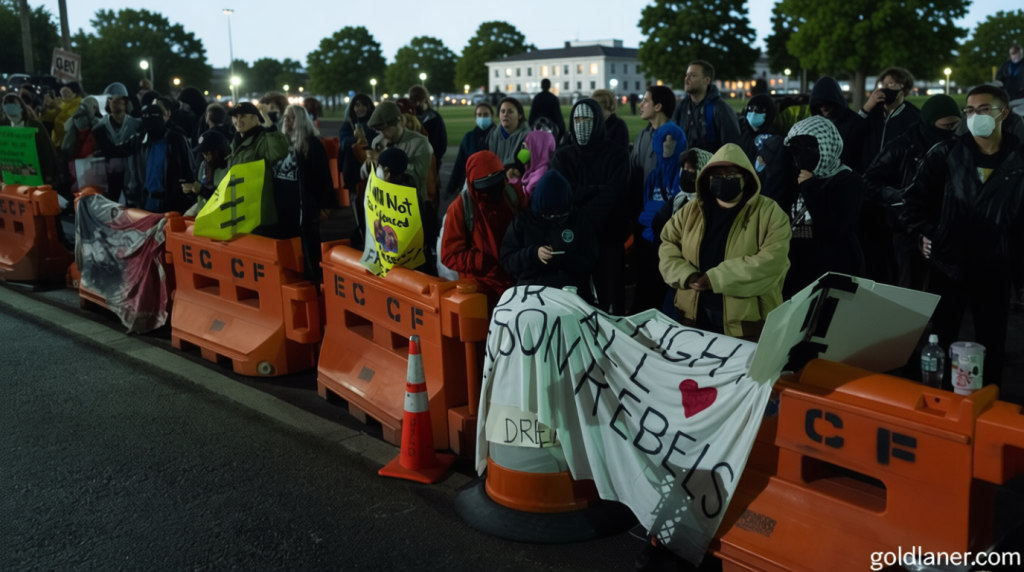
Protesters clash with agents outside New Jersey – On Tuesday, a heated confrontation erupted outside the Delaney Hall detention center in Newark, New Jersey, as protesters clashed with Immigration and Customs Enforcement (ICE) agents. The incident followed a day of unrest, during which hundreds of demonstrators gathered to express dissatisfaction with conditions inside the 1,000-bed facility. Footage from Freedom News TV shows individuals physically engaging with uniformed officers, who were seen using gas canisters and batons to manage the crowd. The clash marked a turning point in the ongoing dispute over the treatment of detainees, who have escalated their resistance through a hunger strike.
Hunger Strike Sparks Outcry Over Detainee Conditions
Inside the facility, detainees are continuing their hunger strike, a protest that has drawn widespread attention to systemic challenges. Attorneys representing the individuals claim the strike began as a peaceful act to highlight concerns such as insufficient food, overcrowded living spaces, and limited medical care. Approximately 300 detainees participated, according to NJ.com. Selenia Destefani, a managing attorney with Nova Law Group, described the conditions as “brutal,” citing reports of freezing temperatures, cold showers, and detainees sleeping on the floor. “It’s not sound conditions to live in,” she stated, underscoring the human impact of the environment.
“People sleep on the floor, endure cold showers, and face freezing temperatures without blankets. These conditions are not just harsh—they are unacceptable.”
Medical concerns have also been raised, with Alex Minogue, another attorney from Nova Law Group, noting that detainees with severe illnesses, such as diabetes and cancer, struggle to receive adequate treatment. While the Department of Homeland Security (DHS) insists that meals are monitored by certified dieticians and that detainees have access to basic necessities, the hunger strike has intensified scrutiny. Advocates argue that the facility’s practices reflect broader issues in the U.S. immigration system, particularly under policies prioritizing rapid deportation over humane treatment.
Protesters Challenge ICE’s Response to Detainee Grievances
The protests outside Delaney Hall have become a focal point for critics of ICE’s operations. Demonstrators accused agents of using force to disperse the crowd, with video evidence showing individuals being dragged from the scene. At least 125 people formed a human chain around the facility’s entrances, creating barriers to control movement. The DHS spokesperson described the actions as necessary to maintain order, but protesters contend that the force used was excessive. The situation escalated further when plans to transfer Martin Alonso Soto Hernandez, a detainee whose wife is pregnant, triggered renewed anger and coordinated resistance from the group.
By Monday, the conflict had grown into a significant demonstration, with protesters demanding accountability and transparency from ICE. Their efforts have drawn support from local officials and advocacy groups, who see the unrest as a symptom of broader dissatisfaction with the immigration system. The clashes outside the facility have also sparked conversations about the role of public opinion in shaping detention policies, with some arguing that the protests reflect a growing movement against the use of force in immigration enforcement.
“We are here to show that the conditions inside are not just poor—they are unbearable. The clash outside is a direct response to the suffering inside.”
As the situation continues to unfold, the focus remains on the intersection of protest and detainee rights. The hunger strike and subsequent demonstrations have highlighted the tension between ICE’s operational goals and the well-being of those in custody. With the protests gaining momentum, advocates are urging federal authorities to address the systemic issues that have led to this escalation, emphasizing that the clash outside is just one part of a larger struggle for reform and dignity in immigration detention.
