
Exclusive: Trump admin shutting key US researchers out of global virus response talks, documents and sources reveal
Exclusive: Trump Administration Restricts US Researchers from Global Virus Response Discussions
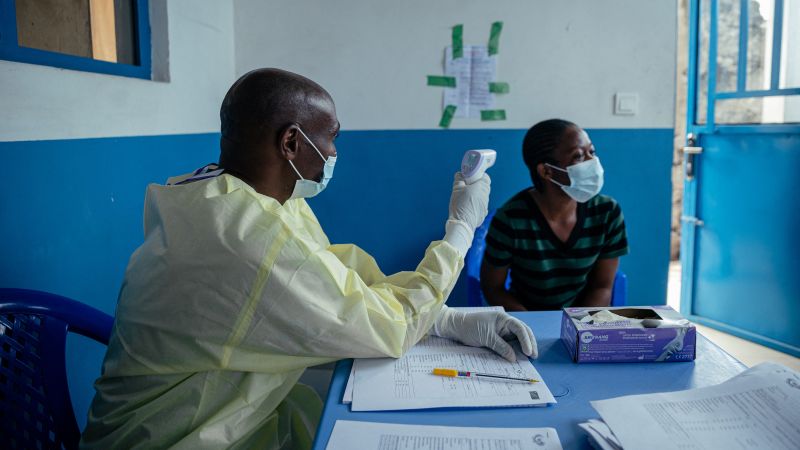
Exclusive – Key US health researchers responsible for tackling infectious disease threats have been excluded from direct communication with the World Health Organization (WHO), as revealed by internal documents and interviews with multiple sources. This move, which effectively isolates some officials from international dialogue, has drawn criticism from current and former health professionals. The restriction targets personnel at the National Institute of Allergy and Infectious Diseases (NIAID), a federal agency long led by Dr. Anthony Fauci, who has overseen critical work on public health crises like HIV/AIDS and the ongoing coronavirus pandemic. The policy was enforced during a recent hantavirus outbreak, though it has since seen minor adjustments as a new Ebola epidemic emerges in the Democratic Republic of Congo.
A Shift in Communication Strategy
The directive, obtained by CNN, limits NIAID staff from engaging in direct conversations with the WHO. Instead, they are now permitted to attend virtual meetings but only in small groups and in a “listening capacity.” This change was outlined in a May 18 email from a senior NIAID official to staff, which emphasized the agency’s reduced role in global discussions. While the Department of Health and Human Services (HHS) handles follow-up actions, the new protocol is designed to streamline interactions and reduce bureaucratic overlap, according to the email.
Health officials argue that this approach hampers swift cooperation with international partners. “It’s rare to see such a bottleneck in communication during a public health emergency,” said one current staffer, highlighting the unusual nature of the restrictions. The policy reflects a broader trend of the Trump administration’s withdrawal from global health initiatives, including the decision to leave the WHO in January 2026 under President Donald Trump’s guidance—a move that sparked widespread backlash from public health experts.
Leadership Vacuums and Temporary Appointments
As the administration navigates its global health strategy, several top positions remain unfilled. The director of NIAID, surgeon general, Food and Drug Administration (FDA) commissioner, deputy health secretary, and Centers for Disease Control and Prevention (CDC) head are all vacant. This unprecedented leadership gap has raised concerns about the consistency and effectiveness of the US response to emerging health threats. Dr. Dan Jernigan, a former CDC official, noted that such a scenario is rare in his 31 years of experience, describing it as “a moment like none other” in the agency’s history.
The situation has been compounded by the absence of confirmed leaders in critical roles. For instance, the surgeon general position has never been officially filled since the start of the Trump administration, while the CDC director served less than a month before being replaced. Recent appointments, such as the third nominee for both positions, have yet to be confirmed by the Senate. “There’s no immediate plan to bring these candidates before the Senate for hearings,” a source familiar with the logistics explained, underscoring the prolonged uncertainty.
Operational Challenges in Outbreak Management
The restrictions on WHO communication have created operational hurdles, particularly during outbreaks requiring rapid action. When passengers from a hantavirus-affected cruise ship arrived in Nebraska, Assistant Secretary for Health Brian Christine was the administration’s representative at the Omaha hospital. Though Christine is known for his expertise in penile implants and his history of making far-right remarks, he was chosen as the public face of the response because a senior official was unavailable, according to an insider.
Meanwhile, the FDA lost its commissioner this month, and several high-ranking CDC officials have departed the agency since last year without replacements. This has led to a fragmented approach in managing health crises, with teams at HHS coordinating efforts across different areas. “We ensure teams align on contact tracing, diagnostics, and medical countermeasures to avoid duplication and confusion,” said an HHS spokesperson, emphasizing the agency’s preparedness despite the leadership gaps.
The administration’s decision to prioritize centralized control over direct engagement with global health bodies has drawn comparisons to past strategies. However, the current situation is unique in its scale. The WHO withdrawal in January, coupled with the ongoing vacancies, has created a scenario where the US is both isolated and understaffed in critical health roles. “It’s a two-pronged challenge—being disconnected from global partners and lacking internal leadership,” said one analyst, pointing to the broader implications for pandemic readiness.
Impact on Global Health Collaboration
The new communication protocol has limited the US’s ability to contribute directly to international efforts. While virtual meetings are now allowed, the small group format and “listening capacity” restrict the flow of information and the agency’s influence in shaping global health responses. “This approach is a departure from the collaborative model we’ve relied on for decades,” remarked a former health official, who highlighted the importance of direct dialogue in coordinating efforts during outbreaks.
Despite these challenges, the HHS maintains that its involvement with the WHO is robust, leveraging the CDC’s frontline presence in disease outbreaks. The spokesperson added that the department is “fully equipped to protect Americans and mitigate risks,” citing its multi-agency coordination. However, critics argue that the lack of clear leadership and the communication barriers could slow the US’s response to both existing and emerging threats.
Broader Implications for Health Policy
The Trump administration’s retreat from global health forums has created a ripple effect across US health agencies. With interim leaders in charge of many departments, there is a risk of inconsistent messaging and delayed decision-making. The ongoing hantavirus and Ebola outbreaks have exposed this vulnerability, as teams scramble to respond without a unified command structure. “The absence of confirmed directors means every crisis is met with a patchwork approach,” said another insider, who stressed the need for stable leadership to maintain public trust.
As the administration continues to navigate these challenges, the situation remains a focal point for scrutiny. The May 18 directive, while slightly relaxed for the Ebola epidemic, has not fully restored the level of engagement seen during previous public health emergencies. The leadership vacuum, combined with the restricted communication channels, has created a scenario where the US is both a key player and an observer in the global health arena, according to experts. “This is a defining moment for national health policy,” said Dr. Jernigan, who pointed to the broader implications for the country’s ability to lead international efforts in the future.
“Not in my 31 years at CDC has there been a moment like this,” said Dr. Dan Jernigan, a former official who resigned after Health and Human Services Secretary Robert F. Kennedy Jr. replaced Dr. Susan Monarez, the sole confirmed CDC director, in August 2026. “The absence of clear leadership has left the agency in a state of flux, with critical roles left unstaffed and communication channels narrowed.”
The administration’s approach to global health has sparked debate about its long-term consequences. While the HHS spokesperson defended the current strategy as “effective,” others argue that the lack of direct engagement with the WHO undermines the US’s role in international health decision-making. As the hantavirus and Ebola outbreaks continue to test the system, the leadership vacuum and communication restrictions may shape the trajectory of future public health responses. The next steps for the administration will determine whether these changes are temporary adjustments or a fundamental shift in how the US engages with global health challenges.
