
Winning gold is ‘way less important than having a chance to save a life’: Michael Phelps on finding purpose beyond the pool
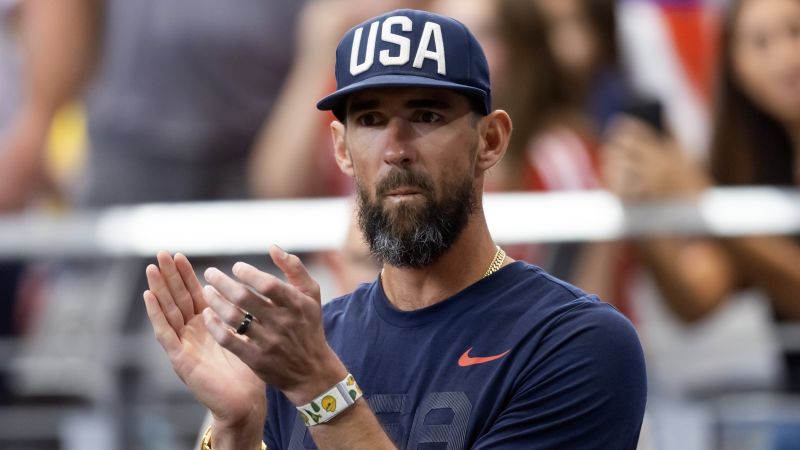
Winning gold is ‘way less important than having a chance to save a life’: Michael Phelps on finding purpose beyond the pool
A Legacy Beyond the Pool
Winning gold is way less important – More than nine years have elapsed since Michael Phelps lit up the Olympic stage at Rio 2016, securing an unprecedented five gold medals and one silver in a single Games. His retirement after those Olympics as the most decorated Olympian of all time—amassing 28 medals across four Olympic cycles—was once thought to mark the end of his storied career. Yet, for the 40-year-old, the pool is no longer the center of his universe. Instead, he has channeled his energy into a mission that transcends sport: championing mental health and well-being for athletes and communities worldwide.
From Olympic Glory to Mental Health Advocacy
The Michael Phelps Foundation, established in 2008, initially focused on promoting water safety and healthy lifestyles. This aligns with Phelps’ own early fears of the water, which he recalled as a child when he first began swimming at age seven. However, as his perspective evolved, so did the foundation’s purpose. In 2020, it formally broadened its mission to include mental wellness programs for children, emphasizing emotional resilience and psychological support. “Water safety and mental health—those two things are who I am,” Phelps remarked during an interview with CNN Sports’ Coy Wire, underscoring the dual pillars of his advocacy.
Phelps’ journey from a competitive swimmer to a public speaker on mental health has been transformative. The 23-time Olympic gold medalist now views his role as a platform to address the challenges athletes face, both in and out of the water. “Being able to implement mental health into my foundation along with swimming, it kind of gives me that purpose again I had when I was competing,” he shared, highlighting how his work has reignited his sense of fulfillment. His message resonates deeply, as many professionals, especially those in high-stakes environments, often struggle to balance personal struggles with public expectations.
Expanding the Mission: A New Chapter
Phelps’ efforts extend beyond the foundation. In 2023, he partnered with Talkspace, an online therapy company, to launch the “Start from the Top” campaign. This initiative outlines five core pillars designed to cultivate sustainable mental wellness practices: self-awareness, routine, support systems, coping strategies, and mindfulness. The campaign aims to equip individuals with tools to navigate the pressures of competition and daily life, reflecting Phelps’ belief that mental health should be as prioritized as physical training.
His advocacy has also taken the form of global keynote addresses. Over the past few years, Phelps has spoken at various events, sharing his experiences with depression and the emotional toll of competing at the highest level. These talks have provided a powerful narrative shift in how mental health is perceived within sports, encouraging others to embrace vulnerability as strength rather than weakness. “For me, winning a gold medal is way less important than having a chance to save a life,” he asserted, a sentiment that encapsulates the depth of his current mission.
A Defining Moment: The Turning Point
Phelps’ transition to this new phase was catalyzed by a profound personal realization. “I honestly think it’s really when I got to that point of not wanting to be alive,” he explained. At that moment, he acknowledged the urgency of addressing his inner turmoil. “Once I got to that point, I was like, ‘OK, something is wrong. I need to ask for help,’” he said, reflecting on the pivotal decision to seek support. This moment marked the beginning of a new chapter in his life, where open dialogue became a lifeline.
Phelps’ story has inspired others, particularly young athletes, to prioritize their mental well-being. He often emphasizes that the path to success is not without its shadows. “That was the first time that I ever asked for help because I just didn’t know what to do,” he recounted. “I’m very thankful that I got the help that I needed because I wanted change.” The ability to articulate these struggles has empowered countless individuals, including a 25-year-old man he encountered during a Microsoft meeting. “I remember after the 2016 Olympics, I was at Microsoft and this kid … I say ‘kid,’ he was probably 25 years old, stood up and he was like, ‘I have my dream job. Everything I’ve ever wanted to do has happened. And I don’t want to be alive anymore,’” Phelps recalled. The shared moment of vulnerability became a turning point for both of them.
Voices of Change: Keynote Speeches and Impact
Phelps’ commitment to mental health advocacy is evident in his extensive speaking engagements. He has delivered talks in diverse settings, from international conferences to community forums, ensuring his message reaches a wide audience. These sessions have not only highlighted his personal journey but also amplified the importance of addressing mental health in sports. “By continuing to speak so candidly about the importance of mental health, I’m helping to shift the narrative,” he said. In an era where athletes are often celebrated for their resilience, Phelps advocates for a more compassionate approach that recognizes the fragility of the human mind.
His work has also sparked conversations about the intersection of mental health and athletic performance. Phelps’ experience with depression, which he openly discussed, has become a cornerstone of his advocacy. “The man who spent nearly two decades relentlessly chasing perfection in the pool has now made it his life mission to help others by openly speaking about the treacherous journey it took to achieve it,” he noted. This duality—between the relentless pursuit of excellence and the need for emotional support—has become a powerful lens through which he views his legacy.
The Olympic Icon’s New Race
For many athletes, retirement signifies the end of an arduous journey and a period of reflection. But for Phelps, it marked the start of a different race altogether. “There was still another race to run,” he stated, one that he believes has a broader impact than any of his sporting achievements. This new mission, rooted in saving lives through mental health education, has become his greatest endeavor. “I think it’s really when I got to that point of not wanting to be alive,” he repeated, underscoring how that moment transformed his perspective. “It was about just being able to find that ground to stand on and be OK sharing the stories that I talk about.”
Phelps’ journey from Olympic champion to mental health advocate illustrates a shift in priorities. Where once the goal was to win gold, now the focus is on fostering resilience and preventing crises. His partnership with Talkspace and foundation initiatives exemplify this evolution, offering tangible resources to those in need. By combining his expertise in sports with his insights into mental health, Phelps has created a unique platform for change. As he continues to share his story, he remains a beacon of hope, reminding others that even the most accomplished individuals can find purpose beyond the spotlight.
Through his work, Phelps has become a symbol of the importance of mental well-being in sports. His message is clear: the pursuit of excellence should not come at the cost of one’s emotional health. “Winning gold is way less important than having a chance to save a life,” he said, a statement that captures the essence of his current mission. In a world where athletes are often seen as paragons of strength, Phelps’ openness has paved the way for a more inclusive understanding of what it means to thrive. His legacy now extends far beyond the pool, proving that the greatest achievements can be measured in the lives touched by compassion and courage.
