
Oral arguments are taking forever. Supreme Court justices have had enough
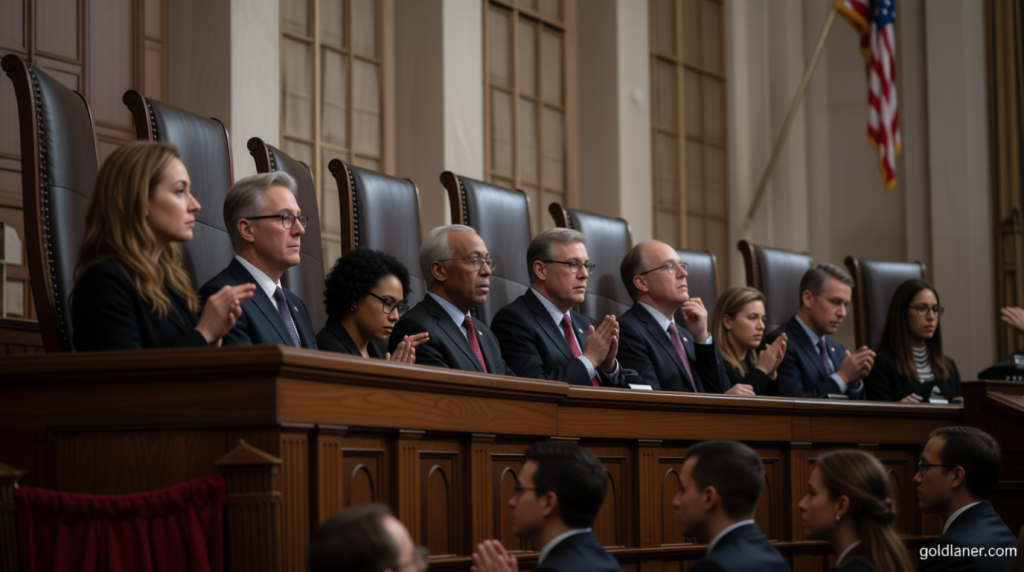
Supreme Court Justices Criticize Lengthy Oral Arguments
Oral arguments are taking forever Supreme – The Supreme Court’s oral argument sessions, once seen as concise and efficient, have become a subject of growing frustration among the justices themselves. In recent months, prominent figures like Chief Justice John Roberts and Justice Samuel Alito have openly expressed concerns about the extended duration of these proceedings, signaling a shift from behind-the-scenes complaints to public critique. Roberts, during a speech at a Pennsylvania judges’ conference, lamented the “way too long” format, vowing to investigate the issue during the summer. Alito, in a separate appearance in Texas, echoed similar sentiments, accusing the process of being “too much speechifying” and emphasizing that “too little asking real questions” was occurring. These remarks have sparked a broader conversation about the court’s procedural habits and their implications for both legal decisions and public engagement.
Revisiting the Court’s Historical Practices
Before the pandemic, oral arguments were typically brief, with justices adhering to strict time limits that had been in place for decades. Former Chief Justice William Rehnquist, known for his rigorous enforcement of schedules, would often interrupt advocates mid-sentence to maintain the pace. However, the transition to virtual hearings in 2020 altered this dynamic. While remote arguments allowed for more flexibility, they also introduced a new pattern: justices began asking questions in order of seniority rather than engaging in the fast-paced, informal “hot bench” style. This change was formalized in 2021 when the court returned to in-person sessions, yet a hybrid approach persisted. The current format, which blends free-form debate with a structured “seriatim” round, has created a new tension between the justices’ desire to explore complex legal theories and the need for time management.
“It’s very important for the court’s legitimacy,” said Tonja Jacobi, a law professor at Emory University, who has closely examined the role of oral arguments. “It can help reassure people that at least some of this is law.”
The recent surge in session lengths has drawn attention to the growing importance of these debates. While legal experts have long viewed them as secondary to written opinions, the oral arguments now serve as a critical platform for justices to challenge each other’s reasoning. This influence extends beyond the courtroom, as the public, for the first time in years, gains direct access to the justices’ thought processes through livestreamed debates. The shift to virtual formats during the pandemic, which lasted from October 2020 to April 2021, initially allowed for longer discussions, but the justices’ return to physical meetings in 2021 only intensified the debate over timing.
Disparities in Speaking Time Among Justices
Analysis of the current term reveals stark differences in how justices utilize their time. The liberal wing of the court, which holds a minority of three justices, has been particularly vocal. According to a study by Adam Feldman, founder of Empirical SCOTUS, and political science professor Jake Truscott, Justice Sonia Sotomayor, the court’s senior liberal justice, averaged over six minutes of speech per argument. Justice Ketanji Brown Jackson also contributed significantly, often dominating the “seriatim” questioning rounds. This contrast highlights how the extended sessions may disproportionately affect the court’s conservative majority, which has been more reserved in its verbal contributions.
While some justices have embraced the change, others have voiced reservations. Justice Clarence Thomas, who has historically remained quiet during arguments, recently remarked that the current approach “may run on a bit long” but praised the opportunity to engage with advocates without interruptions. “I don’t play golf. I don’t play cards. I don’t hang out. So, I can sit there all day,” he joked at a May 14 conference organized by the 11th US Circuit Court of Appeals. Thomas’s comments reflect a pragmatic view of the process, acknowledging its benefits despite the perceived length.
The impact of this trend is most noticeable in the court’s major cases. During the 2026 term, which runs from October to April, the average oral argument lasted just under 90 minutes—a 10-minute increase from the previous term. This growth is attributed to the “seriatim” format, which allows justices to ask individual questions after the initial free-form exchange. However, the system has also led to delays, with some sessions exceeding their 60-minute limit. Notably, the case involving President Donald Trump’s global tariffs, which ultimately resulted in a decision to strike down the policy, became the longest argument of the term, lasting nearly three hours. Despite being scheduled for only 80 minutes, the debate over this case consumed extensive time, illustrating the justices’ deep interest in the issue.
A Deliberate Shift in Judicial Style
The pandemic not only changed how the court conducts business but also reshaped its cultural norms. When the justices first moved to virtual arguments, they maintained a structured order of questioning, which some found more predictable. However, the return to physical hearings in 2021 sparked a divide: conservatives wanted to restore the pre-pandemic pace, while liberals argued for continued flexibility. A compromise emerged, blending the spontaneity of the “hot bench” with the methodical approach of the “seriatim” round. This hybrid system, while intended to balance thoroughness with efficiency, has led to extended debates that challenge traditional perceptions of the court’s workflow.
For the public, these extended sessions offer a rare, unfiltered look into the justices’ reasoning. Livestreaming, which became standard during the pandemic, has transformed oral arguments from a behind-closed-doors activity into a spectacle. Viewers can now witness the justices’ interactions in real time, with their verbal sparring often reflecting deeper ideological divides. This visibility has made the arguments more than just legal proceedings—they have become a stage for ideological battles and a barometer of the court’s internal dynamics.
Despite the complaints, some legal professionals argue that the extended time is beneficial. “The current approach gives advocates a chance to fully articulate their positions,” noted a Supreme Court attorney, who described the white and red lights on the podium as a constant reminder of the clock. These signals, which alert speakers to time constraints, have become a fixture of the process. Yet, the fact that the justices often stretch the sessions beyond their allocated time underscores a growing sense of urgency or curiosity about the cases at hand.
As the 2026 term progresses, the question remains: will the justices’ dissatisfaction with the format lead to a significant overhaul? With the average session already 10 minutes longer than in 2020 and the most contentious cases drawing attention, the court’s procedures are under renewed scrutiny. Whether this trend continues or evolves will depend on the justices’ ability to reconcile their need for detailed discussion with the public’s demand for timely rulings. For now, the debates persist, shaping not only the court’s decisions but also its image as an institution grappling with its own pace and priorities.
