
Rafael Nadal retired a tennis great, but his career was almost cut painfully short
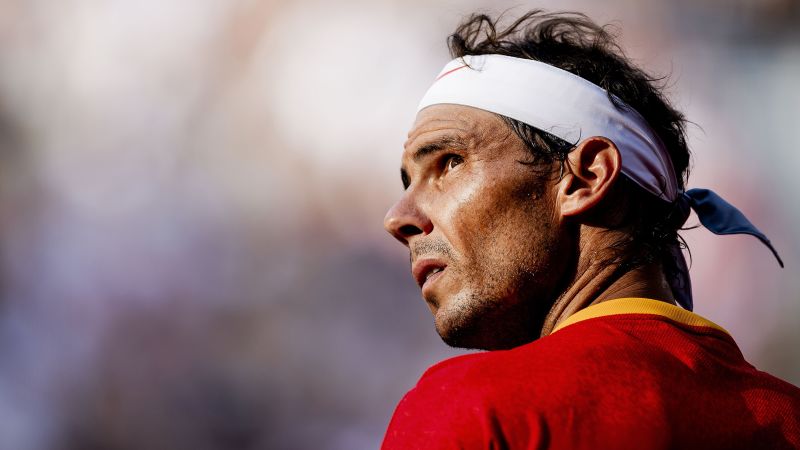
Rafael Nadal’s Journey: From Tennis Great to Retired Champion
Rafael Nadal retired a tennis great – Rafael Nadal, the tennis great, concluded his career with a legacy that redefined the sport. Known for his extraordinary dedication and ability to perform under intense pressure, Nadal’s journey through 22 Grand Slam titles, including 14 French Open triumphs, showcased a career built on resilience. However, his retirement was not just a final chapter—it was a culmination of years spent battling injuries that once threatened to end his professional tennis career prematurely.
The Crucial Injury That Changed Everything
The turning point came in late 2005 when a minor injury during a match triggered a major challenge. Diagnosed with Mueller–Weiss syndrome, a rare degenerative foot condition, Nadal faced the possibility of being sidelined for an extended period. At 19, having just claimed his first Roland Garros title, the young Spaniard had to confront the uncertainty of whether his tennis career would continue as planned. This setback set the stage for a longer battle, both physically and mentally.
“Probably that was the toughest part in my tennis career,” Nadal revealed during a CNN interview with Christiane Amanpour. “Because that was just the beginning.”
The injury forced Nadal to rethink his approach. For months, medical professionals warned of the potential for long-term damage, casting doubt on his ability to compete at the highest level. Nadal, who had always envisioned a career spanning over a decade, now feared that his dreams might be cut short. “You are projecting your future of being a professional tennis player, thinking that you’ll have at least seven to ten years on the tour,” he explained. “But in one second, it looks like maybe you won’t be able to keep doing what you are doing.”
Breaking Barriers with Innovation
Nadal’s determination led to a breakthrough in treatment. A custom insole, designed to shift his foot by 0.276 inches (7 mm), became a game-changer. Nike collaborated to create a specialized shoe tailored to his unique foot structure, enabling him to continue competing. While this innovation resolved the immediate issue, the underlying problem persisted, particularly as his career advanced. Throughout the years, Nadal dealt with recurring foot issues, alongside wrist and knee injuries that tested his endurance.
Despite these challenges, Nadal’s achievements remained remarkable. Securing 22 major titles, including a record 14 French Open wins, highlighted his ability to adapt and thrive. The fact that he missed 18 Grand Slam tournaments only amplified the significance of his perseverance. His journey became a testament to how innovation and strategy can turn potential setbacks into opportunities for growth.
The Mental Health Challenge Behind the Laurels
While Nadal’s physical battles were well-documented, his mental health struggles were equally profound. The pressure to maintain peak performance after multiple injuries took a psychological toll. In a candid moment during his CNN interview, Nadal described how the weight of expectations nearly overwhelmed him. “At one point, I couldn’t leave the house without clutching a water bottle,” he admitted. “It was a sign that my mind had reached a breaking point.”
“Probably because I went through a lot of injuries, a lot of pressure, and arrived at a moment where, in some way, you are not able to handle all of this—even if in my mind I was able to handle all of this,” he said. “But it arrived at a point where your mind fails, and that’s what happened. I always thought that I needed to fix things for myself, in terms of mental strength. So I needed to find help and that’s what I did.”
Nadal’s mental health journey was further explored in a Netflix documentary that delved into the emotional challenges of elite sports. The series revealed how injuries and the relentless demands of professional tennis created a unique form of stress. By embracing medication and therapy around 2015, Nadal found a way to balance his physical and mental well-being, allowing him to continue his reign on the court. His retirement marked the end of an era, but the lessons from his career will resonate for generations to come.
