
Top divers join perilous mission to recover Italian tourists’ remains from Maldives sea cave
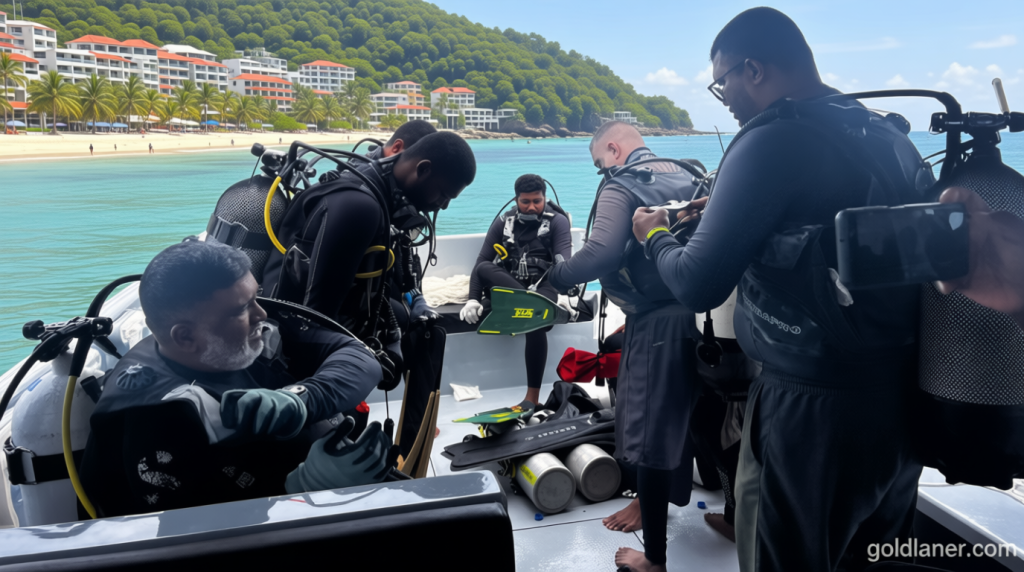
Maldivian Cave Divers Launch High-Risk Operation to Recover Italian Tourists’ Bodies
Top divers join perilous mission to recover – Maldives’ coastal waters have become the focal point of a critical international recovery mission as teams of expert cave divers prepare to retrieve the remains of four Italian tourists who died during a scuba diving expedition. The effort follows the tragic loss of a military officer during an earlier attempt to locate the bodies, underscoring the dangers inherent in the deep-sea cave exploration. The operation has drawn specialists from Finland, Australia, and the United Kingdom, working in tandem with local authorities to overcome the challenges posed by the submerged environment.
The Maldives government’s chief spokesperson, Mohamed Hussain Shareef, confirmed the arrival of three Finnish divers from the Divers Alert Network, a globally recognized scuba safety organization. These divers, seasoned in deep and cave diving, were selected to bolster the search team’s capabilities. “They have extensive experience navigating underwater caves and deep dives worldwide,” Shareef said, highlighting the expertise required for the mission. A fourth diver is set to join the Finnish contingent on Sunday, alongside specialized equipment from Australia and the United Kingdom, as the team refines their approach to the perilous task.
“They were recommended by Italy and have completed deep dives and cave dives around the world,” Shareef told CNN.
The incident began on Thursday when five Italian divers died while exploring the Vaavu Atoll, a region known for its rugged underwater terrain. The group, consisting of 25 Italian nationals, was on a scuba diving trip aboard the Duke of York vessel when the tragedy unfolded. Among the casualties was Gianluca Benedetti, a diving instructor whose body was recovered at the mouth of the cave. His discovery prompted authorities to believe the remaining four divers were still inside the cave, deep within its labyrinthine passages.
The four Italians believed to be trapped are Monica Montefalcone, an ecology professor at the University of Genoa; her daughter Giorgia Sommacal; marine biologist Federico Gualtieri; and researcher Muriel Oddenino. Their fate remains uncertain, though the dive’s complexity has raised questions about the circumstances of their disappearance. The recovery operation has already claimed a second life, with Senior Military Diver Sgt. Mohamed Mahudhee, 43, succumbing to complications during a second descent into the cave on Saturday.
“He was one of the most senior divers, which shows just how challenging this dive is,” Shareef said.
Mahudhee, a member of the national defense force, died during a rescue attempt that saw his partner detect an issue and initiate a retrieval effort. The cave, which extends 200 meters in length and reaches depths of 70 meters—equivalent to the height of a 20-story building—presents a formidable environment. Each dive is constrained to approximately three hours due to oxygen limitations and decompression needs, adding pressure to the operation. During Saturday’s mission, divers marked the cave entrance by releasing a balloon to the surface, enabling the team to navigate directly to the target area.
Maldives’ authorities emphasized the cave’s extreme conditions, including unpredictable currents, narrow passageways, and total darkness. “You have to be an expert for this level of diving,” Shareef noted, underscoring the technical precision required. The decompression process, which must occur in shallow water after ascending from the cave’s depths, is a critical phase that can be fraught with risks. Shareef suggested Mahudhee may have died from complications during this step, though the exact cause remains under investigation.
The cave’s silt-laden waters and depth are cited as major obstacles to recovery. John Volanthen, a British Cave Rescue Council officer who played a pivotal role in the 2018 Thai soccer team rescue, described the situation as “extremely complex.” “It’s essentially a very long way into the cave, and normally, cave divers would lay a guideline to find their way. That’s potentially what happened with the missing group,” he explained to CNN. Volanthen also highlighted the psychological risks divers face, such as narcosis—a disorienting state caused by breathing compressed air at depth.
Carlo Sommacal, Montefalcone’s husband and Giorgia’s father, expressed uncertainty about the cause of the accident. “Something must have happened down there,” he said, reflecting on his wife’s and daughter’s extensive experience in the water. Sommacal recounted how his wife had survived the 2004 tsunami while diving near Kenya, a testament to her resilience. Despite this, the current incident has left families and officials grappling with the possibility of unforeseen dangers in the Maldivian caves.
The Maldives’ vast ocean territory, which is roughly 3,000 times larger than its landmass, has made the country a hub for underwater exploration. However, the recent tragedy has intensified scrutiny on its safety protocols. Shareef noted that the archipelago’s coastal regions are particularly hazardous, with sudden changes in currents and challenging visibility. “This is not an easy environment,” he said, emphasizing the need for meticulous planning in such operations.
As the search continues, the multinational team is focused on improving their strategy to locate the remaining bodies. The cave’s size and depth, combined with the risks of decompression and disorientation, mean that each dive requires precise coordination. Authorities have also begun analyzing the incident to determine the sequence of events leading to the divers’ demise. The investigation includes reviewing the dive’s equipment, training records, and environmental conditions at the time of the accident.
Meanwhile, the community in Malé has rallied to support the families of the victims. Thousands attended the funeral ceremony for Sgt. Mahudhee, where President Mohamed Muizzu and officials from tourism and military sectors paid tribute to the fallen diver. Foreign ambassadors were also present, highlighting the international significance of the event. The mourning process reflects both the loss of life and the shared commitment to uncovering the truth behind the disaster.
With the sun setting on the island paradise, the search for the four Italians remains a top priority. The combination of human expertise, advanced technology, and unwavering determination underscores the global effort to recover the remains and bring closure to the families. As the divers prepare for yet another descent, the risks of the mission remain as high as ever, with the cave’s secrets still holding the answers to this tragic chapter in Maldivian waters.
