
US experience fighting Iran offers lessons for China, experts say
US Experience Fighting Iran Offers Lessons for China, Experts Say
US experience fighting Iran offers lessons – The conflict in Iran has now reached its third month, offering China a critical opportunity to observe the U.S. military’s operational dynamics under pressure. Analysts suggest that this ongoing engagement provides a practical lens through which Beijing can evaluate its own strategic preparedness, particularly in light of potential confrontations with Washington. CNN consulted experts across China, Taiwan, and other regions to explore how the recent combat in the Persian Gulf might shape China’s approach to future warfare. They emphasized the importance of recognizing both China’s strengths and its vulnerabilities, as well as the necessity of adapting to evolving battlefield realities.
Defensive Weaknesses in the Spotlight
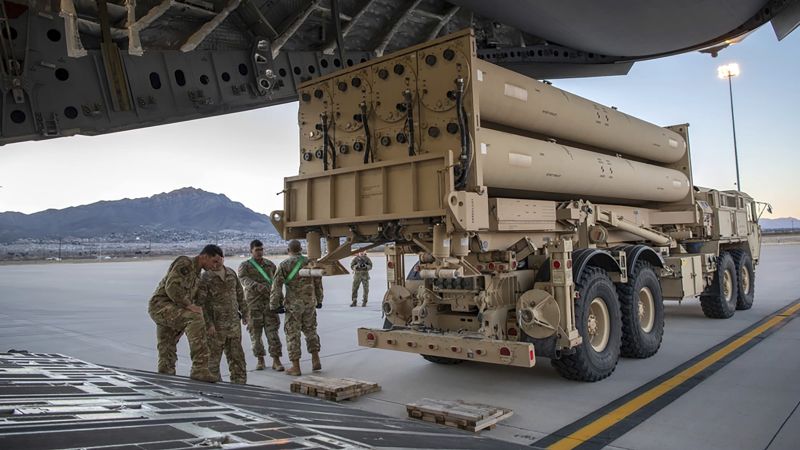
Among the key insights highlighted is the U.S. military’s reliance on advanced defensive systems, which Iran has managed to circumvent. Fu Qianshao, a retired air force colonel in China, pointed to this as a pivotal lesson. “The People’s Liberation Army must not overlook its defensive capabilities,” he told CNN. “Iran’s ability to bypass systems like the Patriot or THAAD demonstrates the importance of identifying weaknesses in our own defensive posture.” Fu’s analysis underscores the need for China to invest in countermeasures that can withstand both high-tech and low-cost threats.
“We need to devote significant efforts to identify weakness in our defensive side to ensure we remain invincible in future wars,” Fu said.
While China has made strides in offensive capabilities, its defensive infrastructure remains a focal point for improvement. The U.S. military’s use of hypersonic glide vehicles and fifth-generation stealth fighters exemplifies its rapid modernization. However, the same systems that have bolstered offensive power may also expose gaps in defense. For instance, the PLA’s recent expansion of missile-launch platforms and hypersonic weaponry has raised concerns about their ability to defend against precision strikes or drone swarms.
The Evolution of China’s Military Arsenal
China’s military modernization is accelerating, with a particular emphasis on hypersonic missiles and stealth aircraft. According to a 2025 report by the analytical platform War on the Rocks, the People’s Liberation Army Air Force is set to deploy approximately 1,000 J-20 stealth jets in long-range strike operations. This number closely mirrors the U.S. F-35 fleet, signaling China’s ambition to match Washington’s technological edge in airpower. Additionally, the development of a long-range stealth bomber, comparable to the U.S. B-2 or B-21, highlights the growing sophistication of Beijing’s strategic assets.
Yet, the lessons from Iran suggest that China must balance its focus on offense with robust defensive strategies. Analysts note that Iran’s use of low-cost drones and ballistic missiles—despite the U.S. having superior technology—has showcased how asymmetrical warfare can disrupt even the most advanced forces. This raises questions about whether China’s current defenses are adequately equipped to handle similar challenges. “If we’re to sustain dominance, we must ensure our defensive systems are as resilient as our offensive ones,” said Fu, reflecting a broader consensus among military strategists.
Taiwan: A Strategic Flashpoint
Taiwan is frequently cited as a potential catalyst for a U.S.-China conflict, with the island’s strategic location and economic significance making it a key point of contention. Chinese officials, including President Xi Jinping, have repeatedly asserted their commitment to “reunifying” Taiwan, even though the island has not been under Beijing’s control for decades. Analysts argue that the current military buildup in China could translate into a decisive advantage in a scenario involving Taiwan, especially with the integration of both high-tech precision weaponry and mass-produced drones.
“Long-range rockets and drone swarms will definitely play a key role in China’s joint military operations against Taiwan,” Chieh Chung, an associate research fellow at Taiwan’s Institute for National Defense and Security Research, stated.
China’s position as the world’s largest drone manufacturer further amplifies its potential capabilities. A 2025 report from War on the Rocks noted that Chinese civilian producers could retool factories within a year to manufacture up to one billion weaponized drones annually. This capacity, combined with the PLA’s growing arsenal, suggests a formidable offensive force. However, Taiwan’s military is not without its own strategies. While current countermeasures are deemed “ineffective” by a government watchdog, efforts are underway to enhance defensive capabilities, including mass production of drones.
Gene Su, managing director of Thunder Tiger, Taiwan’s leading drone manufacturer, advocated for increased investment in indigenous production. “We need to produce continuously, day and night, to counter our enemies,” he explained. “Taiwan’s ability to sustain drone operations will be crucial in any prolonged conflict.” Despite these advancements, the island’s infrastructure and key installations remain vulnerable to large-scale attacks, a reality that has not gone unnoticed by experts.
U.S. Adaptation and the Cost of Offense
Meanwhile, the U.S. military is recalibrating its approach to potential conflicts in the Pacific. With the war in Iran demonstrating the challenges of modern warfare, there is growing recognition that the U.S. may need to shift from an offensive to a defensive role in a confrontation with China. Adm. Samuel Paparo, head of the U.S. Indo-Pacific Command, highlighted this during a Senate hearing in April. “Drones make warfare much more costly for the offensive side,” he remarked, underscoring the strategic implications of China’s drone dominance.
Analysts suggest that the U.S. is preparing for scenarios where it must defend critical assets against a barrage of hypersonic missiles and unmanned systems. This shift in perspective aligns with the broader realization that China’s military display—combining advanced technology with sheer volume—could redefine the rules of engagement. “The ability to strike with precision and scale is no longer just a U.S. advantage,” said one expert. “China’s evolving capabilities mean the Pacific could become a theater of intense, asymmetric warfare.”
Looking Ahead: Balancing Strengths and Weaknesses
The conflict in Iran has illuminated both the strengths and the blind spots of the U.S. military, providing China with a roadmap for future campaigns. While the PLA has made significant progress in building a technologically formidable force, the lessons from the Persian Gulf emphasize the need for vigilance in defensive planning. “The adversary always has a big say in the outcome,” Fu noted, a sentiment that resonates deeply with China’s strategic thinkers. As the U.S. continues to refine its tactics, the PLA must ensure its defenses are as adaptable and resilient as its offensive capabilities.
The global implications of this dynamic are profound. China’s military display in the region signals its readiness to project power across the Pacific, potentially reshaping the balance of power in the Indo-Pacific. If the U.S. is to counter this, it will need to invest in advanced defense systems, as well as strategies that account for the growing sophistication of China’s drone and missile capabilities. The lessons from Iran are not just about technology—they are about adaptability, persistence, and the enduring influence of the opposing force in shaping the outcome of any war.
As the situation in the Persian Gulf continues to evolve, the strategic lessons learned will likely influence military doctrines in both Beijing and Washington. The integration of hypersonic missiles, stealth fighters, and drone swarms into China’s operational framework highlights its ability to challenge the U.S. in multiple domains. Yet, the need to strengthen defenses and refine countermeasures remains a pressing priority. The path forward for China will depend on its capacity to balance innovation with pragmatism, ensuring that its military superiority translates into sustained strategic advantage.
