
How discarded chewing gum helped convict a serial rapist of two cold case murders
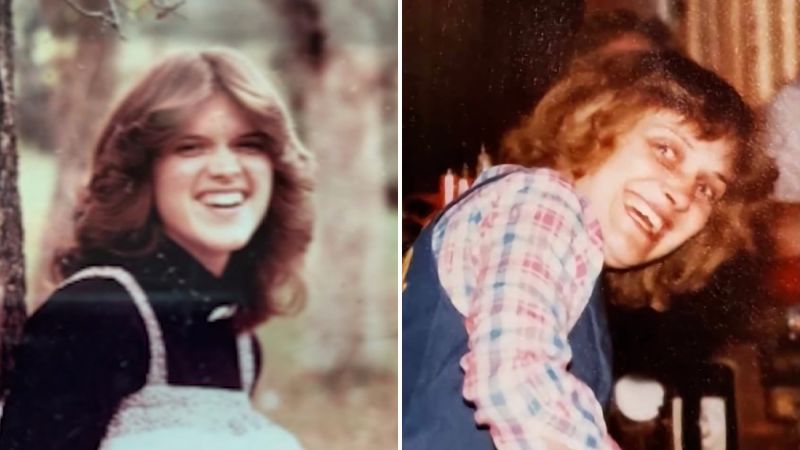
How Discarded Chewing Gum Helped Convict a Serial Rapist in Two Cold Case Murders
How discarded chewing gum helped convict – In a twist of fate that highlights the power of modern forensic science, a simple act of sampling chewing gum became the pivotal clue in solving two long-unsolved murders in Everett, Washington. Susan Logothetti, a detective, and her colleagues orchestrated the encounter, using a gum company promotion as a cover to approach Mitchell Gaff, a 68-year-old convicted rapist, at his home in January 2024. The scene unfolded with Gaff wearing pajamas and inviting the trio into his house, where he enthusiastically tried different gum flavors. What Logothetti later recalled as a moment of astonishment was the way Gaff spit a piece of gum into a small dish, inadvertently leaving behind saliva that would become the linchpin in connecting him to a 1984 crime.
The Gum Ruse and a Breakthrough in DNA Evidence
The discovery of Gaff’s DNA in the saliva sample, according to an affidavit of probable cause filed in March, was the key that unlocked the past. This “gum ruse,” as described in the legal document, allowed detectives to gather evidence that had eluded investigators for decades. The DNA extracted from the gum matched that found on the body of Judy Weaver, whose murder had been linked to a suspect who was never formally charged. Four decades after her death, the breakthrough came when forensic scientists confirmed the match, reigniting the case and linking it to Susan Vesey, another victim from 1980.
“I remember watching him spit the first piece of gum into the ramekin and seeing the saliva, and it was very hard for me to contain my excitement,” Logothetti told CNN.
At the time of the original crimes, DNA profiling was still in its early stages, limiting its utility in cold cases. However, the foresight of law enforcement in collecting vaginal swabs from Weaver’s murder scene proved critical. Those samples, submitted hours after her death, eventually led to a re-examination of the case in 2020. That year, a new wave of forensic advancements made it possible to revisit old evidence with fresh tools, ultimately revealing a link to Gaff.
Admissions and the Victims’ Stories
Mitchell Gaff, now facing up to life in prison, admitted to the murders of Judy Weaver and Susan Vesey during a plea statement on April 16. In the case of Vesey, a 21-year-old mother of two young children, Gaff described how he found her door unlocked and proceeded to tie her up, beat her, rape her, and strangle her. He further claimed to have wrapped cords around her neck and set fire to her bedroom to erase evidence of his crime. Weaver, a 42-year-old mother, was attacked in her home four years later, with Gaff stating he lit a corner of the bedspread to cover his tracks and ensure her death.
Both victims were killed in separate incidents that were once considered unrelated. The initial investigations into each case had identified persons of interest but failed to secure convictions. It wasn’t until the DNA from the gum sample provided a direct connection to Gaff that the truth emerged. The discovery not only solved the murders but also offered closure to families who had long carried the burden of uncertainty.
Forensic Innovation and the CODIS Connection
Forensic scientists at Washington State Patrol played a vital role in linking Gaff to the crimes. Lisa Collins, who worked on Weaver’s case, emphasized the transformative impact of recent advancements in DNA technology. “New software and strides in genetic genealogy are two relatively recent watersheds in DNA profiling that have allowed for breakthroughs in cold cases like these,” Collins said. The use of STRmix, a tool that enables analysis of smaller DNA samples, was particularly crucial. Collins explained that in Weaver’s case, the evidence included a binding with DNA from the victim, her boyfriend, and an unknown third party. By subtracting the DNA of the known individuals, forensic analysts narrowed the focus to the mysterious contributor.
Once the profile was isolated, it was entered into the Combined DNA Index System (CODIS), a national database containing profiles of convicted offenders. Mary Knowlton, another forensic scientist, noted that the process involved comparing the genetic material against existing records, which eventually identified Gaff as a match. “The CODIS system is a powerful tool,” Knowlton said, “but without the right software, even the most promising evidence could have gone unnoticed.”
A Legacy of Suspicion and Scientific Redemption
The connection between Weaver and Vesey’s murders not only validated the use of modern DNA technology but also underscored the importance of persistence in criminal investigations. Heather Wolfenbarger, Gaff’s defense attorney, declined to comment on the case, leaving the focus on the evidence that secured his conviction. For the families of the victims, the resolution was a long-awaited relief. “The Weaver and Vesey cases just needed science to catch up,” Logothetti said. “Now, they have the answers they’ve been searching for.”
The gum sample, once dismissed as a trivial detail, became a symbol of how even the smallest traces of evidence can reshape the course of justice. With the help of STRmix and CODIS, detectives transformed a seemingly mundane moment into a decisive breakthrough. This case exemplifies the evolving nature of forensic science, where past limitations are now overcome by innovative techniques. As Gaff prepares for sentencing, his story serves as a reminder of the enduring impact of DNA evidence in solving crimes that span decades.
