
He earned a Purple Heart fighting for the US. Swept up in Trump’s immigration crackdown, he now fights to come home
He earned a Purple Heart fighting for the US. Swept up in Trump’s immigration crackdown, he now fights to come home
A Soldier’s Return to America
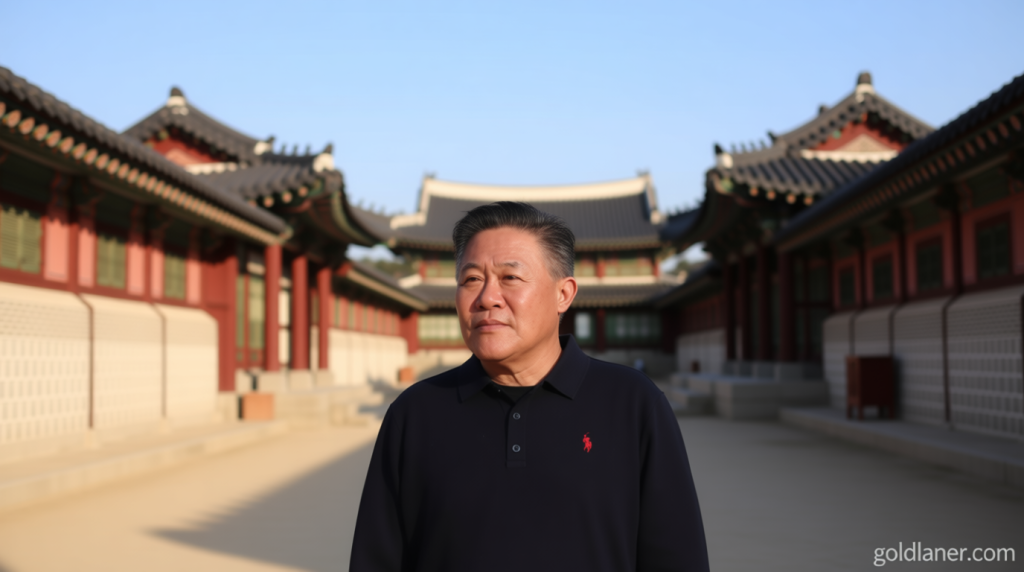
He earned a Purple Heart fighting – Sae Joon Park, a 56-year-old Army veteran, recently found himself in a peculiar situation: ordering pancakes and walking past soldiers in uniform, hearing a language he hadn’t spoken in years since leaving the United States. For a few hours, the experience felt like a fleeting glimpse of home. Yet, he was far from American soil, stationed at Camp Humphreys, a sprawling US Army base south of Seoul. The garrison’s amenities—chain restaurants, housing blocks, and training facilities—offered a semblance of familiarity, but the distance from his homeland weighed heavily on him.
“When I’m on base, it actually feels like I’m in America,” Park said, reflecting on his unexpected return. He had not lived in the country since childhood, a fact that made his current predicament all the more disorienting.
The Trump Era’s Impact on Veterans
Park, a former green-card holder, became one of many noncitizen veterans caught in the Trump administration’s aggressive immigration policies. These measures, which revived outdated removal orders and limited immigration officials’ discretion, led to the deportation of individuals with deep ties to the United States. His case gained national attention in December when lawmakers questioned then-Homeland Security Secretary Kristi Noem during a tense congressional hearing. They sought answers about how veterans—people who had risked their lives for the nation—could be targeted for expulsion.
The Department of Homeland Security (DHS) cited Park’s criminal record, including drug possession, bail jumping, and related charges, as justification for his removal. Despite his service, the agency maintained that his past convictions warranted action. Park is now exploring multiple legal avenues, including a request for a pardon from the governor of New York, in hopes of reclaiming his status. However, his attorney warned that these processes could span years and do not guarantee success.
A Childhood Shaped by Immigration
Park’s journey to the US began at age seven, when his parents’ divorce forced him to relocate alone from South Korea to Miami. The transition was difficult, as he recalled. “Miami was tough,” he told CNN. “I would always get in fights … I was the only Asian kid in the entire school, so I would get picked on a lot.” His mother, a single parent, worked tirelessly, taking on multiple waitressing jobs before eventually launching small businesses selling clothing and records.
After settling in Los Angeles, Park grew up surrounded by extended family in Koreatown and the San Fernando Valley. The city provided a sense of community, but his early struggles with identity and belonging persisted. “I always felt like I was two worlds away,” he explained. “One foot in Korea, one foot in America.” This duality would later define his life, both in his personal journey and his service to the United States.
The Combat That Changed Everything
Seeking purpose after high school, Park enlisted in the military with his best friend, following his uncle’s advice. His uncle, the eldest of his mother’s 11 siblings, was a South Korean Marine colonel who believed military service would provide direction. Park’s journey took him to Fort Clayton in Panama, where he quickly found himself immersed in what the Army called “the largest and most complex combat operation” since Vietnam. This was during Operation Just Cause, a campaign to remove Manuel Noriega, Panama’s drug-trafficking leader.
“I got there just in time for the training and to go into war,” Park recounted. The operation’s intensity was overwhelming, and within days, he was involved in a mission that would forever alter his life. His platoon raided the home of a Brazilian woman, described as Noriega’s “witch,” who allegedly conducted occult rituals for the dictator.
The raid revealed a shocking scene: closets filled with “crates of cocaine” and rooms containing jars of human body parts. As the mission unfolded, a firefight erupted outside, leaving Park wounded. He sustained two gunshot wounds, one to his spine and another to his lower back, before being dragged to safety. The injuries left him badly bleeding and gasping for breath, a moment that marked the beginning of his battle for survival.
A Purple Heart and a Nation’s Gratitude
Park’s bravery during the mission earned him a Purple Heart, the US military’s highest award for combat injuries. The honor was bestowed in a bedside ceremony at a San Antonio Army hospital, where he was airlifted after the incident. Though he doesn’t remember much of that time, the trauma of the experience left an indelible mark. The award symbolized recognition of his sacrifice, but it also highlighted the irony of his current status as an immigrant in his own country.
Returning to civilian life, Park grappled with the aftermath of his injuries and the psychological toll of combat. What he later diagnosed as post-traumatic stress disorder (PTSD) manifested in vivid nightmares and panic attacks triggered by loud noises. “After I came out of the military, I was really messed up,” he said. “Trying to live like a twenty, twenty-one-year-old, but my mind was constantly fighting battles I couldn’t escape.”
A Debate Over Loyalty and Justice
Park’s story has sparked a broader conversation about the balance between national security and the rights of veterans. Critics argue that Trump’s policies have disproportionately affected individuals who had already demonstrated their commitment to the United States. “Should people who gave their lives for this country be sent back to their homelands simply for a past conviction?” one immigration attorney asked. “That seems harsh, especially when their service was a testament to their loyalty.”
Despite the legal hurdles, Park remains determined. His case has become a symbol of the broader struggle for noncitizen veterans, who find themselves caught between their service and the consequences of their legal status. As he navigates the complex path to reentry, his journey underscores the human cost of policies that prioritize removal over redemption. “I never wanted to leave the US,” he said. “I just wanted to come back.”
The debate over his fate reflects a deeper question: how should a nation treat those who have fought for it, even if they are not citizens? For Park, the answer is still uncertain, but his resilience and dedication to the country he served continue to shine through. His story is a reminder that the line between hero and exile can be as thin as a border, and that the price of loyalty can sometimes be measured in years of separation and legal battle.
