Top Tech Gadgets for 2026 You Should Watch This Year

Daftar Isi
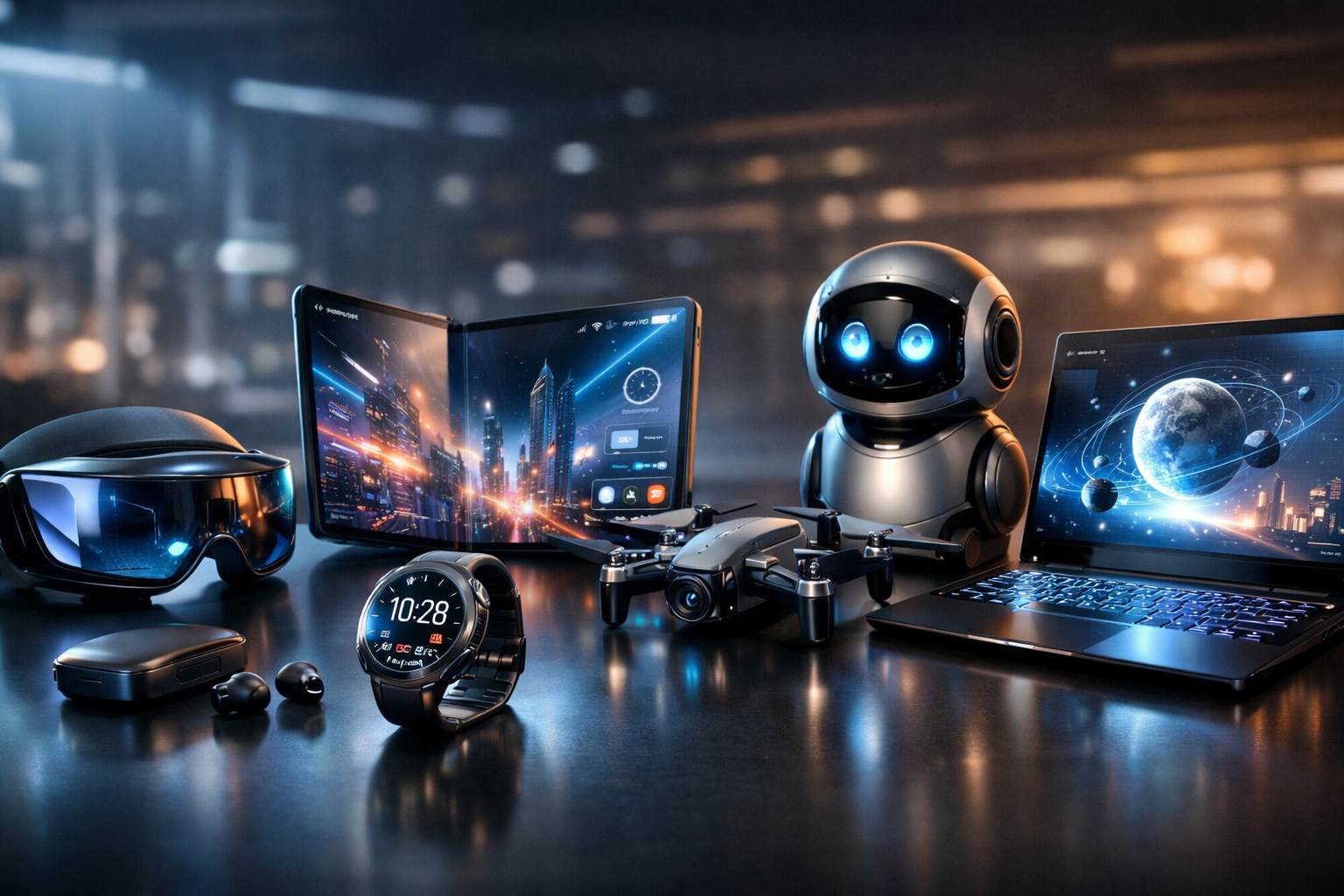
The rapid evolution of consumer technology continues to redefine how people live, work, and interact with digital environments. The top tech gadgets for 2026 reflect a shift toward smarter automation, deeper personalization, and seamless integration across devices. This year introduces innovations that are not just incremental upgrades but foundational changes in how hardware supports daily life.
AI-Powered Personal Devices
Artificial intelligence is no longer confined to software; it is now embedded directly into consumer hardware. Devices such as AI-driven wearables and smart assistants operate independently without relying heavily on cloud processing. This results in faster response times and improved privacy.
Smart glasses are a major highlight in the top tech gadgets for 2026 category. These devices integrate augmented reality overlays with real-time data processing, enabling users to navigate, communicate, and access information hands-free. Unlike earlier versions, the 2026 models are lighter, more discreet, and capable of all-day use.
AI smartphones are also evolving into predictive systems. They analyze user behavior to optimize battery usage, recommend actions, and automate routine tasks. This reduces manual input and enhances efficiency across daily activities.
Advanced Wearable Technology
Wearables in 2026 extend far beyond fitness tracking. Devices now focus on comprehensive health monitoring, including real-time blood analysis, hydration tracking, and early disease detection. These features position wearables as essential tools rather than optional accessories.
Smart rings are gaining traction due to their compact form and powerful sensors. They provide continuous biometric data without the bulk of traditional smartwatches. This aligns with the trend toward minimalistic yet functional design.
Another key development in the top tech gadgets for 2026 is neural interface wearables. These devices enable basic interaction with digital systems through brain signals. While still in early stages, they indicate a shift toward more intuitive human-device communication.
Next-Generation Smart Home Ecosystems
Smart homes are becoming fully autonomous systems rather than collections of connected devices. Central AI hubs coordinate appliances, lighting, security, and energy consumption in real time. This creates a unified ecosystem that adapts dynamically to user preferences.
Smart kitchens are a notable advancement. Appliances can identify ingredients, suggest recipes, and automate cooking processes with minimal input. This reduces time spent on routine tasks and improves consistency in meal preparation.
Energy management systems are also a major focus. Homes now include AI-driven grids that optimize electricity usage based on pricing, demand, and renewable energy availability. This contributes to both cost savings and environmental sustainability.
The integration level seen in these systems places them firmly among the top tech gadgets for 2026, as they transform entire living environments rather than individual tasks.
Breakthroughs in Portable Computing
Portable computing is shifting toward flexibility and adaptability. Foldable and rollable displays are becoming standard, allowing devices to change form based on user needs. This eliminates the need for multiple devices by combining functionality into a single unit.
Laptops are evolving into modular systems. Users can upgrade components such as GPUs, storage, and batteries without replacing the entire device. This extends product lifespan and reduces electronic waste.
Another emerging trend is cloud-integrated processing. Devices offload heavy computational tasks to edge servers while maintaining local responsiveness. This balance improves performance without increasing hardware size or energy consumption.
These developments define a new category within the top tech gadgets for 2026, where portability no longer compromises power or usability.
Immersive Entertainment and Gaming Tech
Entertainment technology in 2026 emphasizes immersion and realism. Virtual reality and augmented reality systems now offer near-photorealistic environments with minimal latency. This significantly enhances gaming, training simulations, and virtual collaboration.
Haptic feedback systems have advanced to provide detailed tactile sensations. Users can feel textures, resistance, and motion, creating a more engaging experience. This moves digital interaction closer to physical reality.
Gaming consoles and platforms are also integrating AI-driven storytelling. Games adapt narratives based on player decisions in real time, creating unique experiences for each user. This shifts gaming from static content to dynamic storytelling systems.
These innovations reinforce the position of immersive systems among the top tech gadgets for 2026, as they redefine how users engage with digital content.
Sustainable and Eco-Friendly Gadgets
Sustainability is becoming a core requirement in consumer technology. Manufacturers are prioritizing recyclable materials, energy-efficient components, and longer product lifecycles. This shift is driven by both regulatory pressures and consumer demand.
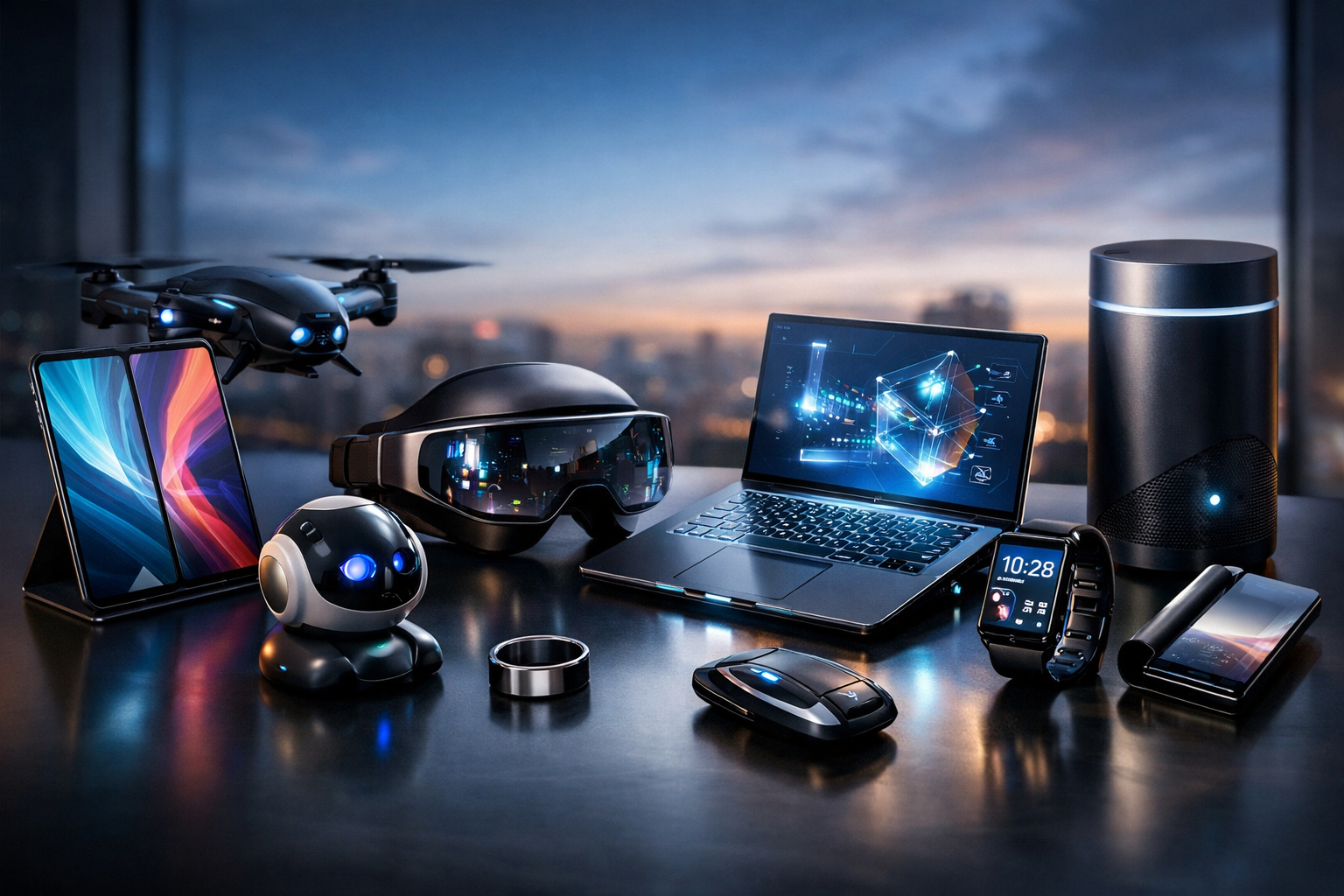
Solar-powered devices are gaining wider adoption. Portable chargers, wearables, and even some laptops now incorporate solar panels to extend battery life. This reduces dependency on traditional power sources.
Biodegradable electronics are another emerging trend. Components designed to decompose safely after disposal address the growing issue of electronic waste. While still developing, this approach signals a long-term change in manufacturing practices.
Sustainable innovation is a defining characteristic of the top tech gadgets for 2026, as environmental impact becomes a key factor in product development and consumer choice.
Connectivity and Communication Advancements
Connectivity technology is evolving to support the increasing number of smart devices. 6G networks are beginning to roll out, offering significantly higher speeds and lower latency than previous generations. This enables real-time data exchange across complex systems.
Satellite-based internet is expanding coverage to remote areas. This reduces connectivity gaps and supports global access to digital services. Devices are now designed to switch seamlessly between terrestrial and satellite networks.
Communication devices are also becoming more integrated. Smartphones, wearables, and home systems operate as a unified network, allowing continuous interaction across different environments. This eliminates fragmentation and improves user experience.
These advancements ensure that connectivity remains a critical component of the top tech gadgets for 2026, enabling all other technologies to function effectively.
Conclusion
The top tech gadgets for 2026 are defined by intelligence, integration, and sustainability. Devices are no longer isolated tools but interconnected systems that adapt to user behavior and environmental conditions. From AI-powered wearables to autonomous smart homes and immersive entertainment platforms, the focus is on enhancing efficiency and creating seamless experiences. These innovations indicate a transition toward technology that operates proactively rather than reactively.
FAQ
Q: What are the main trends in top tech gadgets for 2026?
A: Key trends include AI integration, advanced wearables, smart home automation, sustainable design, and improved connectivity.
Q: Are AI-powered devices safe to use?
A: Most modern devices prioritize on-device processing and data encryption to enhance privacy and security.
Q: Which gadget category is growing fastest in 2026?
A: Wearable technology and smart home ecosystems are experiencing the fastest growth due to increased functionality and demand.
Q: Do these gadgets require constant internet access?
A: Many devices now include offline capabilities, but full functionality often depends on stable connectivity.
Q: Are sustainable gadgets more expensive?
A: Initial costs may be higher, but long-term savings and durability often offset the price difference.