
Who was Niño Guerrero? The alleged drug kingpin the US killed in Venezuela
Who Was Niño Guerrero? The Alleged Drug Kingpin the US Killed in Venezuela
Who was Niño Guerrero The alleged – On a quiet Friday evening, US President Donald Trump made a dramatic declaration on his social media platform, Truth Social. He revealed that the United States and Venezuela had executed a covert operation to eliminate Héctor Rusthenford Guerrero Flores, known by his alias “Niño Guerrero,” who was labeled as the chief figure of the criminal network Tren de Aragua. The US government designated the group as a Foreign Terrorist Organization during Trump’s second term. The attack, described as “swift and lethal,” marked a significant moment in the ongoing battle against transnational crime in South America.
“Under my leadership, the US will find these vicious murderers and drug lords anytime, anyplace, and send them to the depths of hell where they belong,” Trump stated in his post.
Accompanying his announcement was a 10-second video clip, offering a bird’s-eye perspective of a structure with a galvanized metal roof being destroyed in a sudden explosion. The clip, though brief, served as visual evidence of the operation’s execution. Meanwhile, Venezuela’s acting President Delcy Rodríguez confirmed the joint effort occurred in the southeast of Bolívar state, emphasizing that the collaboration involved intelligence sharing and technical expertise from the US.
The Hidden Life of a Fugitive
Until the operation’s reveal, Niño Guerrero’s location had remained a mystery. Authorities claimed he had evaded capture for years, with his criminal history dating back decades. The US State Department’s profile on him was sparse, listing only his full name and birth date—though discrepancies emerged between the official records and those from Venezuelan courts. Both sources agreed on his birthplace: Maracay, the capital of Aragua state, in 1983.
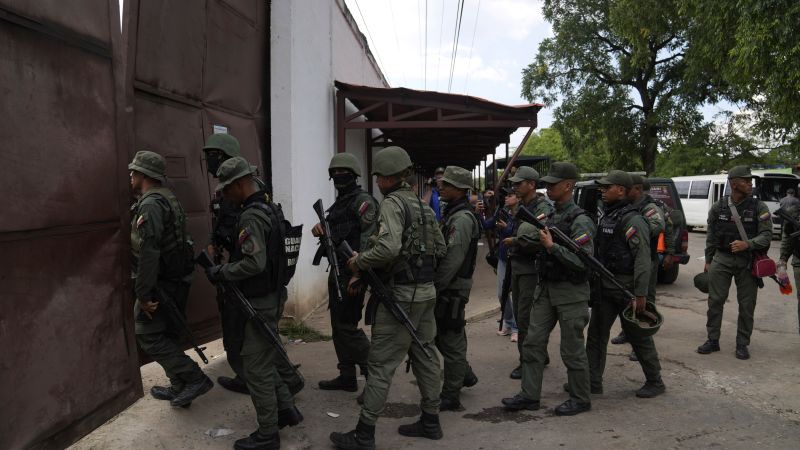
Guerrero’s criminal career began in 2005, when he was arrested for the murder of a government official, as stated in a 2018 ruling by Venezuela’s Supreme Court. He escaped from Tocorón prison, a notorious facility in Aragua, in September 2012, only to be recaptured in 2013. During his imprisonment, Tren de Aragua grew in strength, leveraging the prison’s infrastructure to expand its influence. The group reportedly constructed facilities like swimming pools and restaurants within the prison walls, creating a self-sustaining criminal ecosystem.
After his recapture, the gang began shaping its modern structure, with Guerrero at its helm. By 2015, Tren de Aragua had established dominance over San Vicente, a neighborhood in Guerrero’s birthplace of Maracay. According to InSight Crime, the gang’s reach extended beyond Venezuela, controlling areas in Colombia, Ecuador, Peru, Bolivia, and Chile. Transparencia Venezuela, a branch of Transparency International, further noted its operations in Brazil and Costa Rica, underscoring the group’s transnational nature.
International Reach and Legal Actions
Tren de Aragua’s activities were not confined to South America. In December 2025, the US Attorney’s Office for the Southern District of New York charged Guerrero with orchestrating acts of terrorism within the US. This marked a critical escalation in the US’s campaign against the group, which had already established a presence in the United States. The charge came after years of alleged criminal activity, including drug trafficking and organized violence, linked to the gang’s operations across borders.
Guerrero’s flight from justice began when the Venezuelan government took control of Tocorón prison in October 2023. Prior to this, the facility had been under the group’s influence, allowing them to manipulate the prison system and maintain Guerrero’s anonymity. His escape prompted the US to offer a $5 million reward for information leading to his apprehension. The reward, part of a broader effort to track down key figures, highlighted the gang’s perceived threat to global security.
Despite his absence from public view, Guerrero’s legacy endured through Tren de Aragua’s expansion. The group’s operations spanned multiple countries, linking Venezuela’s internal struggles with regional and international drug trafficking networks. Mexican authorities have reported arrests of individuals tied to the gang, further illustrating its widespread reach. The US’s involvement in Venezuela, however, was not without controversy, as it raised questions about sovereignty and the use of military force in combating organized crime.
Legacy of a Criminal Empire
Guerrero’s leadership transformed Tren de Aragua into a formidable criminal empire. The gang’s ability to control prison systems and operate in both legal and illicit domains demonstrated its strategic acumen. By 2016, a trial court in Aragua sentenced Guerrero to 17 years and two months for a series of crimes, including homicide, weapon concealment, and drug trafficking. Yet, the sentence felt symbolic, given the gang’s stronghold within the prison walls.
His death in Venezuela, however, marked a turning point. The US’s involvement in the operation underscored its commitment to dismantling transnational criminal networks. The joint effort with Venezuela, though collaborative, was also a display of geopolitical maneuvering. As Trump’s administration sought to project strength, the killing of Guerrero became a symbolic victory in the fight against drug lords and terrorist activities.
While the US and Venezuela celebrated the operation, critics questioned its long-term effectiveness. The absence of detailed information about Guerrero in government records raised doubts about the thoroughness of the investigation. Yet, his story remains a testament to the power of organized crime in South America and the complex alliances formed to combat it. The legacy of Niño Guerrero, from his early criminal acts to his eventual downfall, continues to shape the narrative of Tren de Aragua’s influence across borders.
