
Ukraine launches largest attack on Moscow since start of full-scale war
Ukraine Launches Largest Attack on Moscow Since Start of Full-Scale War
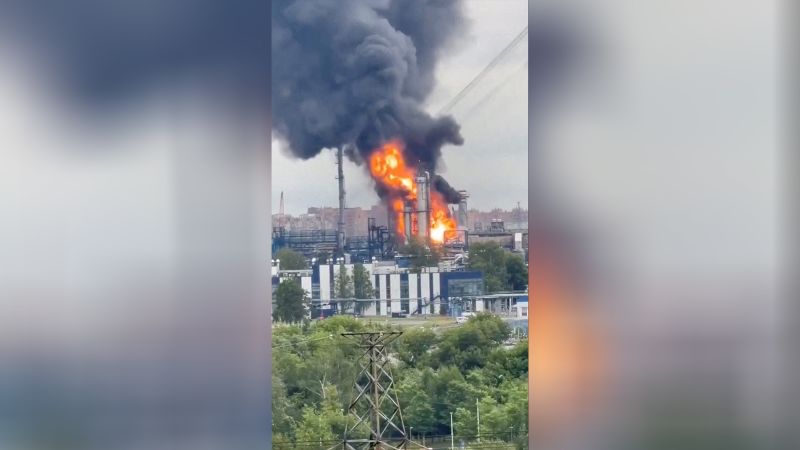
Ukraine launches largest attack on Moscow – Ukraine executed a significant drone strike on Moscow, marking one of the most substantial attacks on the Russian capital since the war began. The assault targeted a vital oil refinery, resulting in fires and debris falling across the surrounding area. According to Moscow Mayor Sergei Sobyanin, air defenses neutralized at least 194 drones overnight into Thursday, a number significantly higher than previous days of intense attacks. This surge in drone effectiveness highlights Kyiv’s enhanced capabilities in aerial warfare over the past four years, since Russia’s full-scale invasion initiated.
Broader Attack and Defensive Response
The strike was part of a wider Ukrainian offensive spanning multiple regions of Russia. The Russian Ministry of Defense reported intercepting nearly 1,000 drones during the operation, including those launched near the Sea of Azov. As a result, flights at major Moscow airports were temporarily halted, as reported by Reuters, citing the Russian aviation authority. This coordinated effort underscores the scale of Ukraine’s strategic operations against Russian infrastructure.
“In recent days, all our partners have noted the precision and effectiveness of our mid-range strikes and long-range sanctions,”
Ukrainian President Volodymyr Zelensky, who arrived in Brussels for NATO meetings, emphasized the importance of targeting Russian energy systems. He framed Thursday’s strikes as a justified retaliation against attacks on Ukrainian cities, sharing this view in a Telegram post. The president also highlighted that his allies have acknowledged the growing potency of Kyiv’s aerial campaigns.
Damage and Strategic Targets
Among the primary targets was the Moscow Oil Refinery in Kapotnya, a district just 15 kilometers from the Kremlin. The facility suffered damage in both the previous day and Thursday’s attack. CNN’s geolocated video footage depicted a ground-launched projectile firing from a road as drones approached the refinery, creating thick black smoke. Another clip showed a massive explosion that toppled a fuel tank’s roof, sending debris into the air.
Additional damage was reported near Moscow’s Sadovod Trade Center, Russia’s largest mall. A plume of smoke rose from the area, indicating the scale of the attack. An apartment building and a fitness center in the capital were also affected by falling debris, according to TASS. At least 16 individuals sustained injuries, as stated by Moscow’s regional governor, Andrei Vorobiev.
Ukraine’s assault extended beyond Moscow, with another oil depot in Rostov region and two bridges in occupied territories of the country also hit. The Ukrainian General Staff confirmed these targets, reinforcing the military’s focus on disrupting Russian logistics and energy networks. In response, Russia launched seven missiles and 239 drones, according to the Ukrainian Air Force, hitting private homes, energy facilities, and oil infrastructure in Kyiv and Poltava regions.
Economic Impact and Geopolitical Context
Russia’s reliance on oil revenue has grown critical over the years, with analysts noting that the state budget depends on at least one-third of its income from energy sales. However, stricter sanctions from the European Union and Washington have reduced the pool of buyers for Russian oil, despite the Iran war offering a temporary boost through rising global fuel prices and eased penalties.
The recent attack came shortly after the G7 summit in France, where Zelensky asserted that world leaders had unified in supporting Ukraine’s acquisition of advanced air defense systems. He mentioned that U.S. President Donald Trump had positively received his proposals. Earlier that week, Trump advocated for a peace deal with Russia, stating, “Russia’s lost tremendous amounts of people, and so had Ukraine,” during a speech.
International Reactions and Ongoing Efforts
At a NATO defense ministers meeting in Brussels, NATO Secretary-General Mark Rutte highlighted the alliance’s discussions with Zelensky, citing Russian casualties at 30-35,000 per month. He noted that efforts to secure Ukraine’s military needs, including missile interceptors and weapon systems, are still underway. Rutte’s comments reflect the alliance’s commitment to sustaining Kyiv’s defense capabilities.
“Ukraine is doing really well,”
Rutte added, emphasizing the progress made by Ukrainian forces. This statement aligns with the broader narrative that Ukraine’s resilience has been a key factor in the war’s evolving dynamics. The NATO meeting occurs at a crucial juncture for Europe, which has faced political turmoil due to statements from Trump administration officials. Despite this, the alliance remains focused on reinforcing Ukraine’s strategic position.
Targeting Energy Infrastructure
Ukraine’s intensified drone campaigns against Russian energy facilities have become a central component of its military strategy. Recent attacks included naval bases, oil depots, and terminals, with some incidents occurring in the Leningrad region. This area recently hosted a global economic forum, often compared to Russian President Vladimir Putin’s version of Davos. The strikes aim to weaken Russia’s economic foundation, as energy exports remain a cornerstone of its financial stability.
With the war entering its fifth year, Ukraine’s ability to strike deep into Russian territory has shown marked improvement. This capability not only pressures Moscow’s military but also impacts its economic prospects. The sustained targeting of energy infrastructure demonstrates Kyiv’s shift toward a more aggressive approach, blending military and economic warfare in its strategy.
Context and Future Implications
As the conflict intensifies, the focus on energy targets highlights the intersection of military and economic objectives. The attacks on Moscow and other key locations have forced Russia to divert resources toward defending its capital and infrastructure, while Ukraine gains leverage in negotiations. Analysts suggest that these strikes could further strain Russia’s ability to sustain its war efforts, especially as global demand for oil fluctuates.
The continued escalation in drone warfare also signals a new phase in the war, where technology and precision play a pivotal role. With Ukraine’s capabilities expanding, the potential for more coordinated and impactful strikes remains high. This development has significant implications for the war’s trajectory, potentially altering the balance of power between the two nations in the coming months.
