
‘The greatest cosmic movie ever made’: Historic telescope kicks off an unprecedented survey
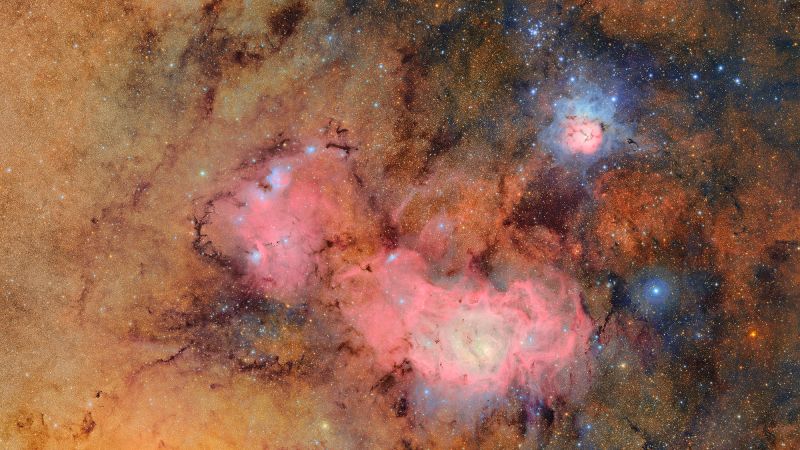
The greatest cosmic movie ever made: Historic telescope kicks off an unprecedented survey
The greatest cosmic movie ever made – The Vera C. Rubin Observatory, nestled in the Andes Mountains of Chile, has officially begun its groundbreaking mission to capture the universe’s dynamic story. Over the next decade, the facility’s colossal camera, comparable in size to a compact vehicle, will generate images every 40 seconds during the night, amassing a vast visual record of the southern sky. This effort, known as the Legacy Survey of Space and Time (LSST), aims to create a comprehensive time-lapse of cosmic events, potentially shedding light on unresolved questions about the universe’s structure and evolution.
About the Rubin Observatory
Located on the 8,800-foot summit of Cerro Pachón in northern Chile, the Rubin Observatory is a state-of-the-art scientific hub equipped with the world’s largest digital camera, weighing 6,600 pounds. The site’s dark skies and arid climate make it an ideal location for astronomical observation, ensuring minimal atmospheric interference. This camera, which will operate continuously for ten years, is designed to capture the faintest and farthest celestial objects, from nearby asteroids to distant galaxies.
The observatory’s first images were released last year, setting the stage for its full launch. However, the timeline was extended beyond initial projections due to rigorous system testing and optimization. After a thorough review of technical readiness, data system performance, and scientific validation, the LSST was officially launched, marking a pivotal moment in modern astronomy.
Project Objectives
The LSST’s primary goals include building a detailed inventory of the solar system and the Milky Way, while also exploring the enigmatic nature of dark matter and dark energy. By analyzing the distorted light from distant galaxies, scientists hope to uncover insights into the invisible forces shaping the cosmos. Additionally, the survey will document the life cycles of celestial phenomena, such as supernova explosions and black hole activity, providing a living archive of cosmic change.
According to a recent statement, the project will enable researchers to track the evolution of star systems and galaxies across time. This will allow for the detection of rare events, like transient astronomical occurrences or the collision of cosmic bodies, that are typically difficult to observe. The data collected will also serve as a foundation for collaborative efforts, with global observatories working in tandem to analyze significant celestial developments.
Technological Innovation
At the heart of the LSST is its advanced imaging technology, which uses a series of colored filters to simulate superhuman vision. These filters enhance the camera’s ability to distinguish between different types of celestial objects, offering a nuanced perspective of the universe. The resulting images will not only depict exploding stars and cosmic collisions but also reveal the subtle shifts in light that hint at the presence of dark matter.
“This moment reflects decades of vision, innovation and the power of federal investment,” said Brian Stone, who is currently serving as the acting director of the US National Science Foundation. His remarks underscore the collaborative effort between the NSF and the Department of Energy, which jointly funded the $800 million project. The combined resources have allowed the observatory to achieve its ambitious scope, which includes creating a dynamic map of the universe’s history.
“Rubin is bringing the universe to life, illuminating a treasure trove of discoveries: pulsating stars, supernova explosions, the fossil record of galaxies, clues to the mysteries of dark energy and dark matter, and entirely new phenomena never seen before,” the observatory team shared in a news release.
Operational Process
Each night, the observatory’s camera will scan the southern sky, capturing thousands of images that will be stitched together to form a detailed record of the cosmos. The survey’s design allows for repeated observations of the same regions, enabling scientists to track the progression of celestial objects over time. This approach will create a living image of how the universe evolves, from the birth of stars to the formation of galaxies.
The process of assembling these images requires careful calibration and precision. The camera’s system uptime and reliability are critical to ensuring consistent data collection. “Important factors that played a role in this decision included image quality, effective survey speed, system uptime and reliability, and calibration accuracy,” explained Željko Ivezić, head of the LSST. These elements are essential for producing high-quality data that can be used by researchers worldwide.
Already, the observatory has made early progress, detecting 11,000 new asteroids and identifying dozens of other previously unknown objects in our solar system. These discoveries highlight the camera’s ability to uncover hidden details, even in its initial phases. As the LSST progresses, its data will serve as a cornerstone for future astronomical research, with machine learning playing a key role in analyzing the vast volume of information generated nightly.
Scientific Impact
Researchers anticipate the LSST will generate 7 million alerts per night, signaling interesting movements, explosions, or phenomena that require further investigation. This data will not only support scientific analysis but also engage the public in exploring the universe. “When the LSST is complete, the final dataset will contain billions of objects with trillions of measurements, all accessible through regular data releases,” the observatory’s news release stated. This unprecedented collection of information will democratize access to astronomical data, allowing both professionals and amateurs to contribute to scientific advancements.
The LSST’s ability to detect subtle changes over time is expected to revolutionize our understanding of cosmic events. For example, it may help track the gradual dimming of supernovae or the slow dance of distant galaxies. By combining these observations with those from other telescopes, the project will create a holistic view of the universe, enriching the field of astrophysics and opening new avenues for discovery.
As the time-lapse unfolds, the observatory’s work will provide a continuous narrative of the cosmos.
