
Texas teen sentenced to 35 years in prison for fatally stabbing another athlete at a high school track meet
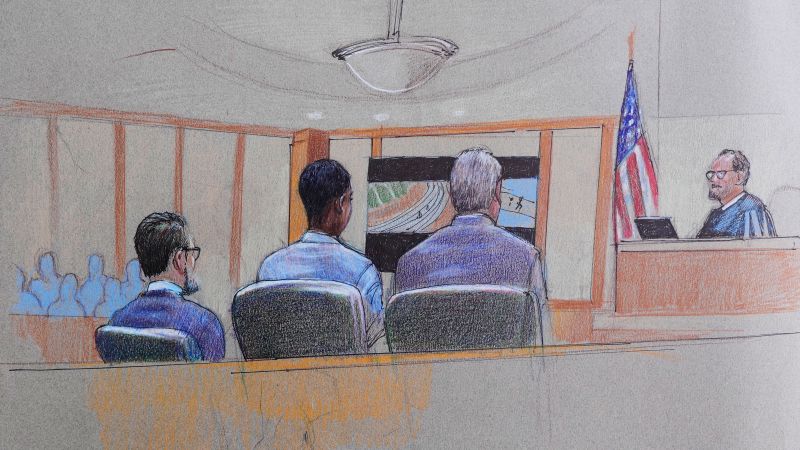
Texas Teen Receives 35-Year Sentence for Fatal Stabbing at High School Track Meet
Texas teen sentenced to 35 years – McKinney, Texas — A 19-year-old high school student, Karmelo Anthony, was convicted of murder and sentenced to 35 years in prison on Tuesday following a trial that sparked nationwide attention. The verdict, delivered in a Collin County courtroom, concluded that Anthony had fatally stabbed Austin Metcalf, a 17-year-old athlete from a rival team, during a heated confrontation at a track meet in the stadium bleachers. The case, which unfolded on a rainy spring day in April 2025, has become emblematic of broader societal tensions, fueled by social media posts that framed the incident in racial terms.
A Trial Marked by Rivalry and Emotion
The courtroom buzzed with tension as the jury swiftly dismissed Anthony’s self-defense claims. Anthony, a member of the Frisco-based team, was accused of provoking Metcalf, who was part of another group competing at the event. Witnesses testified that Anthony refused to leave Metcalf’s team’s tent, leading to an escalating argument. The confrontation, which occurred amid the backdrop of athletic competition, drew a crowd of spectators and heightened security measures around the courthouse.
“He’s very sorry for what he did. Please, have mercy on my son,” Anthony’s mother, Kala Hayes, implored jurors after the verdict was announced.
Anthony’s mother was the sole witness during the sentencing phase, while his defense attorney, Mike Howard, emphasized the emotional turmoil of the moment. “Texas law does not require that you wait until you get hit,” Howard argued, urging jurors to consider the split-second chaos. “You must put yourself in his shoes,” he said, attempting to portray Anthony as a victim of provocation.
In contrast, prosecutor Bill Wirskye presented a case centered on accountability. “Mercy to the guilty is cruelty to the innocent,” he stated, advocating for a harsh sentence. The jury, which deliberated for less than three hours, opted for murder over the lesser charge of manslaughter, a decision that underscored the gravity of the act. The same jury will determine the final sentence, though the verdict had already been sealed.
The Heat of the Moment
Testimony from students revealed the dynamics of the clash. Anthony had been sitting under the Memorial High School tent when Metcalf and others demanded he move. Witnesses described Anthony’s aggressive response, including a moment where he reached into a bag and warned Metcalf: “Touch me and see what happens,” according to a police report. This statement, along with Metcalf’s earlier shove, became pivotal in the prosecution’s narrative.
“You don’t get to meet a shove with a stab, especially if you provoke the shove,” Wirskye asserted, highlighting Anthony’s actions as premeditated.
Anthony’s refusal to vacate the tent, coupled with his verbal challenge, escalated the situation. The incident, though brief, left lasting repercussions. As the verdict was delivered, dozens of people gathered outside the courthouse, enduring 90-degree heat to witness the outcome. One woman broke down in tears, shouting, “This isn’t real!” as the sentence was finalized.
A City and a Community in the Spotlight
Frisco, a rapidly growing city in Texas, has become a focal point for this tragedy. Known for its modern school campuses and state-of-the-art athletic facilities, the community now grapples with the aftermath of a violent act that occurred during a seemingly routine event. The parents of both victims expressed hope that their children’s futures would be defined by their aspirations, not the incident. “They were good students who planned to go to college,” one parent noted, reflecting on the loss.
During the nearly weeklong trial, prosecutors stressed Anthony’s role as the aggressor, citing his verbal provocation and the sequence of events leading to the stabbing. “This is not self-defense, folks. It’s murder plain and simple,” Wirskye emphasized, painting a clear picture of Anthony’s intent. The defense, however, argued that Metcalf had no legal authority to escalate the conflict, claiming the confrontation was a mutual clash rather than a calculated attack.
Despite the racial angle that social media amplified, both attorneys acknowledged that the case was not solely about race. Anthony, a Black teen, and Metcalf, a white student, were strangers before the incident. The trial’s conclusion, however, has ignited discussions about justice, accountability, and the role of social media in shaping public perception. As the sentence took effect, the community in McKinney and beyond continues to process the impact of this event on young lives and the broader cultural narrative.
The case has also highlighted the pressures of competition and the potential for conflicts to escalate quickly. Anthony’s actions, though impulsive, have led to a lifelong prison sentence, while Metcalf’s family mourns the loss of a promising athlete. The trial’s brevity and the jury’s unanimous decision reflect the clarity with which the facts were presented, as well as the emotional weight of the moment. As the courtroom echoed with the finality of the sentence, the story of Anthony and Metcalf serves as a reminder of the fragility of life and the consequences of moments of anger or fear.
With the verdict and sentence now sealed, the focus shifts to the future of Anthony, who will spend the next 35 years reflecting on his actions. Meanwhile, the Metcalf family seeks closure, while the community debates the balance between justice and leniency. The trial, though centered on a single act, has become a symbol of the complexities of youth, rivalry, and the pursuit of fairness in a divided society.
