
Scott Pelley speaks: ‘CBS News is on fire’ and Bari Weiss should be removed
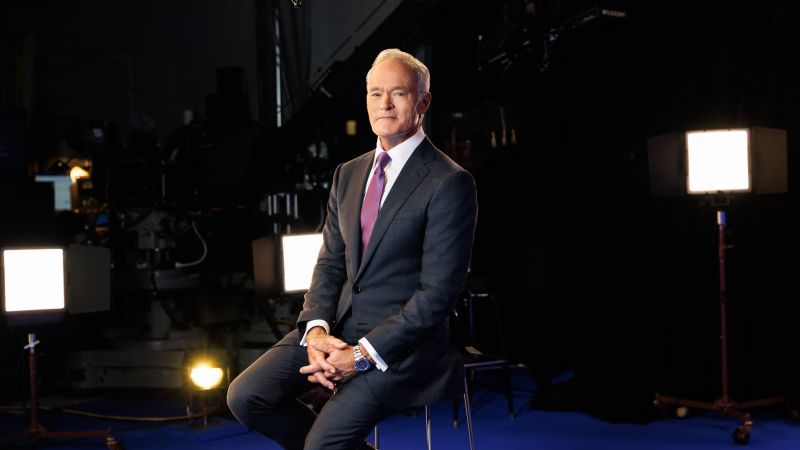
Scott Pelley’s Departure and Critique of CBS News Leadership
Scott Pelley speaks – Scott Pelley, the former anchor of CBS News’ flagship program 60 Minutes, has openly criticized the network’s editorial direction, calling it “on fire” and urging the removal of its editor in chief, Bari Weiss. His remarks, made during an interview with The New York Times, mark his first public reflection since being fired in early June. Pelley’s comments have reignited debates about the role of political influence in CBS News and the internal dynamics of the once-esteemed program.
Pelley’s Allegations of Political Interference
According to Pelley, the current leadership at CBS News has allowed political bias to shape its content, particularly during the latest season of 60 Minutes. He claimed that Weiss was “putting a thumb on the scale” in favor of the Trump administration, suggesting that the network’s editorial decisions were compromised. “My hope is that the leadership of Paramount will say to themselves, this isn’t working,” Pelley stated, emphasizing his belief that the organization’s approach has strayed from its core principles.
“My hope is that the leadership of Paramount will say to themselves, this isn’t working.”
Pelley argued that the problem was not political influence alone, but a deeper issue of “incompetence” within the news division. He stressed that the true challenge lies in the network’s failure to adapt to evolving media trends, even as it continues to dominate television audiences. His interview, published Sunday morning, highlights his resolve to voice these concerns despite his recent dismissal, underscoring the controversy surrounding the changes at 60 Minutes.
The Staff Shake-Up and Weiss’s Reorganization
The tension between Weiss and the 60 Minutes team escalated in May when she orchestrated a major restructuring, ousting several key figures, including executive producer Tanya Simon and two correspondents, Cecilia Vega and Sharyn Alfonsi. Simon, who had worked on the show for years, was reportedly “completely blindsided” by the sudden shift, according to Pelley. While Weiss’s team has defended the move as necessary for modernization, some staff members have described the changes as disruptive and emotionally charged.
As part of the overhaul, Weiss appointed Nick Bilton, a former tech reporter, to lead the show. This decision has further strained relations with long-time employees, many of whom view Bilton’s appointment as a symbolic shift toward outsider influence. Pelley, who was fired just days after the shake-up, criticized the move, calling Bilton “unqualified” and accusing him of lacking the expertise to steer the program. “I confronted Bilton because somebody had to stand up not just for the broadcast but for the people,” Pelley explained, reflecting on the heated staff meeting that preceded his termination.
Political Ties and the Legacy of “60 Minutes”
CBS parent company Paramount has maintained a close relationship with former President Donald Trump, seeking his approval to acquire Warner Bros. Discovery. This political alignment has fueled accusations that the network is softening its stance to please Trump, a claim that network spokespeople have denied. However, Pelley has echoed these concerns, asserting that the management is pushing a “subtle political bias” that undermines the show’s independence.
Despite these criticisms, Pelley acknowledged the program’s past success, including a notable 9% rise in ratings during the most recent season. He argued that the show’s growth in viewership, particularly with the 11% increase in NFL regular season game ratings, demonstrates its strength and relevance. “We’re there. We’re everywhere,” he said, emphasizing the show’s ability to reach diverse audiences through both traditional broadcasts and digital platforms like 60 Minutes Overtime, which launched in 2010.
“We started our first ‘60 Minutes’ online show, ‘60 Minutes Overtime,’ in 2010.”
Yet, Pelley’s remarks also revealed a rift between him and Weiss’s vision for the show. He accused the new management of failing to recognize the program’s historical achievements and its capacity for innovation. “The bigger problem,” he stated, “was not any kind of political influence. The problem was the incompetence.” This sentiment has been shared by some veterans of the show, who question why changes are needed if 60 Minutes is already thriving in a competitive media landscape.
Conflicting Visions and the Path Forward
Weiss, who has been a vocal advocate for transformation, has framed her leadership as a necessary evolution for 60 Minutes. According to insiders, her goal is to preserve the show’s legacy of in-depth reporting while modernizing its approach to align with streaming-era demands. “Her efforts are about ensuring that ‘60 Minutes’ — and its DNA of hard-hitting interviews, probing investigations, deep journalism — is built to survive a changing media landscape,” one source noted.
However, the restructuring has been met with mixed reactions. While some support Weiss’s push for fresh perspectives, others feel the show’s insular culture is being eroded. Longtime employees describe the network as fiercely protective of its traditions, a quality they believe is essential to maintaining credibility. “CBS News is famously insular and proud of its culture,” one veteran remarked, “and that’s precisely because its independence and integrity deserve protecting.”
The Ripple Effect of Leadership Changes
The fallout from Weiss’s reorganization has extended beyond the editing room, creating a sense of uncertainty among the show’s staff. Pelley’s firing, justified by Bilton as a response to his “performative display of hostility,” has deepened the divide. “There’s no interest in contributing to the future success of the show, or approaching my new tenure with a mind open to collaboration and progress,” Bilton said, according to the network’s explanation. This has left many in the team feeling “heartbroken” and questioning the long-term impact of the changes.
As the controversy unfolds, the broader implications for CBS News remain a topic of discussion. Pelley’s departure symbolizes a shift in power, with Weiss’s team now driving the show’s direction. Critics argue that the program’s legacy is at risk, while supporters believe the changes are vital for staying relevant in a rapidly evolving industry. The battle between tradition and transformation continues to shape the future of one of America’s most iconic news programs.
In a conversation with The New York Times interviewer Lulu Garcia-Navarro, who is also a CNN contributor, Pelley highlighted the stakes of the current situation. “This is like somebody walking up to me and saying, ‘There’s a 747,” he said, using a metaphor to underscore his frustration with the perceived disconnect between the show’s history and its current trajectory. His words reflect a broader struggle within CBS News: balancing the need for innovation with the preservation of its foundational values.
As the network navigates this transition, the question remains whether Weiss’s leadership will solidify 60 Minutes as a forward-thinking entity or jeopardize its storied reputation. With ratings growth and a strong historical foundation, the show’s future hinges on its ability to reconcile these competing priorities. For now, Pelley’s criticism serves as a reminder of the high standards that once defined CBS News and the challenges it faces in the modern era.
