
Robots are redefining the war in Ukraine – and forcing Russia onto the back foot
Ukraine’s Unmanned Warfare: A New Era of Conflict Against Russia
Robots are redefining the war in Ukraine – The war in Ukraine has transformed dramatically, with robots and drones becoming central to the conflict. In a scene where a mechanical hum echoes as a dust cloud swirls, a distant explosion signals the culmination of a mission orchestrated by Ukrainian forces. No soldiers are present on the ground; instead, commanders in eastern Ukraine direct strikes from behind screens, their eyes fixed on feeds from reconnaissance drones overhead. This shift marks a pivotal moment in the war, where technology now dictates the battlefield’s rhythm, leaving Russia struggling to keep pace.
A Shift in Warfare Tactics
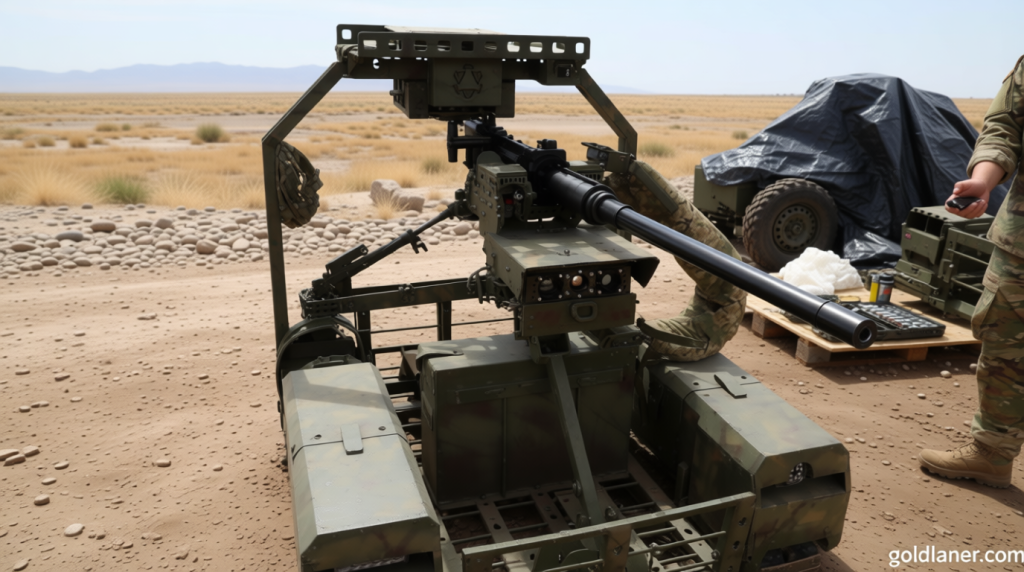
Ukraine’s reliance on unmanned systems has emerged as a response to months of dwindling manpower and uncertain American support. With the Third Assault Brigade’s “NC13” unit leading the charge, the nation has pivoted toward automation, deploying machines that can navigate urban terrain and strike with precision. These robotic units, equipped with explosive payloads on four-wheel chassis, have been dubbed “silent death” by Russian prisoners, a testament to their stealth and effectiveness. Operators observe the action from control hubs, where real-time data streams guide the assault, reducing the need for human exposure in high-risk zones.
The efficiency of these systems is staggering. According to the unit’s calculations, 164 assaults would have required 2,300 troops in traditional roles, but now the same effect is achieved with a fraction of the personnel. The risk for Ukrainian soldiers has been halved, as machines take the brunt of combat. This technological leap has not only minimized casualties but also forced Russia into a defensive stance, its forces stretched thin and adapting to a new kind of warfare.
The Human Element in Robot Combat
Despite the mechanical dominance, the human factor remains critical. Bar, the deputy commander of the NC13 unit, recalls the stark contrast between past urban battles and the present. “Back then, war was a visceral experience,” he reflects. “You felt every explosion, every bullet. Now, it’s a silent, calculated operation.” The psychological toll of combat has been eased, as operators now experience the war from a distance, their decisions mediated by screens and software.
For Mykola “Makar” Zinkevich, the unit’s commander, the transition feels incomplete. “War was once about skill, discipline, and courage,” he says. “Now, it’s about technology. The battlefield is no longer a place of human resolve—it’s a realm of algorithms and remote control.” Yet, he acknowledges the necessity of this change, stating, “If we had this equipment four years ago, more of my comrades would have survived.” The war has become a race against time, with Ukraine striving to outmaneuver a Russia that is increasingly reactive.
Strategic Implications of Unmanned Forces
Ukraine’s strategy is now deeply rooted in the capabilities of its robot army. The goal of eliminating 35,000 Russian soldiers monthly has become a tangible objective, driven by the mass production of drones and the industrialization of their accuracy. This approach has forced Moscow into difficult recruitment decisions, drawing from urban centers and middle-class populations to replenish its ranks. A recent report from the British spy agency GCHQ estimates that over 500,000 Russian deaths have been recorded, a figure that underscores the impact of these unmanned systems.
The evolution of warfare in Ukraine has also redefined the role of its personnel. Gora, a 22-year-old embedded hardware and software engineer, is one of the new generation of combatants. “I’m not just a software engineer,” she asserts, her voice firm as she adjusts the controls in the unit’s hub. “I’m part of the system that makes this possible.” Her work bridges the gap between technology and strategy, ensuring that the machines function seamlessly. “The key isn’t the vehicles,” she explains. “It’s the minds behind them—how they coordinate communication between drones, operators, and the battlefield.”
However, the challenges of this new frontier are ever-present. Operators must contend with evolving tactics, such as the spoofing of the Salamander 6, a robotic unit that recently fell victim to deception. “We’ve plotted a course, but the enemy may have rerouted it,” a commander warns. This adaptability highlights the complexity of unmanned warfare, where Russia continues to innovate and counter Ukraine’s advantages. Yet, the Ukrainian edge remains significant, with each mission contributing to a broader narrative of attrition against the invading force.
The war’s transformation is not just a matter of machines replacing humans, but of a new mindset taking hold. In a recent statement, President Volodymyr Zelensky highlighted the success of robotic operations, citing 22,000 missions conducted since January. This number, though impressive, is a symbol of Ukraine’s resilience. The country’s ability to industrialize drone technology has turned the tide, as the once-masculine image of war is now intertwined with digital innovation.
The Cost of Adaptation
As Ukraine advances its unmanned capabilities, the human cost of the war persists. The relentless four-year invasion has left the nation’s population decimated, yet its military has found a way to continue the fight with fewer casualties. The robots, with their silent approach and explosive precision, have become the silent heroes of this conflict, their impact felt in the destruction they cause and the lives they save.
But the future of the war remains uncertain. While Ukraine’s strategy has proven effective, the reliance on technology raises questions about the long-term sustainability of its approach. Can the robot army maintain its momentum as Russia develops countermeasures? Or will the war eventually revert to its traditional, human-centric form? For now, the answer seems to be in the machines, their mechanical hum a reminder of the shifting balance of power in the region.
The battlefield of Ukraine is no longer just a physical space—it is a domain of innovation and adaptation. As the NC13 unit prepares for the next phase of operations, the legacy of their unmanned tactics will be measured not just in the number of targets struck, but in the lives preserved and the strategic pressure applied to Moscow. The war may still rage, but its shape is changing, and the future of conflict in Ukraine is being written in code, steel, and smoke.
