
Some of the world’s last Maoist rebels are in India. Their decades-long rebellion is in its death throes
Some of the World’s Last Maoist Rebels Are in India. Their Decades-Long Rebellion Is in Its Death Throes
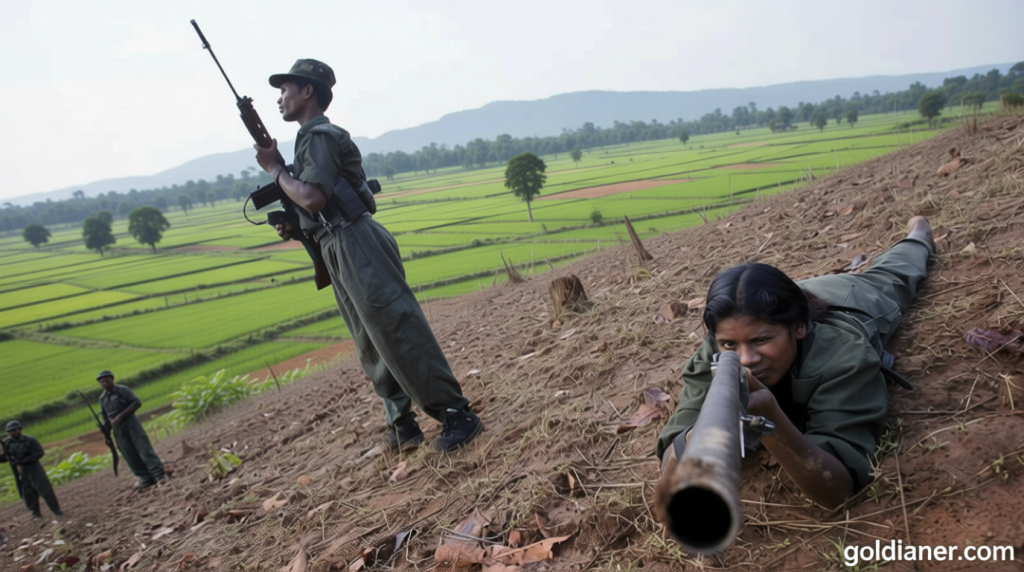
Some of the world s last – Emerging from the dense forests of central India, Papa Rao stood before a crowd, his appearance marked by the remnants of a prolonged struggle. Clad in a faded checkered shirt, dusty trousers, and scuffed sports shoes, he carried a rifle slung over his shoulder. A $26,000 bounty had been placed on his head, a testament to the years of conflict he and his comrades had endured. Behind him, a line of individuals followed, each bearing rifles that had seen decades of action—some as old as the L1A1 and Lee-Enfield models. These rebels, identifiable by their sandals and Puma-branded backpacks, were among the final adherents to a movement rooted in the teachings of Mao Zedong, a global revolutionary force once poised to reshape the world’s economic systems.
As they approached the stage, the weight of their decision was palpable. This was not merely a surrender; it was a symbolic shift, a moment where the ideology they had once fought for was now being presented to the mainstream. A backdrop declared their “return to the mainstream,” with the words in both English and Hindi. Their weapons, displayed like artifacts, were arranged meticulously, and ammunition clips formed the Hindi term for “sacred vow.” The ceremony was a blend of ritual and pragmatism, a recognition of their role in the rebellion and a nod to the future they now sought to embrace.
A Legacy of Ideological Struggle
The journey to this moment began nearly a century ago in China, where Mao Zedong redefined Marxist-Leninist theory to suit the pre-industrial conditions of his homeland. His doctrine ignited a decades-long conflict that culminated in the communist takeover of Beijing in 1949. In the years that followed, the movement’s influence spread across Asia, from Vietnam to Burma, and even to Thailand and Cambodia. Western capitals, including Washington, grew anxious as the ideological battles of the Cold War reached new territories, with Beijing’s support acting as a catalyst for these uprisings.
But in India, the movement took on a different identity. Known as the Naxals, it traces its name to a 1967 peasant revolt in Naxalbari, a village nestled in the Himalayan foothills of northeast India. The uprising, directed against exploitative landlords, ignited a broader movement that inspired thousands. By the early 1970s, the Peking Review, the official mouthpiece of Mao’s government, had acknowledged the resonance of Indian peasants with his teachings, declaring that they had “smashed the feudal yoke” and “overthrown the crushing tyranny.” Yet, while Beijing’s ideological backing was strong, its direct military support for the Naxals remained limited. A CIA report from the same year painted a more measured picture, noting the rebels’ reliance on hit-and-run tactics and their ability to generate headlines through dramatic acts of violence.
The Red Corridor and the Struggle for Tribal Autonomy
Over time, the Naxals carved out a stronghold in what became known as the “Red Corridor”—a vast expanse of rugged terrain stretching across several states in central and eastern India. This region, home to many Adivasi communities, became a battleground where the rebels sought to challenge the Indian state’s dominance. For these marginalized groups, the Naxals offered a vision of resistance, one that resonated deeply with their lived experiences of exploitation.
Sukhmati Dhruv, a 45-year-old woman from rural Chhattisgarh, embodied this connection. Growing up under the weight of poverty and oppression, she witnessed forest officials imposing heavy taxes on even the simplest acts, such as building a home or felling a tree. “They used to collect tax on building houses, they used to collect tax on chopping wood,” she told CNN. “There was a lot of violence.” The Naxals became her path to change, a symbol of defiance against a system that seemed indifferent to their plight. Her story, like many others, reflects the broader narrative of a movement that found its voice among those most affected by economic disparity and state neglect.
Papa Rao’s path mirrored Sukhmati’s in its urgency and conviction. “The Indian state had taken everything from us,” he said, recounting the years of hardship that led to his decision to lay down arms. The rebellion, once a formidable force, had faced mounting pressure from a government that prioritized economic growth and political stability. Security forces, emboldened by a booming capitalist economy and a Hindu-nationalist administration, began targeting Maoist leaders with increasing frequency. The result was a steady erosion of the rebels’ influence, with top figures eliminated and rank-and-file members retreating from the frontlines.
The government’s strategy has been both military and ideological. By crushing leftist opposition at the ballot box, it has marginalized the Maoists’ political allies and reinforced its narrative of progress. The ruling party has declared its intent to eliminate Maoism entirely from the country by this year, framing it as an outdated ideology in a modern, democratic state. Yet, the Naxals’ legacy endures, not only in the lives of those who once fought for their cause but also in the broader discourse on class struggle and social justice.
A New Chapter in a Long-Fought War
As the former rebels stepped onto the stage, they were handed roses and copies of the Indian constitution—a gesture of reconciliation and rebirth. Their presence was met with speeches from local politicians, who praised their commitment to peace and their role in shaping the nation’s future. Yet, the symbolism of this moment carried a deeper meaning. It marked the end of an era where Maoist ideology had been a driving force of resistance, and the beginning of a new phase where former insurgents would integrate into the state’s political framework.
Despite their decline, the Naxals’ impact remains significant. Their struggle has forced the Indian government to address the grievances of tribal communities, even as it continues to suppress their militant wing. The movement’s legacy is now woven into the fabric of India’s social and political landscape, a reminder of the enduring power of revolutionary thought. For Papa Rao and his 17 comrades, the surrender was a choice made in the face of overwhelming odds, but it also represented a shift from armed rebellion to a more pragmatic approach to change.
As the cameras captured their moment of transition, the question lingered: would the Naxals fade into history, or would their ideas continue to inspire new generations? The answer may depend on how deeply their message has taken root in the hearts of those who once saw them as saviors or enemies. Their journey—from the jungles of central India to the podium of a state that once viewed them as a threat—speaks to the resilience of a movement that has shaped the nation’s struggles for decades.
