
Race for UK leadership looms after Prime Minister Starmer’s main rival Burnham wins seat in parliament
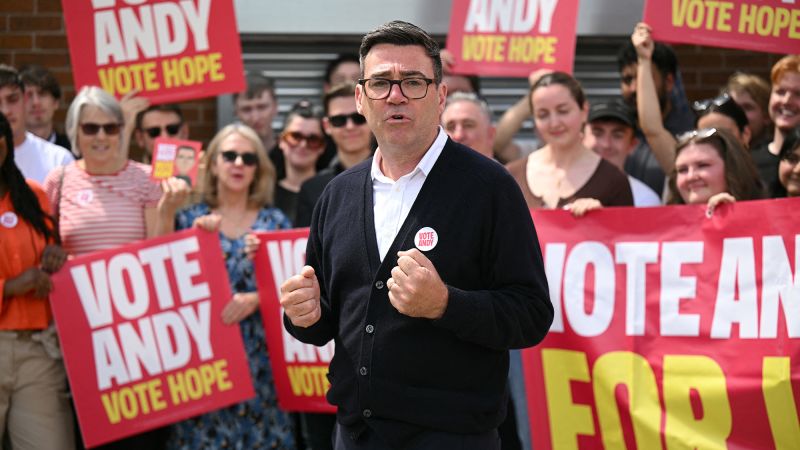
UK Leadership Race Intensifies After Burnham’s Parliamentary Win
Race for UK leadership looms after – The UK leadership race has taken a significant turn following Andy Burnham’s victory in the Makerfield by-election. As the Labour Party’s most formidable rival to Prime Minister Keir Starmer, Burnham’s win has rekindled speculation about a potential leadership contest. The result, announced on Thursday, has heightened tensions within the ruling party, as Burnham’s parliamentary seat now positions him as a serious contender to challenge Starmer’s leadership. This development underscores a growing political shift, with Labour’s base increasingly signaling its desire for change.
Burnham’s Victory and Labour’s Strategic Crossroads
Burnham’s success in Makerfield, a traditionally Labour-held constituency, highlights his ability to secure public backing amid a turbulent political climate. The by-election, strategically timed to test his appeal, has become a pivotal moment for the party. Analysts suggest that his win could catalyze internal debates, potentially leading to a leadership race that would redefine Labour’s future direction. With the party’s popularity waning since the 2024 general election, Burnham’s renewed parliamentary presence may serve as a catalyst for reform.
Burnham’s campaign emphasized themes of unity and economic stability, contrasting sharply with Starmer’s administration’s struggles to address inflation and public service challenges. His victory not only strengthens his standing within the party but also signals to voters that Labour is willing to pivot. This could reshape the UK leadership race, as Burnham’s parliamentary seat becomes a platform for advocating new policies and challenging the current leadership.
“Tonight marks a turning point for our country,” Burnham stated after the results. “People are tired of the status quo, and this win shows we’re ready for fresh ideas.” His remarks reflect a broader sentiment of frustration with Labour’s current trajectory, positioning him as a potential unifier within the party. “This is the start of a new chapter—one that will bring fairness and progress to every corner of the UK,” he added, framing his success as a mandate for change.
Labour’s Internal Dynamics and the Leadership Contest
The Labour Party’s recent struggles have been exacerbated by internal divisions, with Burnham’s win seen as a sign of growing dissatisfaction with Starmer’s leadership. Since taking over as Prime Minister in 2024, Starmer has faced mounting pressure to deliver on promises made during the landslide election. However, Burnham’s success suggests that the party’s grassroots may be ready for a new leader. The by-election result adds urgency to the UK leadership race, as Burnham’s parliamentary seat could become a springboard for a leadership contest.
Burnham’s campaign in Makerfield resonated with working-class voters, a demographic that has increasingly distanced itself from Labour’s policies. This support highlights a key challenge for Starmer: retaining the party’s base while navigating the complexities of governance. The UK leadership race is now seen as a critical juncture, with Burnham’s parliamentary win reinforcing his viability as a candidate for the top role. Analysts warn that without a clear vision, Labour’s momentum could be lost to Reform UK and the Conservatives.
The timing of Burnham’s victory, just months after the 2024 general election, has intensified the UK leadership race. His success in a key constituency signals a potential realignment within the Labour Party, with reformers and grassroots members likely to rally behind his candidacy. The result has also drawn attention to the need for a cohesive strategy to address inflation, public services, and social inequality—issues that have fueled voter discontent. Burnham’s win may act as a catalyst for a leadership contest that could reshape the party’s future and the broader political landscape.
