
Punishing heat wave peaks as East Coast readies for sweltering July 4 weekend
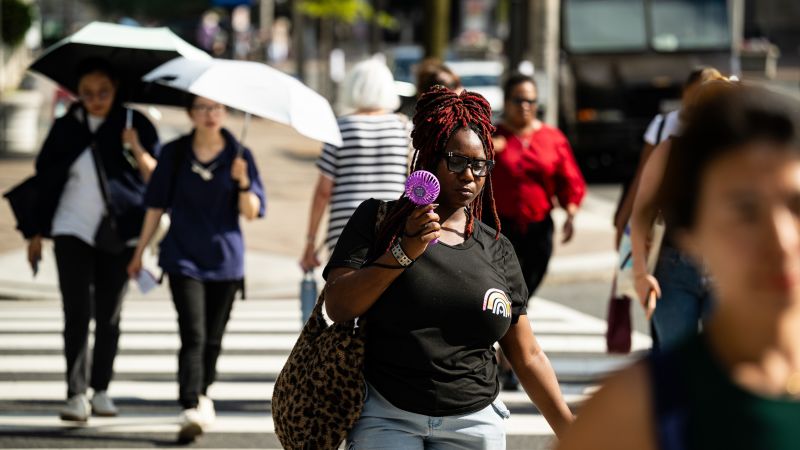
East Coast Faces Sweltering July 4 Heatwave
Extreme Heat Set to Peak During Fourth of July Celebrations
Punishing heat wave peaks as East – As the East Coast braces for a relentless heatwave, the peak of this sweltering weather is expected to coincide with the July 4 holiday weekend. What was once a traditional time for outdoor festivities and travel is now being overshadowed by blistering temperatures that threaten to disrupt plans. Forecasters predict the heat dome will intensify, pushing temperatures into the upper 90s and low 100s across Washington, D.C., to Boston. The National Weather Service has already labeled the region as experiencing a “major” or “extreme” heat risk, with some areas reaching the highest level, Level 4, signaling potential for severe health complications.
The timing of this heatwave adds urgency to its impact. With the Fourth of July celebrations in full swing, the combination of scorching heat and humidity poses a significant challenge. Cities are implementing emergency measures, such as expanding cooling centers, rescheduling events, and deploying rapid response teams, to safeguard residents. The Department of Energy has also issued emergency directives to strengthen the PJM Interconnection grid, ensuring power supply remains stable during heightened demand. These actions highlight the growing need to adapt to extreme weather patterns, which are becoming more frequent due to climate change.
Public Health and Infrastructure Adaptation
Local governments are taking proactive steps to mitigate heat-related risks. In Philadelphia, officials have declared a Heat Health Emergency and modified the July 4 parade route to minimize sun exposure. Washington, D.C., has launched an Extreme Heat Alert, ensuring hydration stations, cooling tents, and medical support are accessible to attendees. National Mall festivities are incorporating water stations and shaded seating, demonstrating a shift in how public spaces are managed during heat events. Similar efforts are underway in Boston and Raleigh, North Carolina, where cooling centers and sunscreen distribution are prioritized for vulnerable communities.
New York City is among the most affected, with mobile medical units patrolling neighborhoods to provide wellness checks and hydration. The city’s LinkNYC kiosks are doubling as wayfinding tools, guiding residents to cooling centers. These measures reflect a broader trend of rethinking infrastructure to combat rising temperatures. Experts warn that prolonged heat events like this could strain emergency systems, particularly in areas where air conditioning fails or power outages occur. The impact is not limited to urban centers, as eastern Virginia reports its most intense heat episode since 2012, linked to multiple fatalities.
Breaking Historical Temperature Records
The current heatwave has the potential to shatter long-standing records. New York City could hit a 110-degree heat index on Thursday, joining a rare group of days since 1943 that have reached such extremes. This would mark the first consecutive triple-digit temperatures in the region since 2011, highlighting the event’s unprecedented scale. Washington, D.C., is projected to set new benchmarks, with Thursday’s high at 104 degrees and Friday’s at 105, just one degree short of its all-time high of 106. July 4 itself may become the hottest day on record for the capital, surpassing the 1919 benchmark of 100 degrees.
Philadelphia and Boston also face record-breaking prospects. Philadelphia could reach 105 degrees on Thursday, while Boston might surpass 100 degrees on the same day, with Friday temperatures climbing to 104. These projections raise concerns about infrastructure resilience and public health. The heatwave’s duration, spanning three days with highs consistently in the low triple-digits, may become the hottest three-day stretch in D.C. since 1930. Such conditions underscore the increasing frequency of extreme weather events and their growing influence on daily life.
Climate Change Intensifies Heatwave Severity
Experts attribute the extreme heat to persistent heat domes, which trap warm air and create prolonged high-pressure systems. Climate change is exacerbating these conditions, making heatwaves more intense and frequent, according to meteorologists. “The combination of natural heat patterns and rising global temperatures is pushing the East Coast into a new era of extreme weather,” said Dr. Maria Alvarez, a climatologist at the National Oceanic and Atmospheric Administration. The heatwave’s timing, occurring during a historically warm period, aligns with predictions of increased summer heat due to anthropogenic climate factors.
Alvarez emphasized that the heat dome’s formation is a natural phenomenon, but its severity is amplified by greenhouse gas emissions. The region’s vulnerability to such events is growing, with studies showing that heat-related illnesses and fatalities are on the rise. This underscores the need for continued adaptation strategies to protect populations from the escalating impacts of climate change.
As the heatwave reaches its peak, communities across the East Coast are testing their preparedness. The resilience of infrastructure and public health systems will be critical in minimizing disruptions. While the Fourth of July is a time for celebration, it also serves as a stark reminder of the climate challenges ahead. The coming weeks will reveal how effectively cities can balance festive traditions with climate resilience, setting a precedent for future extreme weather events. Weather forecasters are closely monitoring the situation, as the heatwave may persist beyond the holiday weekend, affecting travel and daily activities for weeks to come.
