
Upper Pottsgrove Officer Faces Voluntary Manslaughter Charge After Fatal Shooting of College Student at Wrong Address
Goldlaner.com – A 58-year-old police corporal from a small Pennsylvania borough has been formally charged with voluntary manslaughter following the August 23 killing of a young man who had wandered to the wrong residence late at night and was simply waiting for friends to collect him. Montgomery County District Attorney Kevin Steele announced the charge on Tuesday, marking a significant prosecutorial decision in a case that drew national attention to questions about police use of force in non-threatening encounters.
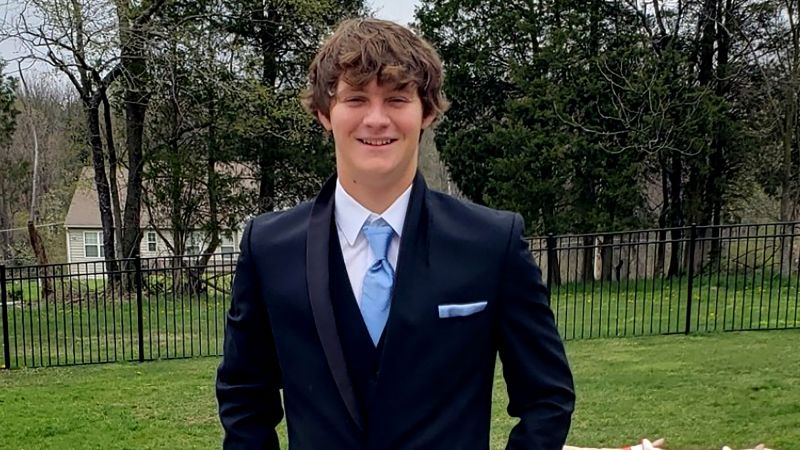
The victim, Glenwood Earl Pysher IV, was 22 years old and enrolled in college at the time of his death. He had arrived at a home that was not his own, stood on the property’s patio near the rear entrance, and was waiting for companions to arrive and drive him away. No weapon was in his possession. No threat was posed. Yet two rounds from a police officer’s service pistol struck him in the chest, ending his life within minutes.
How the Encounter Unfolded
According to footage captured on the officer’s body-worn camera and reviewed by the Montgomery County Detective Bureau, the sequence began when a resident dialed 911 to report an individual attempting to force entry through the back door of the house. Cpl. Sean Farrell of the Upper Pottsgrove Police Department arrived first on the scene. The body-cam recording shows him proceeding down the driveway with his handgun drawn, using the weapon’s integrated light to cut through the darkness.
Positioning himself behind a parked vehicle in the driveway, Farrell spotted Pysher standing on the patio close to the rear doorway. The officer called out, “Police, let me see your hands.” He then escalated his commands, shouting, “Hands up, hands up now, drop to the ground.” Video captured Pysher raising both arms overhead while beginning to walk in the officer’s direction. Farrell repeated the command to drop to the ground, then began another instruction — “Stop or I’ll…” — but the sentence was never completed. Before the officer finished speaking, two shots rang out. Pysher was struck twice in the chest.
The district attorney’s office noted that at the moment the trigger was pulled, Pysher stood between 17 and 20 feet from Farrell, with his hands elevated and no implement of any kind in his grasp. The officer was sheltered behind a vehicle. The victim was not advancing aggressively, not reaching for anything, and not displaying any behavior consistent with an imminent physical threat.
The Prosecution’s Case
Steele’s office framed the charge around a central finding: the officer possessed non-lethal tools at his disposal and chose not to deploy them. The investigation specifically identified a taser on Farrell’s utility belt as an available alternative that went unused. The district attorney’s position is that the circumstances did not justify deadly force, and that the decision to fire constituted a reckless disregard for human life — the legal threshold for voluntary manslaughter under Pennsylvania statute.
“The investigation found that Cpl. Farrell had less-than-lethal options on his utility belt that he did not employ, including a taser. At the time of the shooting, the officer was a safe distance from Pysher behind a car, and the victim had his hands in the air and did not possess any type of weapon. Mr. Pysher was not a threat. This is not a legal use of deadly force, leading to the charge of Voluntary Manslaughter.”
Voluntary manslaughter in Pennsylvania sits between first-degree murder and involuntary manslaughter. It requires proof that the defendant acted intentionally but without premeditation, and that the killing was committed under circumstances showing a reckless disregard for life rather than a lawful exercise of authority. For a police officer, the charge effectively means the prosecution believes the officer’s split-second decision to fire was not the product of a reasonable, good-faith judgment about danger — but rather of carelessness or overreaction.
Family Response
The Pysher family, represented by attorney Ken Fulginiti, issued a brief public statement following the announcement. The family expressed gratitude toward the district attorney’s office for pursuing the charge and signaled its intention to see the matter through to trial.
“The family is grateful for the work of the Montgomery County District Attorney’s office and they are looking forward to justice in this horribly tragic, preventable and reckless conduct that took the life of their son.”
Broader Context
The case lands amid a sustained national conversation about when police officers may lawfully deploy firearms, particularly in situations involving individuals who appear confused, disoriented, or simply out of place. Late-night encounters at residential addresses — where a resident’s alarm or report of a possible intruder prompts an armed response — have become a recurring pattern in police-shooting reviews across the country. Prosecutors in several states have recently moved beyond the traditional “qualified immunity” shield that often insulates officers from criminal charges, arguing that clear video evidence of non-threatening behavior can support a manslaughter theory.
For the residents of Upper Pottsgrove, a borough of roughly 3,000 people in southeastern Pennsylvania, the case carries a particular weight. The officer involved served the community’s own municipal force, and the victim was a young adult whose death was, by the prosecution’s account, entirely avoidable had a less-lethal tool been used or had the officer waited for the sentence to finish. The trial, if it proceeds, will test whether Pennsylvania courts will accept that a drawn weapon, a shouted command, and a perceived — but ultimately unfounded — sense of urgency can justify two chest wounds delivered to a man with his hands raised and no means of harm.
Related Reading
Frequently Asked Questions
What is Pennsylvania police officer charged with voluntary?
Pennsylvania police officer charged with voluntary is the main topic of this guide. The article explains the context, practical details, and next steps readers should understand.
Why does Pennsylvania police officer charged with voluntary matter?
Pennsylvania police officer charged with voluntary matters because readers are looking for a useful answer, not just a short summary. Good content should match search intent and help them decide what to do next.