
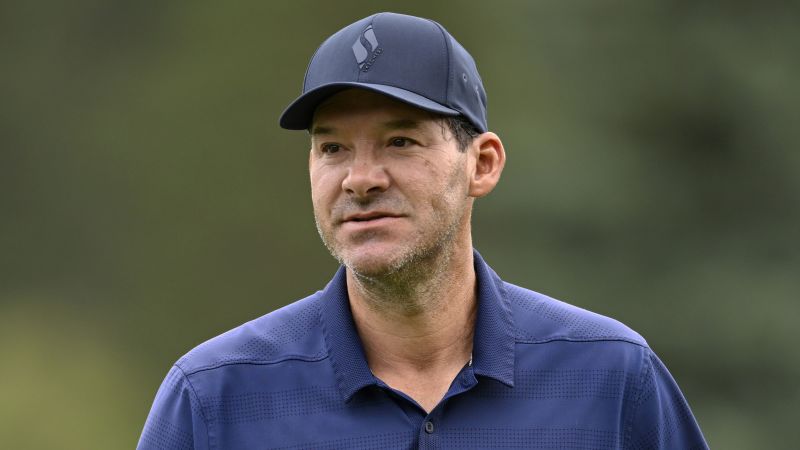
Tony Romo Was Brutally Honest About Life After Football
Goldlaner.com – Tony Romo was brutally honest about what happens when the stadium lights dim and the body keeps paying the bill. The former Dallas Cowboys quarterback, now a lead analyst on CBS’s NFL broadcast crew, pulled back the curtain on a chain of events that ran from the operating table to a Wisconsin roadside — and in doing so, named a wound most retired athletes carry in silence: chronic, career-ending pain that no farewell tour can numb.
From the Operating Room to a Wisconsin Roadside
The trigger was an arrest in Milwaukee County the month before his public statement. Bodycam footage from the Milwaukee County Sheriff’s Office showed the moment officers pulled Romo from his vehicle on suspicion of operating while intoxicated. For a man whose on-air brand had become synonymous with warmth and approachability, the images were jarring. He subsequently pleaded no contest to a civil offense for operating while intoxicated and issued a written account of how he got there.
That account did not stop at one bad night. Romo traced the sequence backward through years of spinal surgery, persistent pain, opioid dependence, and finally alcohol as a crutch during withdrawal. He framed the arrest not as a character failure but as the terminal symptom of a medical cascade that began when his body stopped cooperating.
“Multiple back surgeries ended my career earlier than I expected and left me with constant, debilitating pain. That pain led to a dependence on pain medication, and my efforts to get off those medications led to an over-reliance on alcohol.”
The pattern he described is well documented in sports-medicine literature. Collision-sport athletes who sustain repeated spinal injuries face elevated rates of persistent pain syndromes. Once the daily oversight of a team athletic department and the psychological structure of a season schedule vanish at retirement, many players navigate that pain alone — without a physician checking in or a playbook to fill the hours.
A Parallel on the Fairway
Days after Romo’s statement, Tiger Woods was set to return to court over a separate car crash earlier in the year. Police had accused Woods of being inebriated at the time of the accident and found prescription painkillers in his pocket. He subsequently sought treatment and spent several weeks in Switzerland. His career, built on violent rotational swings, had also wrecked his back and knees, and multiple prior crashes in his history have been linked to the same class of prescription analgesics.
Golf and football sit at opposite ends of the contact spectrum, yet both men arrived at the same intersection: a body that could no longer perform, a pain-management strategy that had quietly escalated, and a public reckoning that followed the moment the private struggle became visible. Tony Romo was brutally honest in naming that intersection without flinching, and in that candor he offered retired athletes a vocabulary for conversations most of them have been avoiding.
Accountability in the Language of the Game
What set Romo’s statement apart from a standard celebrity apology was its explicit use of football’s own moral grammar. He credited the sport with teaching him “the power of relationships, the strength of a team and the toughness to face failure head-on with honesty, resilience and the determination to do better.”
He then turned that grammar inward, speaking directly to his three young sons:
“As I have taught my three young sons: when you fall short, you stand up and take full responsibility. That is an important first step. The harder and more important step is examining the path that brought you here and making the changes necessary to move forward.”
The distinction between the easy first step — acknowledging fault — and the harder second step — diagnosing and altering the conditions that produced the failure — carries practical weight. It moves the conversation past blame and toward structural change, which in Romo’s case means a medical strategy for managing pain without pharmaceutical dependency. Tony Romo was brutally honest not just about the arrest but about what comes after: the long, unglamorous work of rebuilding a body and a routine that no longer answers to a playbook.
Frequently Asked Questions
What charge did Tony Romo plead to? He pleaded no contest to a civil offense for operating while intoxicated in Milwaukee County, Wisconsin.
What medical events preceded the arrest? Romo cited multiple back surgeries that ended his playing career earlier than expected, followed by chronic pain, dependence on pain medication, and over-reliance on alcohol during the process of tapering off those medications.
How does the Tiger Woods parallel relate? Woods faced a separate court proceeding tied to a car crash earlier in the year, with police accusing him of being inebriated and finding prescription painkillers in his possession. Both athletes’ careers had produced significant spinal and joint damage, and both men’s pain-management strategies had escalated before becoming publicly visible.
What did Romo say about his sons? He told them that when you fall short, you stand up and take full responsibility as a first step, then examine the path that brought you there and make the changes necessary to move forward.