
JD Vance confesses to ‘The View’ that he’s an Epstein ‘conspiracy theorist’
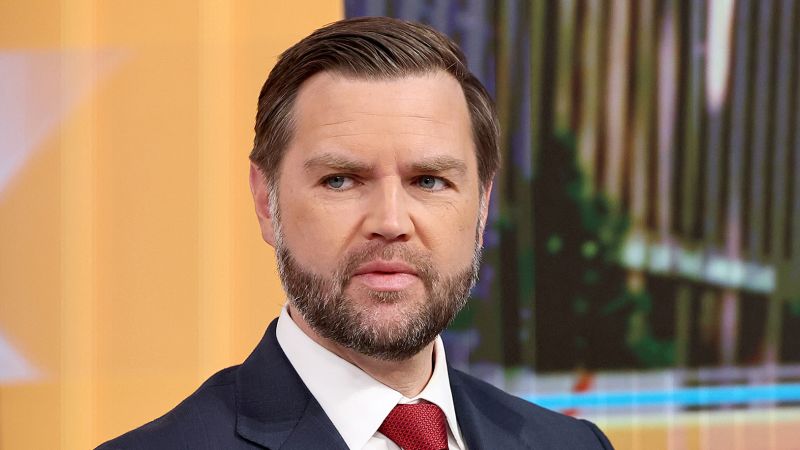
JD Vance Confesses to ‘The View’ That He’s an Epstein ‘Conspiracy Theorist’
JD Vance confesses to The View – Vice President JD Vance has been a busy figure this week, juggling appearances across major networks to build momentum for his upcoming memoir, which is set to release ahead of the 2028 presidential race. From Fox News to NBC and CNN, his public engagements have aimed to position him as a key voice in the political landscape. Yet, one of these appearances on ABC’s daytime talk show “The View” proved to be a standout moment, marked by both tension and an unexpected admission about his views on Jeffrey Epstein.
FCC Investigation Sparks Debate
While the show’s political leanings are well-known, the appearance carried added weight due to the ongoing scrutiny of ABC by the Trump administration’s Federal Communications Commission (FCC). The agency has been actively pressuring the network, targeting it for its coverage of issues critical to the White House. This includes a recent investigation into “The View,” which has raised concerns about the FCC’s influence on free speech. Despite this backdrop, Vance’s discussion did not directly reference the probe, but it underscored the broader ideological divide he was navigating.
Epstein Conspiracy Claims Surface
During the interview, Vance addressed the Jeffrey Epstein case, revealing that he has been labeled a conspiracy theorist by White House chief of staff Susie Wiles. This claim was corroborated by the upcoming book “Regime Change” by Maggie Haberman and Jonathan Swan, which highlights the internal debates within the Trump administration. “I love Susie, but absolutely, she thinks I’m a conspiracy theorist on the Epstein stuff,” Vance said, reflecting on his belief that Epstein’s predatory nature and his connections to powerful figures were suspicious.
“I think that it’s crazy that you had this guy who is clearly a sex predator who was hanging out with a lot of very wealthy and powerful people. Like, that really bothered me. I don’t know what’s there, of course, nobody knows exactly what happened unless you were there, but that really bothered me, and I wanted to have full transparency.”
Vance’s comments drew mixed reactions, with co-hosts pushing back on his portrayal of the Epstein case. One of the key points of contention was his assertion that Trump’s friendship with Epstein began in the 1980s. However, historical records show that their relationship was well-documented throughout the 1990s, including Trump’s direct involvement in Epstein’s activities. This discrepancy was highlighted when an FBI document surfaced, indicating that Trump had called the Palm Beach Police Department in the mid-2000s to express his support for Epstein’s investigation.
Debating the Epstein Connection
Vance reinterpreted the FBI’s actions, claiming that Trump had “narced on him to the police and led ultimately to Jeffrey Epstein’s downfall.” This narrative, however, overlooked the fact that the investigation was already in progress at the time of the call. The vice president’s attempt to frame Trump as a key player in Epstein’s case was met with skepticism, as the co-hosts questioned the timeline and the role of the administration in the matter.
Meanwhile, the conversation took a different turn when host Ann Coulter posed a provocative question about the administration’s treatment of Black Americans. She asked, “What did Black people do to this administration that has allowed it to really stigmatize folks of color?” This prompted a broader discussion on issues such as the removal of historical exhibits and the erosion of Black voter representation. Sunny Hostin, another co-host, added, “I’m talking about Black history getting erased from public spaces. Black voter districts are being dismantled. Black leaders are being sidelined from our ranks. Where do Americans of color fit in this vision?” Vance, though not offering a direct response, maintained that the administration was inclusive, celebrating “all history in this administration” as part of its coalition-building efforts.
Media Strategy and Book Success
Vance’s promotional push for “Communion” appears to be paying off. On the day of its release, the book surged to the top of Amazon’s best-selling new releases, a clear indicator of its popularity. This success contrasts with the second-place spot held by “Regime Change,” which is expected to launch next week. The timing of these events suggests that Vance is leveraging his public appearances to amplify his literary campaign, even as he navigates the political challenges of appearing on a show known for its criticism of the Trump era.
The interview also showcased Vance’s ability to adapt to the host’s style while maintaining his core message. Ann Coulter, known for her sharp political commentary, introduced the vice president with a nod to the show’s reputation for welcoming diverse perspectives. “This show has invited thousands of guests with all kinds of diverse points of view, and we have been asking our next guest to join us for a while now, so we’re glad that he’s taken up on the offer today,” she said. Vance responded with a light-hearted remark, quipping, “This is a show of MAGA Republicans, right? … That’s what my media team told me.”
Despite the host’s ideological alignment with Trump, the discussion remained generally civil, a rarity in the current media climate. The co-hosts challenged Vance on multiple fronts, from the affordability crisis to the administration’s handling of Epstein’s case, but he managed to deflect many criticisms while reinforcing familiar Republican talking points. “There’s a lot more work to do,” he acknowledged, “but I think that we’re making progress.” This balance between defensiveness and openness defined the exchange, highlighting the complexities of political dialogue in an era of heightened polarization.
Looking ahead, Vance’s strategy of appearing on a variety of platforms—ranging from conservative networks like Fox News to progressive ones like “The View”—demonstrates his intent to broaden his appeal. At Fox, he was asked by Sean Hannity why the “The View” appearance was necessary. “You know the president—his attitude, my attitude—is you go everywhere,” Vance replied. This sentiment reflects his approach to media engagement, emphasizing reach and visibility over consistency in messaging.
As the 2028 campaign season looms, Vance’s memoir and his appearances on high-profile shows are likely to play a significant role in shaping his public image. Whether his efforts to position himself as a bridge between different political factions will resonate with voters remains to be seen, but his willingness to engage in debates—albeit with some tactical maneuvering—signals a calculated attempt to solidify his place in the national conversation.
