
Iron Age woman likely had her brains scooped out before burial, study suggests
Iron Age Woman’s Brain Likely Removed in Unique Burial Ritual, Study Finds
Iron Age woman likely had her brains – Archaeologists have uncovered evidence suggesting that an Iron Age woman from Scotland may have undergone a peculiar postmortem procedure before being interred, according to a new analysis published in the journal *Antiquity*. The discovery, part of a broader examination of ancient burial practices, reveals that the individual—estimated to be over 30 years old—was likely subjected to intentional modifications to her skull, indicating a ritualistic act of brain removal as part of her funerary rites.
Skull Modifications Point to Deliberate Brain Extraction
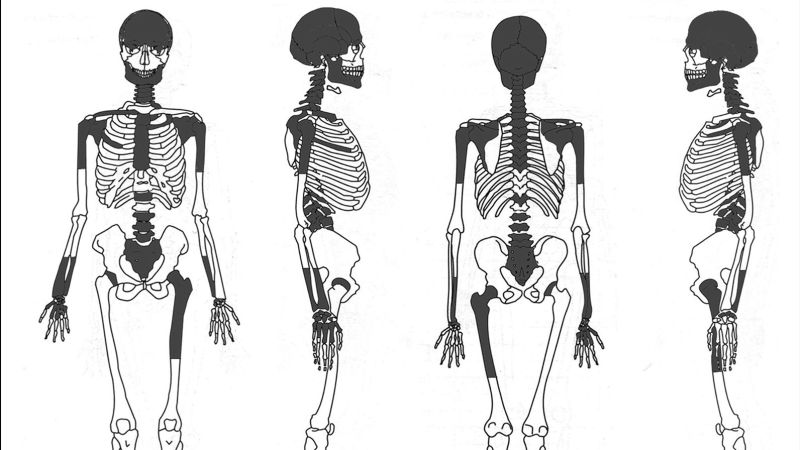
Researchers from the United Kingdom and the United States conducted a detailed study of the woman’s remains, identifying straight, parallel incisions on the interior of her skull. These cuts, they argue, were made using a sharp instrument, possibly a blade or similar tool, with precision that suggests a calculated effort rather than accidental damage. The base of her cranium also exhibited an unusual fracture, described as an “intentional targeted impact,” which further supports the theory of deliberate intervention. The combination of these two features, the researchers claim, implies that the brain was removed shortly after her death.
“The cutmarks are located precisely where the brain is connected to the skull via ligaments, so it makes sense that the intent was to access those structures,” said Laura Castells Navarro, lead author of the study and a postdoctoral research associate at the University of York. “The easiest way to reach the brain while keeping the skull intact is through the base of the skull, and the fracture we observed looked very fresh.”
This practice, while uncommon, aligns with broader cultural behaviors observed in the Iron Age. The study highlights that such modifications are not merely symbolic but appear to have practical purposes, such as facilitating the removal of the brain. The process would have required both knowledge of human anatomy and a specific technique, which the researchers believe reflects a deep understanding of the body’s structure among the community.
Long Bones Show Signs of Ritual Alteration
Compounding the mystery is the modification of at least four of the woman’s long bones: the femur, both humeri, and the ulna from her forearm. Initially, a 2003 report suggested these bones might have been gnawed by rodents, but the current analysis disputes that theory. Navarro explained that rodent marks are typically uneven, whereas the scars on these bones show a smoother, polished appearance. “What we are seeing is an actual polishing of the remains,” she noted. “We think the bones were snapped in half and then whittled to a sharp edge, creating a tapered shape that could have been used for ceremonial purposes.”
The femur, however, presented a different pattern. Unlike the other bones, it had a flat and smooth finish, which the researchers interpret as a sign of careful handling. This detail, combined with the fact that the modified bones were returned to their correct anatomical positions in the grave, suggests that the ritual was not just about dismemberment but also about honoring the deceased. “It’s fascinating how these bones were reassembled with such precision,” Navarro said. “That shows a level of reverence rather than denigration, even though they had been heavily altered.”
Discovery Under a Cairn Adds to Historical Context
The woman’s remains were found in 2000 beneath a cairn—a manmade pile of stones commonly situated on hilltops—on the northern edge of the Scottish mainland. This location is significant, as cairns were often used as markers for graves or as part of larger ceremonial sites. The other individual buried at the same site, a young male believed to have died at around 15 years of age, did not show similar signs of trauma, indicating that the woman’s treatment was unique.
The study also involved DNA analysis, radiocarbon dating, and chemical tests on the molar teeth of both individuals. Results suggest a possible familial connection, with the woman and the boy likely being related as maternal second cousins, sharing great-grandparents. Their deaths are estimated to have occurred between 50 BC and 70 AD, though they may not have been buried simultaneously. This timeline places their interment within the later Iron Age, a period marked by evolving social structures and cultural practices.
Ritual Practices Reflect a Blend of Respect and Symbolism
While the exact motivations behind the brain removal remain unclear, the researchers propose that the practice could have held symbolic or spiritual significance. The act might have been a gesture of respect toward a revered community member, or it could have represented a form of ritual abuse aimed at an outsider or someone of lower status. Navarro emphasized that the practice’s uniqueness does not negate its cultural relevance. “It’s very unique and unusual, but it fits into a wider interaction between the living and the dead,” she said. “This memorialization shows how people cared for their ancestors and sought to preserve their legacy.”
The findings also connect to other archaeological sites in the region where similar modifications have been observed. For instance, skull fragments with drilled holes have been found in several locations, potentially used to suspend remains or display them as part of a ritual. Cut marks on craniums, like those in this case, have also been documented at other sites, indicating that brain removal was not an isolated event but part of a shared tradition. These patterns suggest that the Iron Age people placed great importance on the treatment of the dead, whether through physical alteration or symbolic gestures.
Navarro’s team acknowledges that the precise reasons for the brain extraction remain speculative. However, they argue that the modifications to the woman’s skull and bones provide strong evidence of a ritualistic process. “Even though the bones were heavily modified, they were placed back in their anatomical positions with care,” she remarked. “This attention to detail speaks volumes about the cultural values of the community.” The practice could have served as a way to honor the deceased, ensure their spiritual transition, or mark their place in the social hierarchy.
Broader Implications for Understanding Iron Age Culture
The study not only sheds light on this specific burial but also contributes to a broader understanding of Iron Age Scotland. Researchers note that while the brain removal is distinct, it is part of a larger phenomenon where human remains were modified, curated, and repositioned. This behavior, they suggest, reflects a complex relationship between life and death, where the dead were treated as integral to the community’s identity. The cairn’s role as a burial site, along with the careful arrangement of remains, underscores the significance of such locations in prehistoric societies.
Further analysis of the DNA and isotopic data from the two individuals could provide more insight into their diets, health, and social roles. For example, the chemical composition of the molar teeth might reveal whether the woman and the boy shared similar living conditions or had different dietary patterns. Such details could help differentiate between familial ties and other relationships, such as alliances or kinship through marriage.
While the brain removal remains a striking anomaly, the researchers view it as a valuable piece of the puzzle in reconstructing Iron Age rituals. “The modifications to the woman’s remains cannot be paralleled in detail,” Navarro stated. “But they do fit into a broader context of how people interacted with their ancestors, whether through preservation, display, or transformation.” This perspective highlights the adaptability of Iron Age practices, which may have varied across different regions and social groups.
The discovery also invites comparisons with other ancient cultures where similar brain removal techniques have been documented. For instance, in parts of South America, evidence of cranial surgery has been linked to spiritual beliefs, while in Africa, some early burials included the removal of specific body parts. These parallels suggest that the act of modifying the dead may have been a widespread practice, rooted in shared cultural or religious interpretations of the afterlife.
As the study continues, researchers hope to uncover more about the woman’s life and the community that buried her. Questions about her status, the purpose of the modifications, and the broader implications of such rituals remain open. “This case is unique, but it’s not the only one,” Navarro said. “It’s part of a larger pattern of how people in this era treated their dead, blending practicality with symbolic meaning in ways we’re only beginning to understand.”
Ultimately, the findings challenge previous assumptions about Iron Age Scotland, revealing a society that engaged in intricate and thoughtful funerary practices. Whether the brain removal was a mark of respect or a symbolic act, the evidence underscores the importance of ritual in shaping identity and memory. As more remains are analyzed, the story of this woman and her community may continue to unfold, offering new perspectives on the past.
