
‘I need to be the lion’: Inside a boot camp teaching men how to talk to women
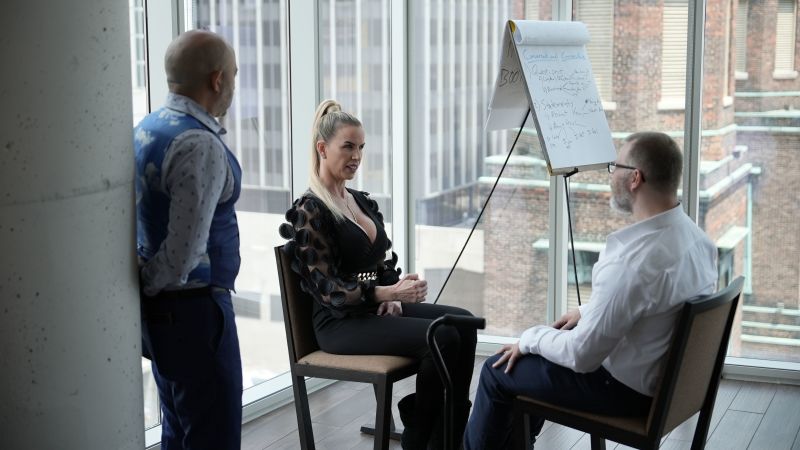
Men’s Social Survival School: A Modern Approach to Connection
I need to be the lion – In the heart of Nashville, a unique social experiment is unfolding. Men gather in small groups, their eyes fixed on the task at hand: mastering the art of conversation with women. The scene is both comical and serious, as participants attempt to transform their approach to dating from tentative to confident. Steve Crook, a 55-year-old man navigating life after divorce, is among them. His journey through the three-day “boot camp” offers a glimpse into a growing movement that seeks to revive what some call a lost skill—direct, meaningful human interaction.
A Focus on Physical Appeal
Crook’s first attempt at engagement is met with mixed results. He scans the streets with a practiced eye, identifying potential targets: women with long legs, full figures, and a certain air of approachability. “I’m very picky,” he admits, his tone measured. “They have to be physically attractive.” His self-described preference leans toward the “Barbie” archetype—long limbs, ample curves, and a streamlined silhouette. Yet, when a woman walks into view, laughing with friends near a cluster of trendy boutiques, his confidence wavers.
With a burst of energy, Crook darts across the sidewalk, weaving through crowds with purpose. It’s mid-afternoon, and the streets are teeming with activity, but nothing detours him. “I just thought, f**k it,” he later explains to CNN, capturing the moment in a play-by-play account. “Let’s get out of the head and just do it.” His heart races as he approaches her, but the moment is brief. A few words are exchanged, and then she turns away. The encounter is over in seconds, leaving Crook to reflect on his performance.
As he returns to his coach, Matt Artisan, the scene is replayed in real-time. Artisan, equipped with earphones and a microphone, listens intently to Crook’s attempt. “The dynamic was ‘not good,’” he observes, offering immediate critique. “You were kind of behind them.” The coach’s feedback is sharp, urging Crook to take a more assertive stance. “You’ve got to get in front of all of them,” he says. This is just one of many lessons Crook will face over the next three days, each designed to refine his approach to social interaction.
Revisiting Old Traditions, Seeking New Goals
These intensive workshops, often dubbed “man camps,” blend elements of classic pickup culture with modern psychological insights. Participants like Crook are drawn to the promise of becoming more “alpha” in their interactions, a concept rooted in evolutionary theory and popularized by 2000s-era dating magazines. Yet, the program’s language occasionally echoes the objectification that once defined such spaces. While they insist on respect, the focus on physical traits reveals a desire to dominate the social landscape.
Despite this, the participants are driven by a genuine quest. They aim to relearn how to converse without screens, to restore the intimacy that digital communication has eroded. For many, the pandemic has intensified this longing, creating a vacuum of real-world connection. A 2024 Pew Research Center study found that one in six Americans feels lonely or isolated most of the time, with men more likely to avoid seeking help from friends or mental health professionals. “We are suffering from an epidemic of loneliness,” says Brandon Viall, a student in Artisan’s program. “We’re connected by all these screens, but is that real connection?”
From Isolation to Confidence: The Camp’s Impact
Artisan’s company, The Attractive Man, operates boot camps in cities across North America, from New York to Miami, and even in Europe and Central America. The Nashville session, where CNN observed the process, highlights the program’s popularity. Over three days, participants are subjected to a rigorous regimen of drills, from street approaches to nightclub interactions. Crook, for instance, is tasked with stopping women in the street, yelling into their ears, and staring into their eyes until the silence becomes unbearable.
Each lesson is a blend of performance and psychology. Artisan critiques vocal pitch, body language, and timing, pushing participants to refine their techniques. “I heard the voice go up a few times,” he notes, emphasizing the importance of control. The feedback is relentless, yet the men embrace it, eager to prove their ability to “win” the game of attraction. For Crook, the stakes are personal. “I need to be the lion,” he says, his eyes on Artisan as if searching for validation. “I want to quash my ‘nice guy tendencies’ and be more alpha.”
The challenges are as much psychological as they are social. Participants struggle with self-doubt, often berating themselves for perceived failures. “I just feel like a p*ssy, basically,” Crook confesses, illustrating the internal battle. The camp’s structure mirrors that of a military training program, with a strict regimen designed to build confidence. Yet, the goal is not domination but connection—though the methods can feel aggressive.
A Modern Phenomenon with Deep Roots
Pickup culture, while often criticized as superficial, has evolved into a mainstream movement. The men who attend these camps cite a variety of factors for their struggle to connect: dating apps, political polarization, and the #MeToo era’s impact on traditional masculinity. “The rise of apps has changed how we look for partners,” one participant notes. “We’re not meeting people in person anymore.”
But the allure of these programs lies in their promise of transformation. By the end of 2026, Artisan’s camps will be in over a dozen cities, offering a solution to a problem many feel is worsening. The men who enroll are not just looking for a date—they’re seeking a way to reclaim their social identity. “We want to restore the art of conversation,” says Viall. “It’s not just about getting a woman; it’s about understanding how to engage with people in a real way.”
As the three-day training concludes, the participants carry new tools and a renewed sense of purpose. Crook, despite his initial awkwardness, has learned to project confidence. The other students, too, have adapted their strategies, whether through bold gestures or calculated pauses. The program’s success is measured not just in the number of women approached, but in the participants’ willingness to step out of their comfort zones.
Such scenes are likely playing out in cities across America, where the isolation of modern life has left many feeling disconnected. These boot camps offer a temporary fix, a way to rekindle the spark of face-to-face interaction. While their methods may spark debate, they reflect a broader cultural shift: the search for authenticity in an increasingly digital world. For men like Crook, the journey is as much about self-discovery as it is about romance. And as long as the need for human connection persists, these camps will remain a part of the landscape, their lessons shaping the way men navigate love and social life in the 21st century.
