
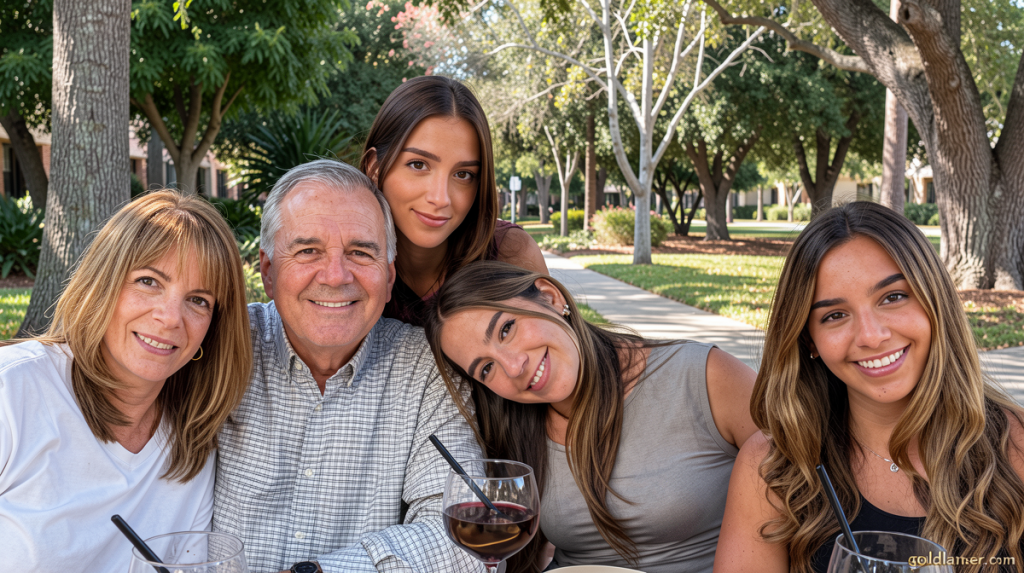
One Girl Left Behind: How a Single Tremor Shattered a Colombian Family
Goldlaner.com – When the ground split beneath Cali on August 10, sending a 7.4-magnitude shockwave through western Colombia, the Saavedra Caycedo household was inside its apartment on what would become one of the most devastated stretches of the city. Hours later, after search-and-rescue crews worked through debris for days, only one member of that immediate family walked out alive. Ana María Saavedra Caycedo, one of three identical sisters born to the same womb, emerged with shattered arms and a fractured pelvis — and with the unbearable knowledge that everyone else she had called family that morning was gone.
Hours Beneath the Rubble
The earthquake struck while the entire household — the triplets Ana María, Sofía, and Isabella; their father Jair Saavedra; their mother Vicky Caycedo; and their uncle Diego Caycedo — was inside the apartment. Rescue teams arrived swiftly, but the structural collapse made extraction agonizingly slow. Neighbors, relatives, and strangers flooded the streets to volunteer, to dig, to beg for equipment. Over the following hours and days, bodies were recovered one by one from the collapsed structure.
The parents were discovered locked together in an embrace, their final gesture one of mutual protection. Sofía and Diego were also confirmed dead. Isabella’s remains were the last to be extracted from the wreckage, according to the triplets’ cousin, Camila Martínez Sierra. Ana María, meanwhile, lay trapped beneath tons of concrete and rebar, sustained by nothing but her own will until rescuers finally reached her.
A Recovery That Will Take Years
Since her extraction, Ana María has undergone surgery and now faces what medical staff describe as a prolonged rehabilitation. A family-organized GoFundMe campaign has already drawn thousands of small donations from strangers moved by her story. The fundraising page explains that the triplets had recently completed their university degrees and were employed together in the same workplace.
“They had dreams, plans, and a whole life ahead of them,” the family wrote on the campaign page. “We want Ana María to have a solid foundation to recover physically and emotionally and to restart her life, without also having to worry about how to pay for everything that is to come.”
Martínez Sierra took to Instagram on Friday to ask the public for continued support.
“Our hearts are broken by the loss of my uncle Jairo and Vicky and my cousins Sofía and Isabella,” she posted. “Now is the time to stay united and be there for our cousin Ana. Every bit of help, prayer, donation, and sharing counts.”
Images That Became Relics
In the days since the quake, Martínez Sierra has shared photographs and short videos from family gatherings, beach outings, birthday parties, and late-night bonfires. One image captures the extended clan dressed in coordinated white outfits and black hats, seated poolside with broad grins at what appears to be a reunion. Another shows the group huddled around a fire after dark, faces lit orange.
“I can only look at these videos and photos with a heart full of memories and a mix of love, nostalgia, and a pain I still don’t know how to explain,” she wrote. “Here are our reunions, the laughter, the hugs, the family moments, my uncles, the triplets … moments we lived without imagining that one day we would look at these images in such a different way.”
For Ana María, those same images now carry a weight no one could have predicted. The ordinary Tuesday dinner, the casual group selfie, the half-joking phone call — each has become an artifact of a life that no longer exists for five of the six people in the frame.
The Scale of the Catastrophe
The Saavedra Caycedo losses are a single, devastating thread within a far larger tapestry of destruction. Colombia’s National Unit for Disaster Risk Management confirmed at least 294 deaths as of the latest count, with another 320 people still missing and nearly 4,000 injured. More than 12,000 homes have been rendered uninhabitable, and over 100 buildings were completely leveled. Satellite imagery released in the aftermath shows a scarred landscape across the affected municipalities of the Cauca Valley.
By every available metric, this was the deadliest earthquake to strike Colombia in decades. The fault geometry that produced the 7.4 event had been studied by seismologists for years, yet the speed and completeness of the collapse in Cali’s older residential blocks caught even experienced engineers by surprise. Rescue operations continue around the clock, and families across the region are posting urgent pleas on social media, hoping to locate relatives who have not checked in since the shaking stopped.
What Remains
Martínez Sierra closed her Instagram post with a reflection that has been shared widely across Colombian social media.
“One never thinks that a photo can become such a precious memory, nor that a hug that seemed so ordinary could become something we would keep forever in our hearts. This earthquake changed our lives in a matter of seconds. It reminded us, in the most painful way, that nothing is guaranteed and that many times we put off a hug, a phone call, an ‘I love you,’ a meeting, a visit.”
For Ana María, the question now is not what was lost but what can be rebuilt — a body, a career, a sense of belonging — while carrying the silence where five voices used to be. The GoFundMe page remains open. The recovery, by every measure, has only begun.
Related Reading
Frequently Asked Questions
What is Colombia s earthquake tore apart this?
Colombia s earthquake tore apart this is the main topic of this guide. The article explains the context, practical details, and next steps readers should understand.
Why does Colombia s earthquake tore apart this matter?
Colombia s earthquake tore apart this matters because readers are looking for a useful answer, not just a short summary. Good content should match search intent and help them decide what to do next.