
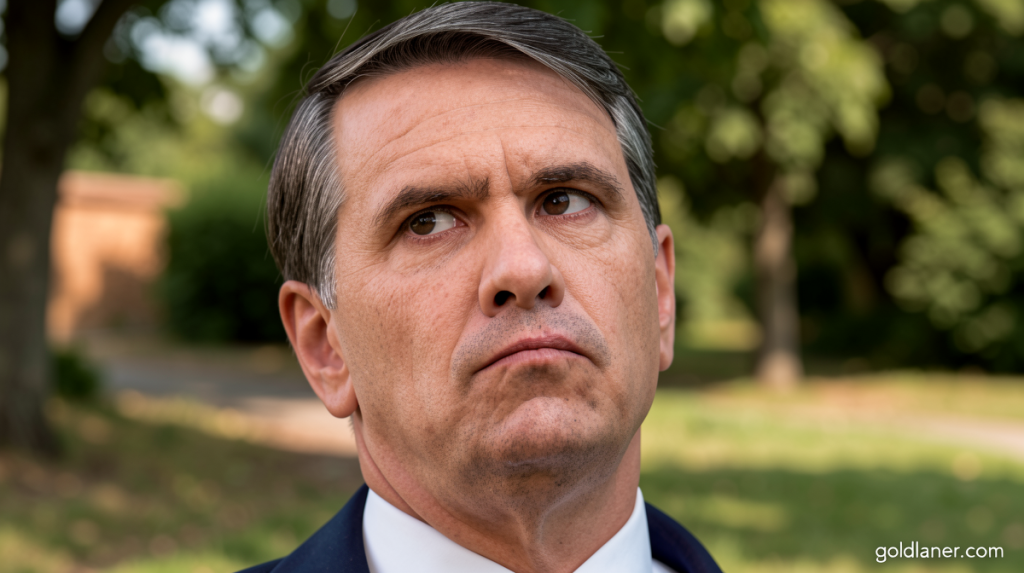
Attorney General Blanche Resists Formal Independence Pledge, Sparks Debate Over DOJ Autonomy
Goldlaner.com – In a weekend television appearance that quickly drew scrutiny from legal scholars and political observers alike, Attorney General Todd Blanche made clear he would not formally guarantee that the Department of Justice operates free from presidential influence. Speaking on NBC’s “Meet the Press,” Blanche pushed back against the notion that any sitting attorney general should bind himself to an absolute independence pledge.
“No, I’m not going to pledge that, and no attorney general should ever pledge that,” Blanche told host Kristen Welker.
The remark landed in the context of a department that critics argue has increasingly functioned as an instrument of President Donald Trump’s political objectives. Blanche, who previously served as Trump’s personal defense counsel, was confirmed by the Senate the prior weekend after occupying the role in an acting capacity beginning in April. His confirmation followed a contentious process in which the so-called “anti-weaponization” fund — a mechanism designed to compensate individuals who felt targeted by government prosecutions — nearly derailed his nomination.
Presidential Input in Prosecution Decisions
Perhaps more consequential than the independence question was Blanche’s willingness to acknowledge that the president’s perspective could factor into individual case decisions. Pressed on whether Trump should ever weigh in on specific prosecutions — a question sharpened by the president’s public call to revisit the Reflecting Pool vandalism case recently dismissed by the U.S. Attorney for the District of Columbia — Blanche offered a qualified yes.
“Every American has a voice in prosecutions… So whether President Trump should have a, quote, ‘voice,’ it depends, but yes,” Blanche said.
He elaborated that considering the president’s view on a matter was not only permissible but, in his framing, expected of any attorney general throughout history. The comment underscored a tension at the heart of the administration’s approach to the Justice Department: the department’s traditional role as an independent prosecutorial body versus its function as an arm of the executive branch led by a president with strong personal stakes in many ongoing matters.
The Reflecting Pool Case and Jeanine Pirro
The Reflecting Pool incident — in which a man was shot near the White House in 2024 — became a flashpoint after the local U.S. Attorney’s office declined to pursue charges. Trump publicly urged a second look at the case, raising questions about whether the president’s frustration could override prosecutorial discretion. Blanche declined on NBC to state definitively whether DC U.S. Attorney Jeanine Pirro should reopen the matter, but he made clear his institutional backing for her.
“I absolutely support US attorney Pirro, as does President Trump. Now that’s different than whether the president is extraordinarily frustrated at what happened in that case, and I don’t in any way fault him for that.”
Blanche characterized Pirro’s overall performance as “phenomenal” and argued that evaluating her tenure on the basis of a single case, given the evidentiary record available, would be unfair. Notably, Trump had reportedly considered dismissing Pirro over the decision, a fact that Blanche acknowledged without elaborating on the internal dynamics.
Disagreement as Expected Norm
In a separate appearance on “Fox News Sunday,” Blanche sought to reassure viewers that the attorney general’s office retains genuine capacity to push back on the president. He described a working relationship in which candid disagreement is not merely tolerated but anticipated.
“The president loves disagreement,” Blanche told Fox. “He wants to get counsel from all of his leaders that is just that – counsel. It doesn’t mean you’re saying yes to him.”
He dismissed what he called a “misnomer” about Trump’s management style — the image of a president waking each morning to phone his attorney general with a specific prosecution directive.
“There’s that misnomer about President Trump – which is that he wakes up in the morning, calls me up, and says ‘Todd, go prosecute this.’ That’s absolutely not the case.”
Blanche added that Trump would “expect” him to voice honest opinions even when they diverged from the president’s preferences, framing candor as a professional obligation rather than a risk.
Election Integrity and the Voter-Rolls Dispute
A second major thread of the interview concerned the administration’s aggressive push to obtain unredacted voter rolls from state governments ahead of this year’s midterm elections. Trump has long maintained — without credible evidentiary support — that the 2020 presidential election was stolen from him, and his second-term agenda has translated that conviction into a sustained legal campaign to insert federal oversight into state-run elections.
The administration has filed suits against roughly thirty states that have resisted turning over voter rolls and related sensitive data. Those cases have frequently ended in losses at the lower-court level. Asked whether Blanche would carry those defeats to the Supreme Court, he stopped short of a commitment but left the door open.
“Absolutely, it’s a possibility,” Blanche told Welker. “Election integrity is something that President Trump ran on, and the American people elected him. It’s something that every American should care about.”
The question of whether the executive branch may compel states to surrender granular voter data touches on federalism principles that have constrained federal election interference for decades. A Supreme Court ruling in either direction would carry implications well beyond the current midterm cycle.
The Anti-Weaponization Fund and January 6 Claims
Blanche confirmed that the anti-weaponization fund, which had generated significant opposition during his confirmation hearings, is effectively defunct. However, he noted that longstanding federal processes remain available for individuals who believe they were wronged by government action and seek compensation.
When pressed on whether those processes could encompass January 6, 2021, rioters who have faced various legal consequences, Blanche declined to guarantee either inclusion or exclusion.
“Well, anybody can file a claim against the federal government, not just anybody associated with January 6,” Blanche said. “I’m not going to sit here and say on a news program whether a litigation that may or may not happen will result in money.”
The ambiguity leaves open a question that has divided supporters and critics alike: whether the administration’s rhetoric about correcting prosecutorial overreach will translate into concrete financial remedies for those who feel targeted, or whether the language of accountability will remain largely aspirational.
Broader Implications
The interview arrives at a moment when the Justice Department’s independence is under sustained pressure. Indictments and attempted indictments against figures perceived as political adversaries of the president — including former FBI Director James Comey and New York Attorney General Letitia James — have fueled accusations that the department is being used as a political weapon. Blanche’s insistence that disagreement is welcome and that prosecutions will proceed “without fear or any sort of favor” offers a normative commitment, but his willingness to acknowledge presidential input in case-level decisions complicates the clean separation that many legal institutions depend upon.
For readers tracking the administration’s first months in power, the Blanche interview encapsulates a recurring tension: the president’s insistence on personal involvement in matters traditionally reserved for independent officials, and the department’s attempt to maintain institutional credibility while operating within that orbit. How that balance holds — or fails — over the coming midterm cycle and beyond will likely define the legacy of this tenure at the Justice Department.
Related Reading
Frequently Asked Questions
What is Blanche declines to pledge independence?
Blanche declines to pledge independence is the main topic of this guide. The article explains the context, practical details, and next steps readers should understand.
Why does Blanche declines to pledge independence matter?
Blanche declines to pledge independence matters because readers are looking for a useful answer, not just a short summary. Good content should match search intent and help them decide what to do next.