
China’s Xi Jinping arrives in North Korea for rare summit with Kim Jong Un
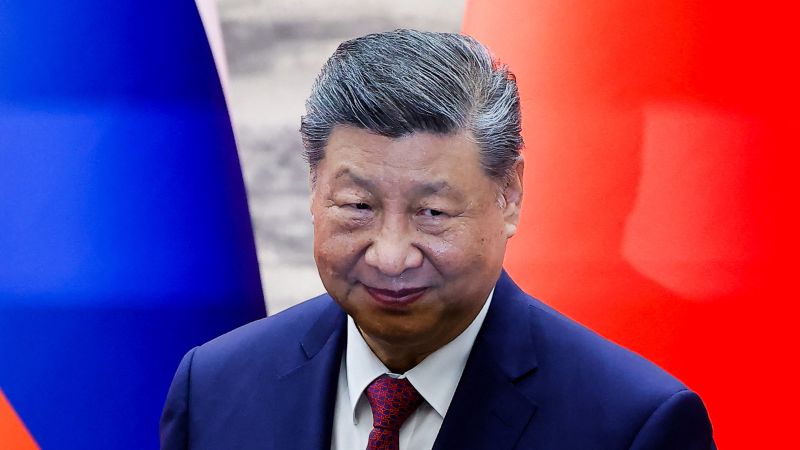
China’s Xi Jinping Embarks on High-Profile Visit to North Korea
China s Xi Jinping arrives in North – On Monday, Chinese President Xi Jinping arrived in North Korea for a two-day state visit, marking his first trip to the isolated nation in seven years. The journey, which followed his recent meetings with Russian leader Vladimir Putin and U.S. President Donald Trump in Beijing, was met with a grand reception in Pyongyang. State media footage captured the moment of arrival, highlighting the ceremonial nature of the event as Xi stepped off his aircraft alongside his wife, Peng Liyuan, who was also greeted with enthusiasm by North Korean officials.
Symbolic Welcome and National Ceremonies
North Korean leader Kim Jong Un and his spouse, Ri Sol Ju, greeted Xi at the airport, according to official reports. The scene, described by Chinese state broadcaster CCTV, featured a warm exchange as both leaders engaged in a display of camaraderie. North Korean children presented bouquets to the Chinese delegation, underscoring the ceremonial significance of the visit. The welcoming ceremony, held in Kim Il Sung Square, included a mounted cavalry procession and meticulously arranged crowds who waved flags and flowers beneath colossal portraits of Xi and Kim. A 21-gun salute preceded the event, with the honor guard chanting in Korean, “We wish Comrade Xi Jinping good health,” as part of the official homage.
“No matter how times change or how the international situation evolves, the traditional friendship between China and North Korea remains unbreakable, enduring, and constantly radiates vitality,” Xi wrote in a letter to North Korean media ahead of the visit.
The visit’s timing aligns with Beijing’s strategy to position China as a key global mediator during a period of shifting geopolitical dynamics. This is particularly significant as Kim has recently strengthened ties with Russia, culminating in the signing of a mutual defense treaty in 2024. Despite this, China continues to serve as North Korea’s primary economic and diplomatic partner, a role that Xi aims to reinforce through the summit. The event also offers an opportunity to revive the deep historical bond between the two nations, a relationship that has withstood decades of international scrutiny and political fluctuations.
Geopolitical Implications and Strategic Goals
North Korea’s recent diplomatic moves have included closer alignment with Russia, as evidenced by the deployment of thousands of soldiers to support Moscow’s operations in Ukraine. This shift has led to a cooling of relations with China, which previously maintained a more dominant influence over Pyongyang. However, the current visit signals Beijing’s intent to reassert its strategic importance, especially as global power dynamics evolve. The summit is expected to address a range of issues, including North Korea’s nuclear ambitions and its broader role in regional stability.
Xi’s trip coincides with the 65th anniversary of the 1961 Treaty of Friendship, Cooperation, and Mutual Assistance, the only mutual defense pact China has with another nation. Signed just over a decade after the Korean War, the treaty remains a cornerstone of bilateral relations. The visit is seen as a way to reaffirm this partnership while navigating North Korea’s dual engagement with both Russia and China. Analysts note that while Kim’s relationship with Russia has grown stronger, China still holds the upper hand in economic matters, a fact that Beijing is keen to highlight during the talks.
Preparations and Nuclear Ambitions
Just days prior to Xi’s arrival, North Korean state media reported that Kim Jong Un had inspected a major munitions factory, where he reviewed plans to expand the production of ballistic and cruise missiles. This visit, coupled with his inspection of a nuclear material plant last week, suggests a renewed focus on bolstering Pyongyang’s military capabilities. Kim emphasized the goal of “exponentially increasing our state’s nuclear forces,” a statement that raises questions about the extent to which North Korea’s nuclear program will dominate the summit agenda.
Although the nuclear issue is likely to feature prominently, it remains a contentious topic for China. The country has historically viewed North Korea’s weapons development as a potential threat to regional stability, particularly given its proximity to the Chinese border. However, Beijing also perceives Pyongyang as a strategic ally that can counterbalance U.S. influence in Asia. This duality shapes the tone of the summit, where China seeks to balance its concerns about nuclear proliferation with its desire to maintain a strong partnership with North Korea.
Historical Ties and Regional Dynamics
Xi’s visit is part of a broader effort to reorient China’s foreign policy in a rapidly changing world. The trip underscores the importance of North Korea as a key player in China’s geopolitical strategy, especially as the Trump administration reshapes U.S. foreign policy. By hosting Kim, Beijing aims to solidify its position as a central power in East Asia, leveraging the summit to showcase its ability to engage with multiple global actors simultaneously. This approach contrasts with the earlier era when China’s interactions with North Korea were more direct and centralized.
Recent years have seen a notable shift in the relationship between Beijing and Pyongyang. During the pandemic, border closures disrupted diplomatic and economic exchanges, further straining the bond. North Korea’s increased collaboration with Russia, including military support in Ukraine, has added complexity to the partnership. Yet, the current visit offers a chance for reconciliation, with Xi seeking to rebalance the ties and reaffirm China’s commitment to North Korea’s development. The summit is also an opportunity to address South Korea’s deteriorating relationship with the North, which has become increasingly adversarial.
Xi and Kim last met in September 2024, when Kim attended a military parade in Beijing alongside other world leaders. At that event, Kim sat beside Xi, symbolizing a rare moment of unity between the two nations. The parade highlighted the deepening alliance between China and North Korea, even as the U.S. and Russia pursued their own strategic partnerships. This historical context adds weight to the current visit, as both leaders aim to reinforce their commitment to shared goals amid global uncertainties.
While the summit is expected to focus on bilateral cooperation, it also reflects broader regional dynamics. North Korea’s nuclear program remains a focal point for the United States, which views it as a major security challenge. However, China’s support for the program has been a point of contention, as it seeks to maintain its influence while allowing Pyongyang to pursue its own ambitions. The visit, therefore, is not just a diplomatic event but a strategic maneuver to align North Korea with China’s vision of a stable and prosperous East Asia.
As the leaders prepare to meet, the stakes are high. For North Korea, the visit represents an opportunity to solidify its position as a key ally of China while also maintaining its ties with Russia. For China, it is a chance to reassert its dominance in the region and project its image as a versatile global leader. The outcome of the summit will likely shape the next phase of their partnership, balancing economic interests with security concerns in a rapidly evolving geopolitical landscape.
