
‘Black widows’: Women accused of marrying Russian army recruits to claim death payouts
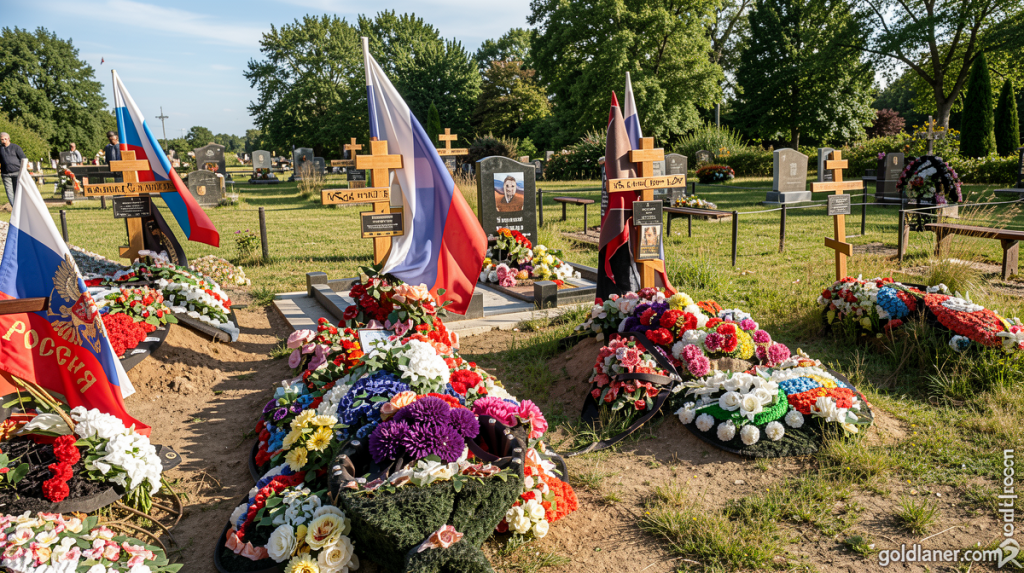
Marriage of Convenience: Russian Women Targeting War Dead for Financial Gain
Goldlaner.com – A growing phenomenon in Russia has caught public attention as women increasingly enter into marriages with military recruits, positioning themselves to receive substantial death benefits if their new husbands fall in battle. The practice, which has drawn comparisons to historical widows who married for inheritance, has earned these women the nickname “black widows” among Russian officials and state media outlets.
A Father’s Secret Life
Maria, a 37-year-old woman from St. Petersburg, found herself grappling with multiple revelations when the Russian military contacted her about her father’s death. Yury, aged 59, had been shot on the front lines of what Moscow continues to call the “special military operation” and subsequently died from his injuries. What made the news doubly shocking was that Maria had no idea her father had joined the army, and even more surprising was learning he had married just two days before being deployed to fight.
“I’m still in shock and still can’t accept what happened,” Maria said while sitting at her kitchen table in her small apartment. “At first, it felt like a dream. Even now, I sometimes wake up thinking I must have just dreamt it all. But it is really happening.”
The bride, whom Maria had never met and had never heard her father mention, was 22 years younger than Yury. This age gap became significant because the younger woman became her father’s legal next of kin, entitling her to official compensation that would otherwise have gone to Maria and other family members.
“I’ve never even spoken to this woman,” Maria explained. “I don’t know what to say to her because I immediately suspected it was a scam.”
The Financial Incentive
When Russian soldiers are killed in combat, their next of kin receive lump sum payments from the military beginning at 5 million rubles, approximately $64,000. This compensation was originally designed to reassure recruits that their families would be financially secure if the worst happened during their service. However, mounting concerns suggest the benefit is increasingly being exploited by what Russian officials call “black widows.”
These women allegedly target vulnerable men, entering into sham marriages before the men are sent to war. If their new husbands are killed in action, the women claim the compensation, effectively cutting out other relatives who might have been entitled to the money. The practice has scandalized Russians in recent months, with multiple stories emerging of recruits being honey-trapped into marriage before perishing on the front lines, or even being married on their deathbeds.
High-Profile Cases and Public Outcry
One particularly widely reported case involved a nurse working at a military hospital who was fired after being accused of marrying five soldiers under her care before they succumbed to their injuries. The nurse allegedly did this specifically to collect death benefits for each soldier.
“The families of Special Military Operation participants need protection from brazen criminals, from so-called ‘black widows,’ from financial and telephone scammers and predators who target those who have received monetary payouts,” said Leonid Slutsky, a prominent lawmaker in Russia’s parliament. He added that such crimes were now reaching “serious proportions.”
This abuse has touched a nerve in Russian society, which is increasingly alarmed at how the ongoing war in Ukraine is taking its toll on life back home. Against a backdrop of a worsening economy, fuel shortages, the ever-growing human cost of the conflict, and damaging Ukrainian strikes on Russian soil, condemnation of these scammers is getting louder. There are mounting public calls for an official crackdown on the practice.
Government Encouragement of Marriage
After Russia’s full-scale invasion of Ukraine in February 2022, the Kremlin actively encouraged Russian recruits to get married. This policy served multiple purposes: bolstering family support for soldiers and instilling an additional motivation to fight. The pro-marriage campaign aligned with Russian President Vladimir Putin’s promotion of so-called traditional values, coming at a time when Russia faces significant demographic decline.
Authorities sought to facilitate speedy marriages for newly enlisted soldiers, avoiding the usual notice period. State television broadcast mass wedding events arranged by local officials to further streamline the process and make marriage more accessible to young men heading to war.
The Property Ladder Connection
Marrying a soldier, especially a soon-to-be-deployed recruit whose life expectancy on the front lines is now considered catastrophically short, has even been cast as a way onto the Russian property ladder. In a video podcast recorded in the Siberian city of Tomsk last year, one Russian real estate agent offered astonishingly cynical advice to would-be property buyers.
“I’m a 30-year-old woman, but if I want to buy an apartment, where am I supposed to get the money?” the host, Darya Cherdantseva, asked. “It’s simple,” the agent, Marina Orlova, responded. “Find a man who’s serving in the Special Military Operation and when he gets killed, you get 8 million rubles ($102,000).”
Orlova laughed as she delivered this advice, noting that “lots of women” were following this strategy. The amount mentioned—8 million rubles—exceeds the minimum payout, suggesting that additional benefits or bonuses may be available depending on circumstances.
Broader Implications
The black widow phenomenon reflects deeper issues within Russian society. The war has created both economic hardship and social disruption, making financial security more elusive for many citizens. For women facing limited opportunities in a challenging economy, marrying a soldier offers a potentially lucrative path to financial stability.
Meanwhile, the government faces pressure to balance its encouragement of marriage with protecting families from exploitation. As the conflict continues and casualties mount, the number of potential “black widows” may increase, along with public demand for stricter oversight of the compensation system.
The case of Yury and his mysterious new wife exemplifies how the war has transformed personal relationships and family dynamics in Russia. For Maria, the discovery of her father’s secret marriage and subsequent death has left her questioning not only her father’s intentions but also the integrity of a system designed to support families of fallen soldiers.
Related Reading
Frequently Asked Questions
What is Black widows?
Black widows is the main topic of this guide. The article explains the context, practical details, and next steps readers should understand.
Why does Black widows matter?
Black widows matters because readers are looking for a useful answer, not just a short summary. Good content should match search intent and help them decide what to do next.
