
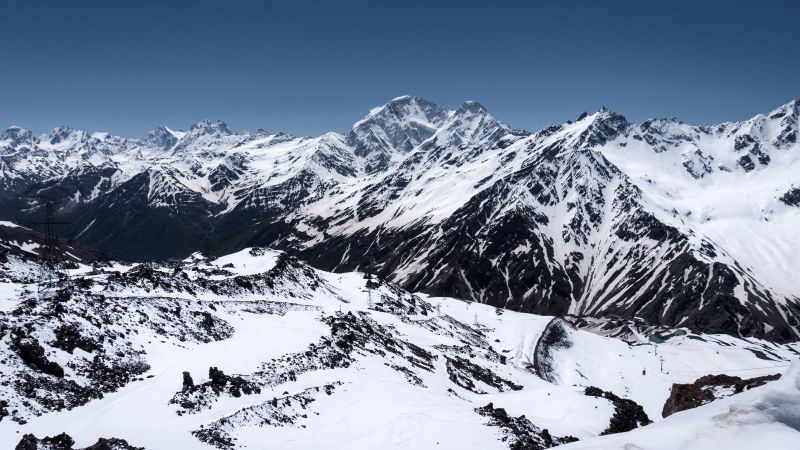
Avalanche on Mount Mizhirgi Claims at Least 11 Lives in Russia’s North Caucasus
Goldlaner.com – A powerful avalanche tore down the slopes of Mount Mizhirgi on Sunday afternoon, killing at least 11 members of a climbing party and injuring six others in one of the deadliest mountain disasters in recent memory for Russia’s North Caucasus. Local emergency services confirmed the toll as of early Monday morning, when the full scale of the disaster was still unfolding amid treacherous conditions above the treeline.
The slide struck approximately at 5 p.m. local time (9 a.m. Eastern Standard Time) on Sunday, catching a group of 33 climbers who had been ascending or traversing the upper reaches of the peak. Mount Mizhirgi, rising to roughly 4,016 meters, ranks among the tallest summits in the entire Caucasus system and draws experienced mountaineers each season for its steep couloirs, exposed ridgelines, and demanding technical terrain. The mountain sits within the Kabardino-Balkaria republic, a region long associated with high-altitude climbing traditions inherited from Soviet-era expedition culture.
Rescue Effort Underway Amid Severe Hazards
By 9 a.m. local time on Monday, emergency coordinators reported that 10 of the climbers had managed to descend the mountain under their own power, reaching lower elevations where they could be accounted for. The whereabouts and condition of six additional members of the party remained unconfirmed at that point, leaving a gap in the headcount that rescue teams were working to close.
More than 50 emergency workers were deployed to the area in a combined search-and-rescue operation. Officials described the terrain as exceptionally difficult, with narrow access routes, unstable snowpack, and a persistent threat of secondary slides. The risk of further avalanches, they noted, constrained how quickly and how many personnel could operate at altitude, forcing teams to proceed in small units and often wait for weather windows before advancing.
The combination of steep, glacierized slopes and rapidly changing snow conditions made every hour of the operation a negotiation with the mountain itself. Helicopter support, where available, is typically limited by wind shear and low cloud cover common to the high Caucasus in the shoulder seasons, meaning ground teams bear the primary burden of reaching isolated victims.
Why the North Caucasus Draws Climbers — and Why It Demands Respect
The Caucasus range, stretching from the Black Sea to the Caspian, forms the natural watershed between Europe and Asia and contains dozens of peaks exceeding 4,000 meters. The western sector, which includes Kabardino-Balkaria, Karachay-Cherkessia, and North Ossetia-Alania, has been a center of Russian and post-Soviet mountaineering for decades. Local climbing clubs, university expedition programs, and commercial guiding outfits send parties into the high country from late spring through early autumn, depending on snowpack and access conditions.
Mount Mizhirgi specifically is known for its steep north and east faces, which can accumulate significant snow load well into the warmer months. Avalanches on such terrain are not rare; they are a recognized hazard that experienced guides plan around. However, when a slide initiates at altitude and sweeps a broad band of slope, the consequences for a group caught in its path can be catastrophic within seconds. The fact that 33 climbers were present at the moment of release magnified the potential for mass casualties, and the confirmed death toll of at least 11 underscores how quickly a single event can overwhelm even a well-equipped party.
What Remains Unknown
As of the latest available information, the identities of the deceased and the injured have not been fully released, and the six climbers whose status was unconfirmed at Monday morning may still be located above the slide zone or in areas where communication is unreliable. Emergency services indicated that the operation would continue through the day, with teams rotating to maintain continuous coverage of the search grid.
Family members and climbing organizations were expected to receive updates as the situation developed. In past incidents of comparable scale in the Caucasus, full accounting of all individuals involved has sometimes taken more than 24 hours, particularly when secondary slides or weather close in overnight.
Broader Implications for Mountain Travel in the Region
The disaster is likely to prompt renewed scrutiny of avalanche forecasting, group-size limits, and communication protocols for high-altitude expeditions in the western Caucasus. Regional authorities have in previous seasons emphasized the need for climbers to file route plans, carry satellite communication devices, and monitor snow-condition bulletins before committing to upper-mountain objectives. Whether those advisories were followed by the party struck on Sunday remains a question for any subsequent investigation.
For the climbing community in Kabardino-Balkaria and across the North Caucasus, the loss of at least 11 lives in a single event will cast a long shadow over the coming season. Mount Mizhirgi and its neighbors will continue to attract those drawn to the range’s raw, high-consequence terrain, but the mountain’s indifference to human ambition was made brutally clear on Sunday afternoon.
Related Reading
Frequently Asked Questions
What is At least 11 killed after avalanche?
At least 11 killed after avalanche is the main topic of this guide. The article explains the context, practical details, and next steps readers should understand.
Why does At least 11 killed after avalanche matter?
At least 11 killed after avalanche matters because readers are looking for a useful answer, not just a short summary. Good content should match search intent and help them decide what to do next.