
A Mexican village warned of a cartel offensive during the World Cup. Then the drone attacks began
A Mexican village warned of a cartel – “`html
Cartel Drones Rain Bombs on Mexican Village During World Cup Celebrations
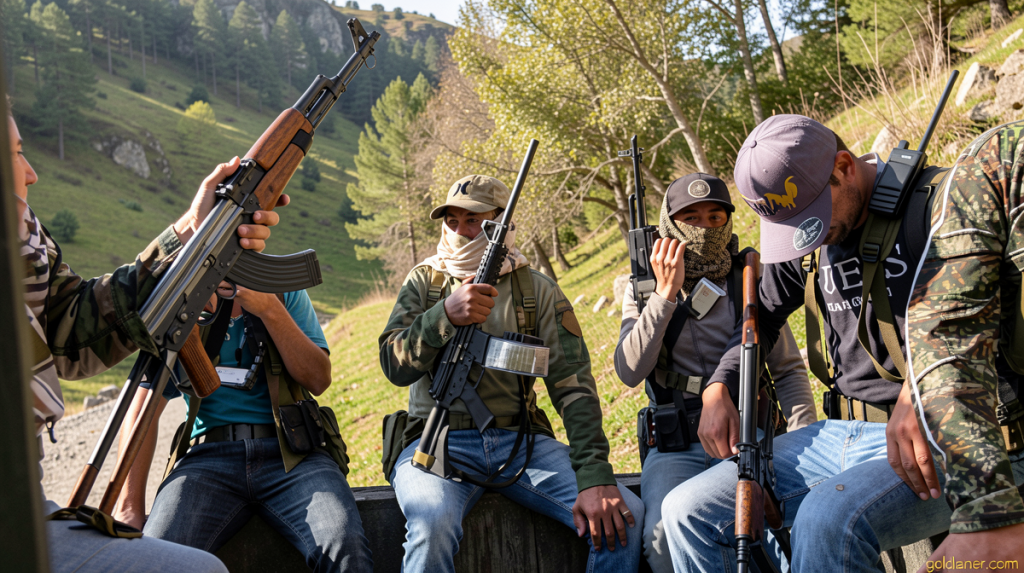
At precisely six o’clock Wednesday morning, as daylight broke over the mountainous terrain of central Mexico, explosive devices began falling from the sky. The rural settlement of Guajes de Ayala found itself trapped in a violent confrontation. For several weeks prior, residents of this tight-knit cluster of communities had been alerting authorities in Guerrero state about escalating dangers posed by La Nueva Familia Michoacana, a powerful criminal organization steadily advancing toward their territory. Unfortunately, their urgent pleas went unanswered while the nation’s attention turned toward World Cup festivities in urban centers including Mexico City, Guadalajara, and Monterrey.
Marilu Solorio, a twenty-four-year-old resident, took cover inside an abandoned medical facility alongside seventy other community members—women, children, and senior citizens. They listened anxiously to the continuous barrage of drone detonations and rifle fire exchanged between cartel forces and local vigilantes. Their hope was simple: survive the onslaught and remain alive when the fighting finally ceased.
“While some are celebrating goals, others are getting massacred by drones carrying bombs,” Solorio explained during a telephone conversation from her temporary shelter. “Instead of protecting people in the places where they’ve been playing the World Cup, (Mexico’s government) should be protecting people like us, who have never done anything wrong.”
Government officials in Mexico swiftly dismissed reports of the violence despite video footage broadcast live by local residents. These recordings captured active gunfire and thick smoke rising from observation towers that community members had constructed atop mountains to monitor cartel movements.
The timing of these attacks coincides with President Claudia Sheinbaum’s ongoing efforts to combat persistent criminal activity throughout Mexico. Although homicide rates have declined considerably during her administration, mounting pressure has emerged over the last twelve months as the country attempted to demonstrate security and stability before hosting the World Cup. This effort followed a surge of violence in February within Guadalajara, one of the tournament’s host cities.
Complicating matters further are threats from U.S. President Donald Trump regarding potential military intervention against cartels, alongside various domestic political challenges. Consequently, Mexican authorities intensified security measures around World Cup venues, positioning approximately one hundred thousand security personnel primarily in Mexico City, Monterrey, and Guadalajara to ensure the tournament’s safety.
The Mexican portion of the competition concluded on Sunday without significant security breaches. While soccer enthusiasts filled city streets celebrating the beautiful game and viral images of ducks wearing Mexican jerseys circulated widely online, violence persisted across numerous regions of the country.
Security Strategy Creates Vulnerabilities Beyond Host Cities
According to Mexican security expert David Saucedo, incidents similar to those in Guajes de Ayala represent unintended consequences of the government’s World Cup security approach. “There was heavy security in Mexico City, Guadalajara, Monterrey. Lots of military and National Guard officers from other states were transferred to fortify World Cup hosts,” Saucedo noted. “But in doing that, they also left a number of regions that weren’t host cities unprotected.”
Meanwhile, other areas experienced their own tragedies. In northern Sinaloa, weekend confrontations between rival criminal factions resulted in the deaths of one naval officer and ten suspected gang members. Earlier that week in southern Veracruz, local officials discovered the corpse of a kidnapped journalist, reportedly murdered by criminal organizations. On Wednesday in Chiapas, a southern state increasingly overshadowed by intense cartel conflicts, eight bodies were discovered piled together bearing cartel messages.
Residents of Guajes de Ayala had previously warned authorities about the approaching cartel threat, sharing social media videos showing cartel drones circling overhead and mapping the gradual advance of cartel fighters toward residential areas. They expressed fear of an imminent assault. Solorio stated that nobody came to help.
That Wednesday morning, the situation reached its breaking point. As Solorio and her group sought protection from the crossfire within the abandoned clinic, other community members found shelter inside churches. Local and federal officials initially failed to respond to inquiries, though Mexico’s Security Cabinet eventually posted on X that “events described in news articles have been ruled out” by authorities. The statement further indicated that state security forces “are heading to the area to verify the situation, strengthen institutional presence, and provide security to the population.”
Previously, officials had rejected claims of abandoning Guerrero communities. However, when the Associated Press recently visited the region, state presence appeared virtually nonexistent near the affected settlements. For years, La Nueva Familia Michoacana—declared a foreign terrorist organization—has maintained its grip on territory in central Mexico, and residents of Guajes de Ayala now face the consequences of being overlooked during a period of national celebration.
“`
