
80 years after World War II, Okinawa’s battle sites are still giving up bones and bombs
Unearthing History: Okinawa’s Living War Memorial
Goldlaner.com – Eight decades have passed since the conclusion of one of the Pacific theater’s most devastating conflicts, yet the island of Okinawa continues to yield its secrets. The landscape itself serves as a repository of memory, with bones and unexploded ordnance surfacing regularly from the earth. Among those dedicated to recovering these remnants is Takamatsu Gushiken, a man whose life’s purpose centers on honoring those who perished during the fierce fighting that transformed the region.
The Bone Digger’s Journey
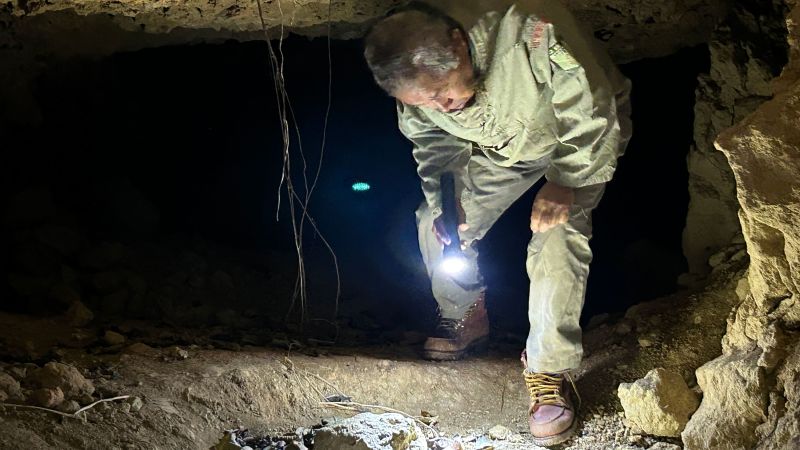
Gushiken navigates narrow passages within limestone caves scattered across Japan’s southernmost prefecture. His movements are deliberate as he squeezes through tight openings, mindful of jagged rock formations overhead while carefully examining the ground beneath his feet. A lamp attached to his head illuminates the soil as he works with a simple gardening implement, searching for traces of individuals who sought refuge in these subterranean shelters during the conflict.
They are human, and I am human too.
When asked about his motivation, Gushiken offers this simple yet profound explanation, his voice trembling with feeling. The discoveries he makes range from fragments of human skulls to tiny bones that may have belonged to children. One particular find—a bullet lodged in the earth—led him to imagine a mother and child caught in the crossfire while American soldiers cleared Japanese defenders from their hiding places.
A Landscape Scoured by Fire
The human cost of the Battle of Okinawa was staggering. Between the initial American landing on April 1, 1945, and the official declaration of victory on June 22, approximately 240,000 individuals lost their lives or vanished without trace. This devastating figure encompasses roughly 100,000 local residents, 110,000 Japanese military personnel and conscripts, and over 12,000 American and allied forces, according to records maintained by the National World War II Museum in Louisiana.
The American assault unleashed unprecedented destructive power upon the island. Military forces deployed 1.1 million 105-millimeter howitzer shells, fired more than half a million mortar rounds, and unleashed 16 million machine gun bullets alongside 9 million rifle projectiles. The sheer volume of ordnance created what witnesses described as a hellscape of relentless bombardment.
Physical Remnants of Conflict
Visitors to Okinawa today can encounter tangible evidence of this devastation. On Ie Shima, a small offshore territory covering 23 square kilometers, a single pawn shop building remains standing as the sole survivor of intense combat. The structure once protected an crucial airfield during the war.
Within Tomigusuku’s former Japanese Navy underground command center, walls bear the pockmarks of shrapnel from a tragic event. A memorial inscription commemorates Vice Admiral Minoru Ota and his 4,000 subordinates who chose death over surrender on June 18, 1945. Nearby, at the Sefa Utaki Sacred Site in Nanjo, an unexploded grenade sits quietly beside a busy thoroughfare, while inside an unmarked cave, smooth pickaxe marks reveal the handiwork of soldiers who carved out machine gun positions.
Further along a pathway from the Okinawa Peace Park, visitors can stand at the precise location where Japanese garrison commander General Mitsuru Ushijima ended his life on June 22, 1945, as American forces closed their final encirclement.
Preserving Memory Through Documentation
Kazuhiko Nakamoto has emerged as a central figure in efforts to preserve Okinawa’s wartime heritage through the Okinawa Prefectural Archives. Working alongside colleagues Akira Yoshimine and Eriko Nishiyama, Nakamoto has compiled extensive collections that overlay historical American surveillance photographs with contemporary landscapes, allowing modern observers to visualize the terrain as it appeared during and after the battle.
Nakamoto’s personal connection to the war runs deep. His mother, merely six years old when hostilities erupted, survived the conflict separated from her parents under the protection of her grandmother. The elderly woman navigated the southern regions of the island, seeking shelter as fighting intensified. “It was like a miracle that she survived,” Nakamoto reflects, acknowledging that his family belonged to the fortunate few who endured.
Through their collective efforts, these archivists ensure that Okinawans—victims of a war they did not choose—remain remembered. The island continues to give up its treasures, both human and mechanical, offering each generation an opportunity to connect with history through touch and discovery.
Related Reading
Frequently Asked Questions
What is 80 years after World War II Okinawa?
80 years after World War II Okinawa is the main topic of this guide. The article explains the context, practical details, and next steps readers should understand.
Why does 80 years after World War II Okinawa matter?
80 years after World War II Okinawa matters because readers are looking for a useful answer, not just a short summary. Good content should match search intent and help them decide what to do next.
