
The USA’s red card controversy explained and why the decision won’t be overturned
The USA’s Red Card Controversy Explained and Why the Decision Won’t Be Overturned
The USA s red card controversy – The global soccer community erupted in debate following a pivotal moment during the USA’s recent victory over Bosnia and Herzegovina. As the match neared its final stages, a contentious red card decision sent shockwaves through the stadium and beyond, overshadowing the earlier triumphs of England and Belgium. For those who missed the drama, the incident unfolded in a split second, raising questions about fairness and consistency in officiating. This controversy, however, is unlikely to be reversed, as FIFA’s regulations have been clear on the matter.
The Incident: A Close Call on the Pitch
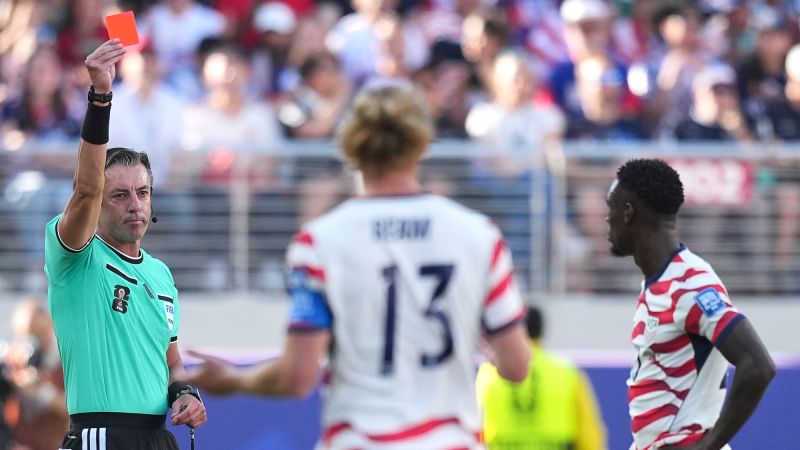
The red card was issued during a routine moment in the match, as the USA, already leading 1-0, pressed forward in the final minutes. Folarin Balogun, the team’s goalscorer, had made a quick move toward the ball, his right foot brushing against Tarik Muharemović’s calf. The Bosnian defender, who had been tending to his ankle, appeared to be in distress. It wasn’t until a replay highlighted the exact sequence of events that the gravity of the decision became apparent.
Referee Raphael Claus, after consulting the Video Assistant Referee (VAR) system, ruled Balogun guilty of dangerous play. The decision was met with mixed reactions from fans and analysts. While some argued that the contact was incidental, others felt the striker had deliberately planted his foot on Muharemović’s ankle, causing a clear injury. The replay, slowed to a crawl, showed the moment in stark detail, leaving viewers to question whether the red card was justified.
Balogun’s dismissal means he will miss the USA’s Round of 16 clash against Belgium, a critical game for their advancement in the tournament. Despite the team’s eventual win, the focus remained on the contentious call. The question lingered: Could FIFA overturn this decision? The answer, according to their current rules, is a resounding no.
FIFA Rules and the Appeals Process
FIFA’s updated regulations for the 2026 World Cup state that a direct or indirect red card (second caution) automatically results in a suspension for the next match. This rule leaves little room for appeal, even if the incident is later scrutinized. US Soccer confirmed to CNN Sports that they would not challenge the decision, leaving Balogun with no choice but to watch from the stands as his team faces Belgium on Monday.
There had been some confusion earlier about the appeals process. While US Soccer could request a review, it would only be possible if FIFA extended the suspension beyond the first match. This meant Balogun would have to sit out at least one game, with the possibility of additional penalties depending on the outcome of any further deliberations. The lack of flexibility has sparked criticism, particularly from players and fans who feel the system is too rigid.
Weston McKennie, one of the USA’s star midfielders, called the absence of an appeals process “bogus.” He pointed to earlier instances where similar incidents went unpunished, emphasizing the inconsistency in how red cards are applied. One such example was Lionel Messi’s accidental stamp on a defender’s leg in Argentina’s opening group match. Despite the clear injury, the 8-time Ballon d’Or winner received no sanction and finished the game with a hat-trick.
“If a player or team official is sent off as a result of a direct or indirect red card (second caution), they will automatically be suspended from their team’s subsequent match,” FIFA’s rules state. This rule has left fans grappling with the idea that even a controversial decision is final once made.
While some argue that the VAR system has improved decision-making, others believe it has introduced new layers of subjectivity. Balogun’s dismissal, though justified by the replay, highlights how a single moment can define a player’s tournament. The striker, known for his pace and finishing, now faces the challenge of watching from the sidelines as his team seeks to advance.
The Ripple Effect: Inconsistencies in Officiating
The incident has reignited discussions about the variability in red card decisions across the tournament. Social media platforms were flooded with reactions, with many comparing Balogun’s fate to that of other players who faced similar situations. For example, Messi’s stamping incident was deemed a harmless mistake, while Balogun’s action was seen as more deliberate, despite the lack of clear intent.
Such disparities are not uncommon in soccer. The sport’s unpredictable nature often stems from the human element of officiating, where subjective judgment plays a key role. While technology like VAR aims to reduce errors, it also creates new dilemmas. Players, coaches, and fans alike are left to interpret the same actions differently, depending on the moment and the stakes involved.
Former NFL star JJ Watt, along with NBA champions Josh Hart and NFL superstar Patrick Mahomes, expressed surprise at the decision. Watt, a passionate soccer fan, took to social media to question whether the red card was truly deserved. “It’s like a game of chance,” he tweeted, “where one missed call can change everything.” This sentiment resonated with many, who felt the outcome was more about timing than the actual infraction.
A New Chapter for the USA and Spain’s Path Forward
As the USA prepares for their next challenge against Belgium, the absence of Balogun will be felt in their attack. The striker’s pace and finishing ability could prove crucial in a high-stakes encounter. However, the team’s overall performance has been strong, and their focus on the next match remains undiminished. The question now is whether they can adapt quickly to this setback.
Meanwhile, Spain has positioned itself as the favorite to progress from Group H. After a rocky start with a draw against Cape Verde, the team has since dominated their remaining matches, showcasing a cohesive unit and youthful energy. Lamine Yamal, the standout young player, appears to be fully fit, adding a dynamic element to their attack. The injury to left winger Nico Williams, however, remains a concern, as it could affect their depth in the knockout stages.
The World Cup has already delivered unexpected results, and the USA’s red card controversy is just another reminder of the unpredictability that defines the tournament. Fans are left wondering how such a pivotal moment will shape the rest of the competition, especially with Spain’s strong position and Belgium’s own momentum. The decision to keep Balogun suspended may be a harsh reality, but it also underscores the challenges of officiating in high-pressure moments.
As the clock ticks toward the next round, the focus shifts to how teams will respond to these decisions. Whether it’s a missed chance to appeal or an unexpected red card, the World Cup continues to test the limits of fairness and consistency. For Balogun, the game is far from over, but his absence will be a significant hurdle for the USA in their quest for glory. For the rest of the tournament, the same question lingers: Can the rules keep up with the drama?
With the World Cup’s unpredictable twists, the focus remains on the next matches, where every decision could tip the balance. The red card controversy is a case in point, reminding us that even in the most organized tournaments, human judgment remains a wildcard. As fans eagerly await the USA’s game against Belgium, they’ll be hoping for a swift resolution to the debate over Balogun’s fate—while also keeping an eye on Spain’s rising star, Lamine Yamal, who could be the key to their success in the coming weeks.
