
The Miracle at MSG: What it was like to know you just saw something special
The Miracle at MSG: What it was like to know you just saw something special
A Historic Turnaround in the NBA Finals
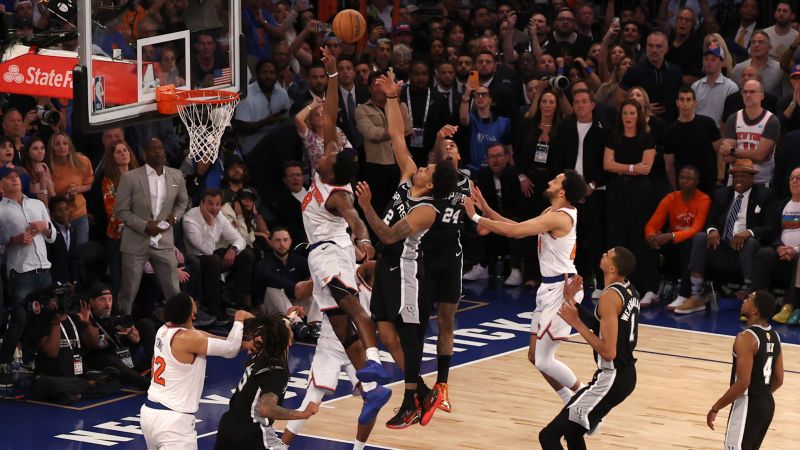
The Miracle at MSG – When the final buzzer sounded at Madison Square Garden, the air was electric with disbelief. The New York Knicks, once trailing by 29 points in Game 4 of the NBA Finals, had staged an extraordinary resurgence to secure a 107-106 victory over the San Antonio Spurs. The win not only handed the Knicks a 3-1 series lead but also rekindled hope for a championship that had eluded them for more than half a century. For the fans who had spent the night in the arena, the moment was more than just a game—it was a living testament to resilience and redemption.
“We were here!” a fan with a beet-red face shouted, his voice cutting through the din of the crowd. “We’re going to tell our grandkids and they’re going to tell their grandkids: We were f**king here.”
Those who had braved the most uncomfortable seats in the Garden, nearly touching the ceiling, found their patience rewarded. The cost of those seats, once dismissed as a poor investment, seemed justified in the face of history. The Knicks’ triumph was a defining moment, one that would be etched into the memory of every fan who witnessed it. From the coaching staff to the players and the city itself, the collective experience of that night was indelible.
The Game That Defied the Odds
The Knicks’ path to victory was paved with grit and precision. In the first quarter, the Spurs’ Victor Wembanyama had taken control, sinking a short floater over Mitchell Robinson to build a 17-point lead. The moment was emblematic of the Spurs’ dominance, but it also sparked a narrative of tension and rivalry. As Wembanyama pointed to his temple, he seemed to declare his dominance, a taunt that would linger long after the game ended.
Robinson, undeterred, responded with a forearm to Wembanyama’s neck—a move that either knocked him off balance or provided the perfect cover for a strategic foul. The crowd, already primed for a showdown, erupted in applause, treating the moment as a form of justice for a previous incident in Game 3, where Wembanyama had shoved Jalen Brunson. The Knicks’ loss in that game had already stoked the flames of frustration, but this physical exchange felt like a spark of catharsis.
By halftime, the Knicks were down 27, the Spurs having carved out the largest lead by a road team in NBA Finals history. The momentum seemed to favor the Spurs, but the Knicks’ team spirit remained unshaken. Coach Mike Brown, known for his calm demeanor, chose not to dwell on film analysis. Instead, he let his players absorb the disappointment, knowing that their determination would be tested in the coming quarters.
The Weight of Expectation and the Echoes of Doubt
As the game progressed, the Knicks’ fight became a metaphor for their entire season. The team’s first loss in 46 days had already raised questions about their consistency, but this comeback was a stark reminder of their tenacity. The officials, too, were under scrutiny. The Knicks’ aggressive play had been overlooked in favor of the Spurs’ polished execution, fueling debates about bias and fairness. Some fans whispered about the “stagnant offense” criticized by their own coach, while others pointed to the Spurs’ dominance as a well-earned victory.
The atmosphere in the Garden was thick with emotion, not just from the players but from the fans who had carried the team through every challenge. Their cheers, often echoing through the arena, were a soundtrack to a season filled with ups and downs. Yet, the Knicks’ loss in Game 3 had cast a shadow over their journey. The tension was palpable, and the stakes felt higher than ever. Even the presence of Donald Trump, who had attended the game and drawn thunderous boos, seemed to amplify the sense of urgency.
Despite the mounting pressure, the Knicks found a way to rise. Their offense, once deemed “as stagnant as I’ve seen us all year,” surged with renewed purpose. OG Anunoby, whose coach had urged him to “use that size and athleticism” to make an impact, became a symbol of the team’s determination. The game’s turning point came in the final seconds, when an offensive rebound by Robinson secured the lead. It was a moment that encapsulated the Knicks’ grit, a testament to their ability to overcome adversity.
The Cost of Optimism and the Aftermath
The journey to this comeback was not without its trials. Monday night’s game had sown seeds of doubt, with the arena’s security and the fate of a watch party becoming the subject of heated debates. Spokespeople for the city and Madison Square Garden had clashed over the incident, ultimately leading to the cancellation of the event. The arena’s official statement, which branded the situation a “party pooper,” left fans feeling frustrated but determined.
Yet, the Knicks’ perseverance on the court seemed to overshadow the logistical hiccups. The crowd’s reaction to the game’s start—marked by a sense of despair—contrasted sharply with their later triumph. Even as Robinson was called for a flagrant foul, the fans celebrated his defiance, recognizing it as a necessary step in the fight for victory. The Knicks had not only clawed their way back but had also turned a potential disaster into a defining moment of unity.
For many, the game was a reminder that sports can be unpredictable, even in the face of overwhelming odds. The Knicks’ ability to reverse a 29-point deficit in the Finals was a story of hope and heart, a narrative that would resonate far beyond the final buzzer. The history of the team, filled with moments of near-misses and unfulfilled potential, made this comeback all the more significant. It wasn’t just a win—it was a rebirth.
As the dust settled and the Knicks celebrated their hard-earned lead, the significance of the night became clear. This wasn’t just a game; it was a chapter in the annals of basketball history, a testament to the power of belief. For the fans, the miracle at MSG was more than a victory—it was a shared experience that would be told and retold for generations to come.
