
Explained: Egypt’s fiery accusations after controversial World Cup defeat
World Cup Break: Egypt’s Outrage Following Heartbreaking Loss to Argentina
Explained – After nearly a month of relentless tournament action, the football world gets a brief respite. No matches are scheduled for today as teams recuperate before the quarterfinal stage begins on Thursday. This pause feels particularly timely given the dramatic events of yesterday’s matches.
At Mercedes-Benz Stadium, Argentina staged what supervising editor Kyle Feldscher called a miraculous comeback, something bordering on divine intervention in sporting terms. While fans worldwide celebrated another Lionel Messi masterclass, Egyptian supporters found themselves devastated and increasingly angry about the officiating decisions that shaped their team’s fate.
A Controversial End to Egypt’s Campaign
With FIFA already facing scrutiny over potential favoritism and external interventions, Egypt’s complaints could not have come at a worse moment. The North African nation had built a commanding 2-0 advantage against the defending champions before everything unraveled in the closing stages.
Egypt’s journey to that lead had been promising. They took the lead in the fifteenth minute and appeared to double their advantage just before the hour mark. However, what should have been a celebration turned into anxiety as the VAR review began. The referee ultimately disallowed the goal, citing a foul on Lisandro Martínez that preceded the ball recovery for the strike.
While most observers acknowledged the incident was borderline, many felt VAR’s intervention was excessive. Despite this setback, Mostafa Ziko found the net to restore Egypt’s two-goal cushion, seemingly putting Argentina’s tournament hopes in jeopardy.
The Final Act: Three Goals in Thirteen Minutes
Argentina’s response was nothing short of spectacular. The Albiceleste scored three times within a thirteen-minute span, with the decisive goal arriving in the third minute of stoppage time. This dramatic turnaround left the Egyptian bench seething with anger.
The Egyptian coaching staff believed they had been denied at least two crucial penalty decisions. The first concerned Mohamed Salah, who fell in the Argentina penalty area less than twenty seconds before Fernández’s winner. Replays revealed Julián Álvarez had made contact with the ball before Salah went down under pressure from the Argentine defender.
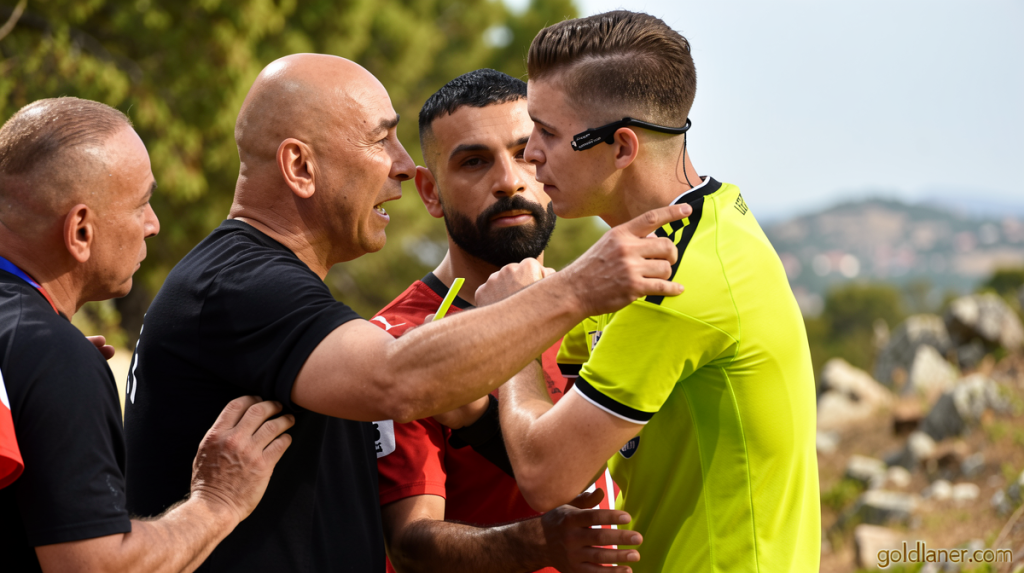
“We have been treated unfairly today,” Hassan told reporters after a match that ended in a flurry of cards for the Egyptian players and coaching staff who confronted the referee. “We have suffered injustice.”
A second potential penalty involved Hamdy Fathy, who appeared to be pulled down by Alexis Mac Allister shortly before the controversy surrounding Salah’s incident.
Hassan’s Vow and Federation’s Response
Egypt’s head coach Hossam Hassan was visibly furious on the touchline, making the distinctive cross gesture that FIFA introduced to signal potential racist incidents. Though he did not explicitly mention racism during his post-match press conference, Hassan’s body language spoke volumes about his frustration.
“There has not been respect or fair play because a penalty was ruled out,” Hassan added. “A second ball that should have been called as a penalty for us was not even checked by the VAR.”
In a dramatic declaration, Hassan promised to withdraw from following the tournament entirely. “I promise you, from the moment I go back, I’m not going to continue following the matches of this FIFA World Cup,” he stated. “This is my internal fight, my internal objection, my own way of speaking up and standing up.”
Egypt’s football federation has formally requested that FIFA investigate the match officials and potentially remove them from the remainder of the tournament. While Egypt can certainly feel aggrieved by the decisions that went against them, the timing of these complaints adds another layer of complexity to an already contentious World Cup campaign.
