
Breaking down 36 disastrous hours for American soccer as World Cup bubble bursts
A Historic Collapse: How American Soccer’s World Cup Dreams Shattered in 36 Hours
down 36 disastrous hours for American – The week of July 7, 2026, marked a pivotal moment for American soccer, one that unfolded with a mix of political maneuvering, sporting controversy, and a crushing defeat. What began as a hopeful narrative of progress and redemption turned into a 4-1 rout against Belgium, casting a shadow over the team’s World Cup ambitions. This sequence of events, spanning from Sunday afternoon to the final whistle, exposed vulnerabilities that had long been ignored and highlighted the precarious state of the U.S. national team’s reputation.
The FIFA Suspension and the Political Gambit
At 12:40 p.m. ET on July 7, FIFA’s disciplinary committee made a decision that sent shockwaves through the soccer world. The body announced that Folarin Balogun’s one-game ban for receiving a red card against Bosnia and Herzegovina would be suspended, allowing him to play in the upcoming match against Belgium. This move, rooted in Article 27 of FIFA’s regulations, provided the American striker with a one-year probation period, effectively clearing him to represent his country in the high-stakes clash.
“I didn’t tell him what to do,” President Donald Trump later admitted, explaining his call to FIFA president Gianni Infantino. The statement, though defensive, raised eyebrows. While Trump claimed he was merely seeking a review of Balogun’s red card, many observers saw a clear attempt to sway the outcome in the U.S. favor. Belgium, as a co-host nation, found itself at the center of a political storm, with accusations of unfair advantage and external pressure looming over the match.
The Belgian Football Association responded swiftly, denouncing the decision as a “major injustice” and vowing to challenge FIFA’s ruling. Coach Rudi Garcia, who had previously criticized the American team’s defensive flaws, framed the suspension as an attack on the integrity of the sport itself. “We are defending the entire game here,” he said, emphasizing the team’s resolve to resist political interference. Yet, as the soccer world awaited the next move, the stage was set for a defining moment in American soccer history.
The Downfall of the U.S. Team: A Day of Humiliation
When the game finally kicked off, the U.S. team arrived on the pitch with the weight of expectations heavy on their shoulders. But from the outset, it was clear that their preparation had faltered. Belgium’s first goal came just nine minutes in, as Charles De Ketelaere capitalized on a defensive lapse, tapping in a simple opportunity to put the visitors ahead. The Americans, expected to be a spirited and tenacious force, seemed uncharacteristically disorganized, their lack of discipline and composure evident in every passing phase.
There were fleeting moments of hope. In the 31st minute, Malik Tillman’s free kick deflected into the Belgian net, briefly evening the score. However, the relief was short-lived. Less than two minutes later, De Ketelaere once again found the back of the net, this time with a header that left the U.S. defense in disarray. The goal underscored a recurring theme: the Americans’ defensive shortcomings were not just a tactical issue but a systemic one, exacerbated by the pressure of the moment.
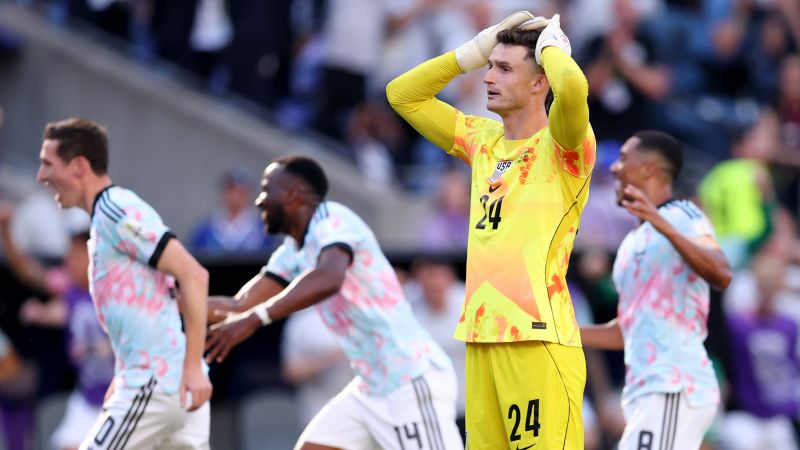
By halftime, the U.S. had fallen behind, and the second half only deepened the despair. Keeper Matt Freese, who had been a key figure in the team’s previous successes, made a critical error that gifted Belgium their third goal. The moment, a split-second hesitation in the face of a clear shot, became a symbol of the team’s fragility. “That fraction of a second is the difference between winning and losing,” one analyst noted, highlighting the gulf in quality between the two sides.
The Aftermath: A Nation’s Disappointment
As the final whistle blew, the U.S. team’s collapse was complete. The 4-1 defeat not only ended their World Cup hopes but also sparked a wave of criticism from fans and pundits alike. For many, the loss was more than just a game; it was a culmination of years of missteps and missed opportunities. The suspension of Balogun’s ban, while seemingly a minor procedural decision, had become a lightning rod for controversy, with critics arguing that it was a calculated move to boost the Americans’ chances.
Despite the suspension, the U.S. defense remained a liability. Players like Tim Ream, often lauded for their leadership, were unable to stem the tide of Belgian attacks. The team’s lack of cohesion and physicality on the field mirrored the chaos surrounding their selection. While FIFA’s decision had given them a chance to recover, the execution of that chance was anything but graceful. The match served as a stark reminder of the challenges facing American soccer on the global stage.
Belgium’s victory was celebrated not just for its own triumph but as a symbolic rebuke of American interference. The Belgian officials, who had initially been caught off guard by the FIFA ruling, used the win to assert their dominance and rally support for their cause. “This is about defending the sport from political meddling,” one Belgian representative stated, reflecting the broader sentiment in the soccer community.
As the dust settled, the focus shifted to the aftermath. The U.S. team’s performance, combined with the political controversy, painted a picture of a squad struggling to adapt to the highest level of competition. Fans who had once celebrated the team’s progress now found themselves questioning its future. The loss, while painful, also sparked a much-needed conversation about the need for stronger leadership and better preparation. For American soccer, the 36 hours that followed were a sobering reminder of how quickly fortunes can change, and how much is at stake in the global arena.
Lessons Learned: A Turning Point for American Soccer?
The events of July 7 will be remembered as a defining moment in the history of the U.S. national team. While the immediate impact was one of humiliation, the long-term consequences could be a catalyst for change. The suspension of Balogun’s ban, though controversial, demonstrated the influence of politics on sports decisions, prompting calls for greater transparency in FIFA’s processes. Meanwhile, the team’s defensive struggles highlighted the need for a more robust playing philosophy, one that could withstand the intensity of elite competition.
As the soccer world reflects on the 4-1 loss, the question remains: was this a one-off disaster or the beginning of a larger trend? The U.S. team’s performance, coupled with the political backdrop, has left fans divided. Some see it as a necessary reckoning, a chance to realign priorities and rebuild trust. Others view it as a sign of deeper systemic issues within American soccer. Regardless of perspective, one thing is clear—the events of the past 36 hours have set the stage for a renewed evaluation of the nation’s football ambitions.
