
‘A bird that flies never leaves a trace’: Why is Japan always so tidy at the World Cup?
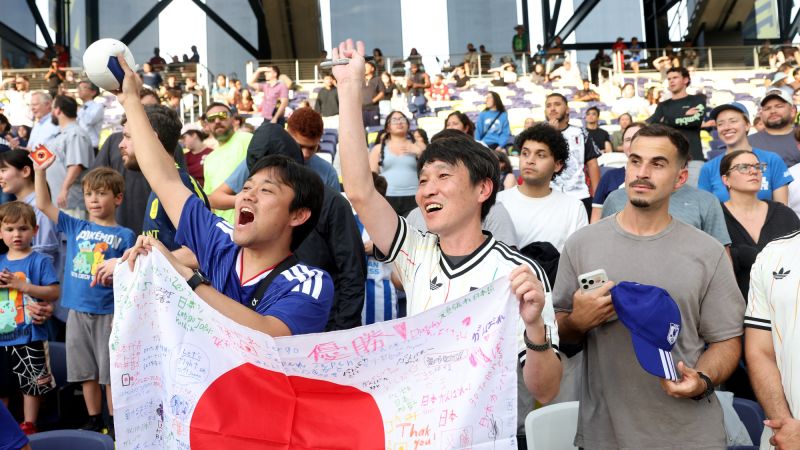
‘A Bird That Flies Never Leaves a Trace’: Why Is Japan Always So Tidy at the World Cup?
A bird that flies never leaves – The FIFA World Cup this summer offers no guarantees, as 48 teams prepare to compete in a global spectacle of chaos and triumph. Yet, one country consistently stands out in a different way: Japan. Known for its impeccable cleanliness, the nation’s fans have become synonymous with tidiness, often leaving behind no trace of their presence. This reputation is not accidental but a reflection of deep-rooted cultural values that extend far beyond the stadium gates.
A Cultural Legacy of Order
Japan’s commitment to cleanliness is often attributed to its societal norms, which emphasize discipline and respect for shared spaces. Nozomi Morgan, a leadership expert and founder of Michiki Morgan Worldwide, recalls how these expectations shaped her early experiences in Tokyo. “When I moved from Seattle to Tokyo at eight, the most striking difference was the way people treated their environment,” she said in an interview with CNN Sports. “You take off your ‘outside shoes’ and switch to ‘inside shoes’—a ritual that ensures the floor remains unmarked. The goal is to keep the interior as pristine as possible.”
But this practice was just the tip of the iceberg. Morgan’s parents had equipped her for school with a Zokin, a handmade cleaning tool crafted from recycled fabric and stitched with care. “Each child had their own Zokin, labeled with their name,” she explained. “The first task was to clean the classroom. The desks and chairs were moved to the front, and we swept, wiped, and polished until everything gleamed.” This activity felt less like a chore and more like a game, a shared responsibility that instilled a sense of community and pride in maintaining order.
Morgan noted that this habit persisted throughout her school years. From sweeping leaves off staircases to cleaning restrooms, Japanese students were taught that cleanliness was not optional but essential. “There’s a saying in Japan: ‘A bird that flies never leaves a trace,’” she shared. “It captures the idea that diligence and care should always be evident, even in small actions.” This mantra, she argues, becomes ingrained in the psyche from childhood, shaping behaviors that transcend generations.
From School to Stadium: A Shared Responsibility
While Morgan’s story highlights the generational transmission of cleanliness, Hirokazu Tsunoda, a lifelong Japanese fan, offers a contrasting perspective. “I hated every minute of it,” Tsunoda admitted when reflecting on his school days. “I resented the constant cleaning. Why did we have to tidy up the classroom when everyone used the bins anyway?” Despite his initial resistance, Tsunoda’s views shifted as he matured. Now, he volunteers at World Cup events, ensuring that the arenas reflect the same standards he once found tedious.
Tsunoda explained that Japan’s fans have developed a habit of maintaining order, viewing stadiums as sacred spaces. “If something is a passion you truly care about, you don’t want to leave the place that matters to you in a mess,” he said. This philosophy extends beyond personal pride; it’s a collective effort. Supporters often carry extra trash bags, meticulously collecting waste to ensure the grounds remain spotless. Even in the heat of competition, the act of cleaning becomes a ritual, a symbol of respect for the event and its participants.
The transformation in Tsunoda’s attitude was cemented when he volunteered at his daughter’s school. “It wasn’t until I saw the impact of cleaning on others that I truly appreciated its value,” he reflected. “Watching parents and teachers work together to keep the campus tidy made me realize how much of a difference it makes.” This experience also helped him counter criticism from skeptics who argue that Japanese fans’ behavior is performative. “People say it’s just for attention or show,” Tsunoda said. “But once you’ve picked up someone else’s half-eaten food or half-finished drink, you’ll understand why it’s so meaningful.”
Immaculate Teams and Supporters: A Nation of Detail-Oriented Excellence
The tidiness of Japan’s supporters is matched by the professionalism of its team. During the 2018 and 2022 tournaments, the Japanese squad’s locker rooms were described as spotless after matches. “The only signs of our presence were a thank you note and some origami cranes,” said Makoto Hasebe, the team’s captain in the 2018 World Cup. “It’s impossible to tell we were there unless you look closely.”
Hasebe, who has traveled extensively with the national team, praised Japan’s cultural emphasis on cleanliness. “When I’ve lived abroad and visited other countries, I’ve never seen streets as clean as Japan’s,” he said. “It’s a testament to the people’s dedication to maintaining harmony in their surroundings.” His comments underscore a broader phenomenon: Japan’s meticulousness is not confined to one aspect of life but permeates every corner, from urban planning to public etiquette.
The 2022 World Cup saw this tradition reach new heights, with supporters from around the world joining in. Tsunoda noted that in recent years, non-Japanese fans have increasingly adopted the habit. “There are often more foreigners helping to clean up than Japanese ones,” he said. “It’s heartening to see the global impact of our values.” His encouragement to others has sparked a ripple effect, with fans from other nations beginning to embrace the same ethos.
A Global Influence of Japanese Cleanliness
The World Cup has become a platform for Japan to showcase its cultural identity. In Qatar 2022, a viral video captured Japanese fans cleaning up after a thrilling comeback win against Germany, highlighting their commitment to order. FIFA praised the effort, noting how the cleanup reflected the nation’s spirit. “Around 500 volunteers from the stadium joined in to thank the fans,” said Tsunoda, who was present during the event. “It was a powerful moment of unity.”
Such moments are not isolated. Tsunoda argues that Japan’s approach to cleanliness is a natural extension of its values. “We’ve always been taught to care for our environment, to take pride in our actions,” he said. This mindset, he believes, fosters a sense of responsibility that transcends individual effort. “When you see a Japanese person in a foreign country, they often carry extra trash bags because it’s just part of their character.”
The influence of these values is also evident in the way Japan’s fans interact with each other. “It’s not just about keeping the stadium clean,” Tsunoda added. “It’s about creating a positive atmosphere for everyone. When you clean up, you’re not just removing trash—you’re showing respect for the game and your fellow spectators.” This perspective aligns with Morgan’s view that the act of tidying up is a form of cultural expression, a way to demonstrate care and humility.
As the 2026 World Cup approaches, Japan’s reputation for cleanliness is expected to continue. The nation’s fans and players have built a legacy of meticulousness that reflects their broader societal ethos. From the smallest gestures—like changing into indoor shoes—to large-scale efforts at international events, this habit is a cornerstone of Japanese identity. It’s a reminder that in a world often defined by disorder, some cultures choose to uphold order with unwavering dedication.
Whether it’s a child cleaning a classroom or a fan picking up litter after a match, the Japanese people embody a philosophy that values effort and care. This mindset, cultivated through generations, has become a defining trait of the nation’s presence at global sporting events. As Tsunoda and Morgan’s stories illustrate, the same principles that shape daily life also extend to moments of national pride, ensuring that Japan’s footprint remains as light as a feather, even in the most bustling of environments.
